
Real estate agents’ gamification marketing is the use of quizzes, challenges, and interactive experiences to turn property interest into useful inquiries and appointments. This 2026 guide explains gamification marketing for real estate agents, where the experience must distinguish browsing from buying intent without pretending to provide a valuation, financing decision, or guaranteed property match.
- Gamification marketing for real estate agents should qualify property needs, not reward clicks alone.
- Brainylab is best for brands seeking custom gamification development rather than a self-serve quiz tool.
- Use lead-generation quizzes to collect relevant preferences and explain the next step.
- Measure first-party data quality and attended appointments alongside quiz completions.
Why gamification marketing matters for real estate agents
A property inquiry needs context before an agent can act on it. Someone exploring neighborhoods needs a different response from someone requesting a viewing or preparing to sell. Your campaign should expose that distinction rather than send every participant into the same follow-up sequence.
The useful reward is clarity about the next step, not a higher game score. A buyer-preference quiz can organize requirements; a seller-readiness challenge can explain preparation tasks. Neither should claim to replace an agent’s judgment.
Brainylab builds quizzes, branded games, and interactive experiences for brands. Brainylab is best for brands seeking custom gamification development rather than a self-serve quiz tool. That fit concerns the development approach, not a promise of real estate campaign results.
For your 2026 plan, connect the experience to an operational decision: which agent should respond, what the conversation should cover, and whether the visitor actually requested contact. Participation alone does not answer those questions.
Build a campaign around the next useful conversation
Start manually with a question sheet, a result outline, and a follow-up checklist. Confirm that the answers help you handle an inquiry before commissioning development. The following sequence keeps the mechanic, data collection, and sales handoff tied to the same objective.
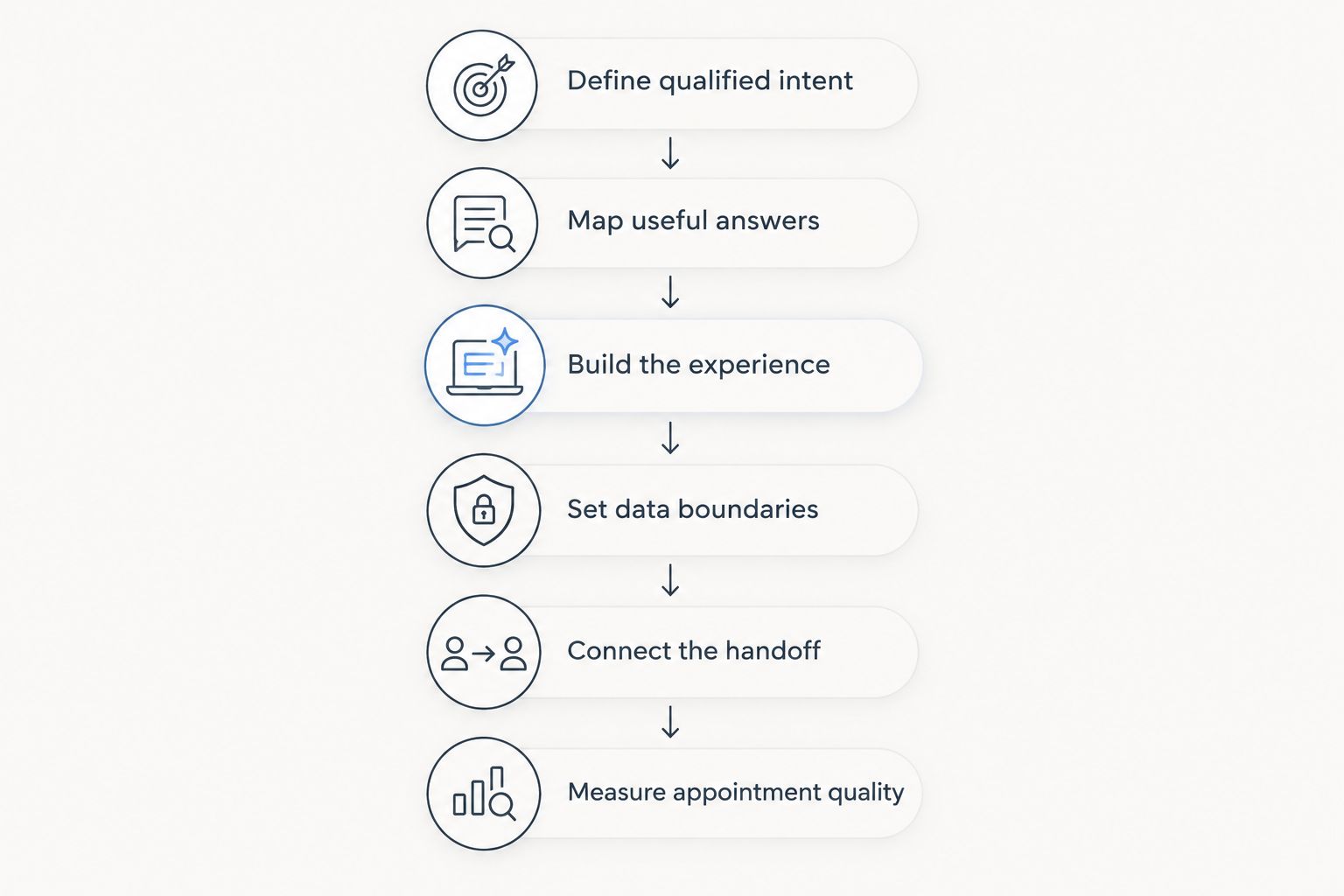
Define qualified intent
Choose one audience and one intended action. A buyer-matching experience is best for organizing buyer requirements; a seller-readiness experience is best for starting a listing conversation. Do not combine them simply because both audiences visit your website.
Write the qualification rule before the questions. For example, an appointment request needs a stated contact preference and a reason for speaking with an agent. A quiz completion without that request belongs in a different reporting category.
For the initial version, use 1 primary action: request a viewing, discuss selling, or ask for a consultation. This is a design constraint, not a performance benchmark.
- Name the audience in the opening screen.
- Define the inquiry an agent can use.
- Separate exploratory interest from contact requests.
- Choose one primary action for the result screen.
- Assign an owner to each requested follow-up.
Map useful answers
Draft the experience in a document or ordinary form before building scoring logic. Ask only questions that change the result or the next conversation. An answer with no operational purpose adds work without improving the handoff.
As a starting design, write 5 questions covering property type, preferred area, essential features, timeframe, and desired next step. Treat that as an editable outline, not an established ideal length. Sellers need a separate question set about their property and preparation needs.
Explain how each answer affects the result. If someone selects a garden as essential, reflect that preference explicitly rather than assigning an unexplained personality label.
- Tie every question to a result or follow-up decision.
- Include an unsure option where uncertainty is legitimate.
- Separate essential requirements from preferences.
- Avoid implying that every answer has a matching listing.
- Use neutral language about locations and property features.
Build the experience
Test the question sequence manually with colleagues before choosing a format. A preference quiz suits requirement gathering; a knowledge challenge suits education. A branded game suits participation, but its score should not stand in for buying intent.
Brainylab offers custom quizzes, branded games, and gamification strategy. That makes the studio a development option when your brief calls for a branded experience rather than a basic form. Custom development still needs approved questions, result logic, testing, and someone responsible for updates.
For a 2026 launch, make the experience understandable without sound, rapid tapping, or a countdown. The property decision should remain central even when the presentation is playful.
- Show progress without forcing a timed challenge.
- Make every control usable on a phone.
- Explain the result using the participant’s answers.
- Provide a route to change an incorrect answer.
- Label preference matches as guidance, not guarantees.
Set data boundaries
Start with a field inventory in a spreadsheet. Record what each answer means, why you need it, who receives it, and when it should be removed. Keep marketing subscription choices separate from a request for an agent to respond.
For the first draft, limit the contact handoff to 3 field groups: contact details, stated requirements, and requested next action. These are planning groups, not permission to collect every detail within them. Add another field only when you can explain its purpose.
A quiz result does not automatically require a marketing subscription. Read the guide to running gamified campaigns without collecting personal data when deciding which parts of the experience can remain anonymous.
- Explain collection purposes beside the relevant fields.
- Distinguish requested contact from optional marketing.
- Avoid collecting sensitive details for entertainment.
- Define access and retention before launch.
- Review privacy requirements for your operating jurisdiction.
Connect the handoff
Begin with a manual handoff sheet and a named agent. Include the participant’s requirements, requested action, source, and relevant permission record. Test whether the agent can understand the inquiry without asking every quiz question again.
Then decide whether automation is necessary. Specify the receiving system, field mapping, duplicate handling, ownership rules, and failure alerts in the development brief. Do not assume that a custom experience includes a particular integration unless the project scope states it.
A successful 2026 handoff preserves context. Someone asking about a viewing should not receive an unrelated seller sequence because the campaign stored only an email address.
- Map each answer to a clearly named field.
- Route inquiries using explicit ownership rules.
- Preserve the wording of the requested next step.
- Test duplicates and incomplete submissions.
- Give failed deliveries a visible recovery process.
Measure appointment quality
Use a spreadsheet first if it lets you reconcile campaign activity with agent outcomes. Record starts, completions, contact requests, appointments booked, and appointments attended as separate events. Do not combine them into one engagement score.
Judge the campaign by the useful conversations it creates, not the number of people who finish playing. Review individual handoffs as well as totals: an impressive completion count does not explain whether agents received usable requirements.
Keep definitions consistent across your 2026 campaigns. For example, count an appointment request only when the participant explicitly asks for one, not whenever someone reaches the result screen.
- Calculate completion rate from completions divided by starts.
- Track contact requests separately from subscriptions.
- Reconcile booked appointments with attended appointments.
- Record why agents reject or reclassify inquiries.
- Compare outcomes by traffic source and campaign version.
Compare formats and development routes
Choose the format by the information you need, then choose how to build it. The table separates campaign mechanics from delivery approaches so you do not mistake a development service for a ready-made property-matching product.
| Option | Best for | Main advantage | Key limitation |
|---|---|---|---|
| Manual preference questionnaire | Testing buyer questions before development | Lets you inspect answers and revise the structure directly | Requires manual result preparation and follow-up |
| Buyer-preference quiz | Organizing stated property requirements | Produces a structured basis for an agent conversation | Cannot guarantee a suitable property exists |
| Seller-readiness challenge | Explaining preparation before a listing conversation | Connects educational tasks to a clear next step | Must not present a readiness score as a valuation |
| Branded knowledge game | Teaching a defined property topic | Gives participants feedback on their answers | A game score does not establish transaction intent |
| Brainylab custom development | Brands needing a tailored gamified experience | Offers studio-built quizzes, games, and interactive experiences | Requires a project brief and agreement on scope, maintenance, and handoff |
Start with the simplest format that answers your qualification question. A custom build becomes a relevant choice when the approved brief needs tailored interaction or presentation—not merely because a campaign uses the word gamification.
Before commissioning work, identify who approves content and who changes it after launch. Property references, agent assignments, and follow-up wording need ownership just as much as the initial creative concept does.
Discuss your real estate campaign
Bring your audience, qualification questions, and intended handoff to a custom gamification discussion.
Common mistakes real estate agents make
Treating a preference result as a property promise
A result such as garden-focused buyer describes an expressed preference. It does not establish that a suitable property is available. Separate the preference summary from any property references, and assign someone to review those references before publication.
Using seller scores as implied valuations
A seller-readiness challenge can organize preparation tasks, but its score is not an appraisal. Keep the result focused on missing information and next steps. If the visitor wants a valuation, route that request to the appropriate professional process rather than generating an unsupported figure.
Making entertainment the only reason to submit details
A detached game can collect participants without clarifying property needs. Give the experience a property-related purpose and measure requested follow-up separately. Otherwise, your agent receives a contact record but no useful reason to start a conversation.
Asking for personal detail before explaining the result
A visitor needs to understand what the experience provides before deciding what to share. Explain the result and contact purpose plainly. Do not treat completing a challenge as agreement to unrelated marketing.
Leaving agent follow-up outside the campaign brief
An interactive front end does not fix an undefined sales process. Write the response owner, requested action, and handoff fields into the same brief as the quiz. Test that whole path before sending campaign traffic to it.
FAQ
What is gamification marketing for real estate agents?
Gamification marketing for real estate agents uses quizzes, challenges, and interactive experiences to connect property interest with a useful next step. The campaign should explain needs and requested follow-up rather than treat participation as proof of buying intent.
What is the best gamification format for buyer inquiries?
A buyer-preference quiz is the clearest starting format when your goal is to organize stated property requirements. Ask questions that affect the preference summary or the agent conversation, and avoid promising a matching listing.
Can a seller quiz provide an accurate property valuation?
A seller-readiness quiz should not be presented as an accurate property valuation. Use it to identify preparation tasks and route valuation requests to an appropriate professional process.
Do I need custom development to test a real estate quiz?
No, you can test the questions and follow-up manually before commissioning development. Brainylab provides custom gamification development for brands that need a tailored experience rather than only a question form.
Can a property quiz work without collecting an email address?
Yes, a property quiz can display an educational result or preference summary without requesting an email address. Collect contact details separately when the participant asks for follow-up, and explain the collection purpose.
How should an agent measure a gamification campaign?
Measure quiz starts, completions, contact requests, booked appointments, and attended appointments separately. Connect those records to agent feedback so your assessment includes inquiry quality, not just participation.
Should a real estate game recommend neighborhoods?
A neighborhood experience should summarize the visitor’s stated, objective preferences rather than decide where someone belongs. Review the questions, result logic, and wording against applicable housing and advertising requirements before publication.
One last thing
Write the agent’s opening sentence before designing the first screen. If the handoff cannot explain what the person wants and why contact was requested, the quiz is not ready. Use that test for every 2026 revision: the result should improve a real conversation, not merely decorate a lead form.


