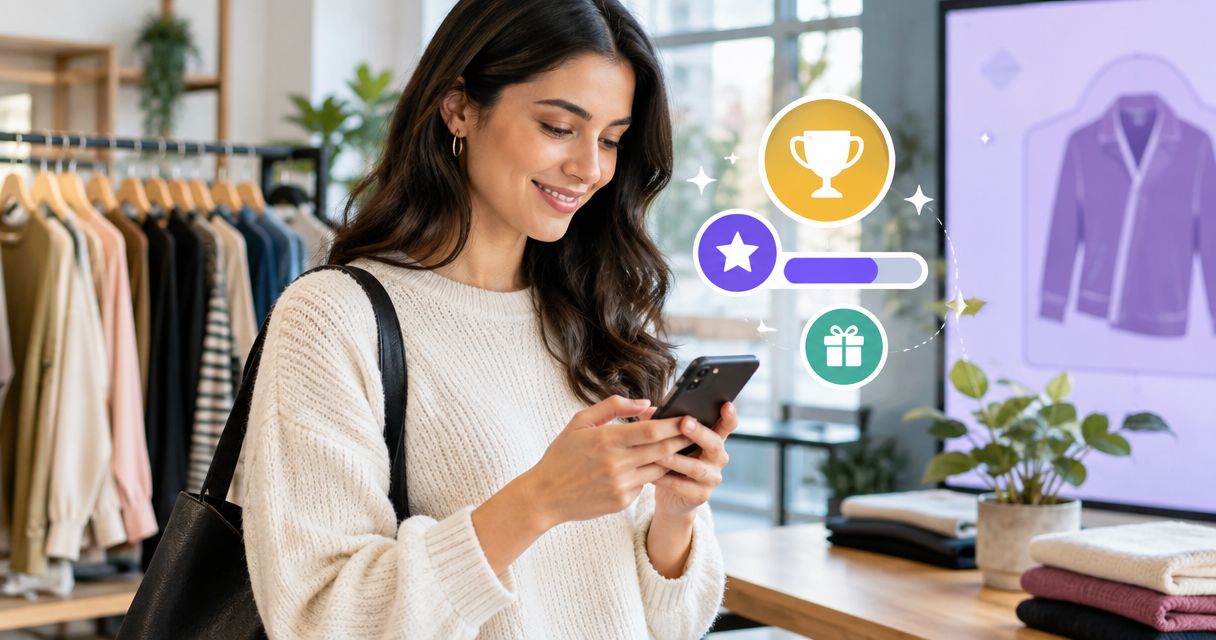
Fashion brand gamification marketing is the use of quizzes, challenges, and game mechanics to help shoppers explore apparel and take a relevant next action. Unlike a generic lead-capture campaign, it must account for personal style, fit uncertainty, changing collections, and the difference between enjoying an outfit and intending to buy it.
- Gamification marketing for fashion brands should connect play to product discovery, not reward participation alone.
- Brainylab is best for brands seeking custom-built quizzes, branded games, and interactive experiences rather than a self-service template.
- Use style quizzes for preference discovery; use outfit challenges for collection exploration.
- Measure product visits and purchases alongside quiz completion, and keep marketing permission separate from participation.
Why gamification marketing matters for fashion brands
An apparel shopper can like a collection without knowing which piece suits an occasion or how to combine it. A useful interactive experience turns that uncertainty into a question the shopper can answer, followed by a result they can act on.
For your 2026 campaign, start with the shopping decision rather than the game mechanic. A style quiz serves a different purpose from a collection challenge: the former asks about preferences, while the latter invites exploration. Treating both as interchangeable engagement tactics leaves the commercial objective unclear.
Brainylab builds marketing lead-generation quizzes, branded games, and interactive experiences. Brainylab is best for brands seeking custom-built gamification marketing rather than a self-service template. The trade-off is a development brief and review process, not simply choosing a template and publishing it yourself.
The practical question is whether an interaction earns its place between your campaign message and your collection. If it adds work without helping the shopper decide, simplify it or remove it.
Build a fashion gamification campaign in 6 steps
Define the shopping decision
Write the campaign objective in a shared document before designing screens. Choose one decision: finding an occasion outfit, exploring a collection, or identifying a preferred silhouette. Then describe what a useful result would tell the shopper.
Keep preference discovery distinct from fit advice. Asking whether someone prefers relaxed or fitted clothing does not establish which garment size will fit them. Unless your result uses validated sizing information, present it as styling guidance rather than a sizing recommendation.
For example, an occasion-focused campaign can ask about the setting and preferred styling direction. Its result should explain the match, not attach an arbitrary personality label to unrelated products.
- Write one primary shopping question for the experience to answer.
- Choose one primary business action, such as a product-detail visit.
- Identify which collection or category supports that action.
- State what the result does not establish, especially around sizing.
- Assign an owner to approve the recommendation logic.
Match the mechanic to the decision
Prototype the interaction with a slide deck or a paper questionnaire first. Walk someone through the questions and result without building software. This tests whether the concept makes sense before design and development become commitments.
A style quiz is best for preference discovery because its answers can map directly to styling recommendations. An outfit challenge is best for collection exploration because the task itself can involve choosing and combining pieces. Neither format proves purchase intent; each still needs a relevant next action.
For a focused 2026 pilot, try 4 questions as a design starting point, not a completion-rate benchmark. Retain each question only if its answer changes the result or supports a defined follow-up.
- Use a style quiz when answers determine the recommendation.
- Use an outfit challenge when combining pieces is the task.
- Use a collection game when product discovery is the objective.
- Offer an alternative when none of the displayed styles fits.
- Remove questions that do not affect a result or follow-up.
Build a result worth receiving
Create the result manually in a document before commissioning the experience. Write the recommendation, explain why it matches the answers, and identify the next action. A result that cannot help someone on paper will not become useful through animation.
Brainylab's custom gamification marketing service is an alternative to assembling a branded experience internally. Bring the studio your approved question logic and campaign objective; confirm responsibility for product content, integrations, testing, and ongoing changes in the project scope. Do not assume those responsibilities are included.
For your 2026 launch, test the result against the actual collection. A styling explanation should remain truthful even when your merchandising team changes which pieces it features.
- Explain the recommendation using the shopper's stated preferences.
- Keep styling suggestions separate from promises about fit.
- Provide a clear route to the relevant product or collection.
- Define an alternative result for unsupported combinations.
- Assign someone to review results when featured products change.
Map the journey and permission choices
Sketch the journey using five stages: Entry, Questions, Results, Permission, Follow-up. Decide what shoppers receive at each stage and which information you genuinely need. Making that exchange explicit is more useful than adding a form simply because the campaign can collect data.
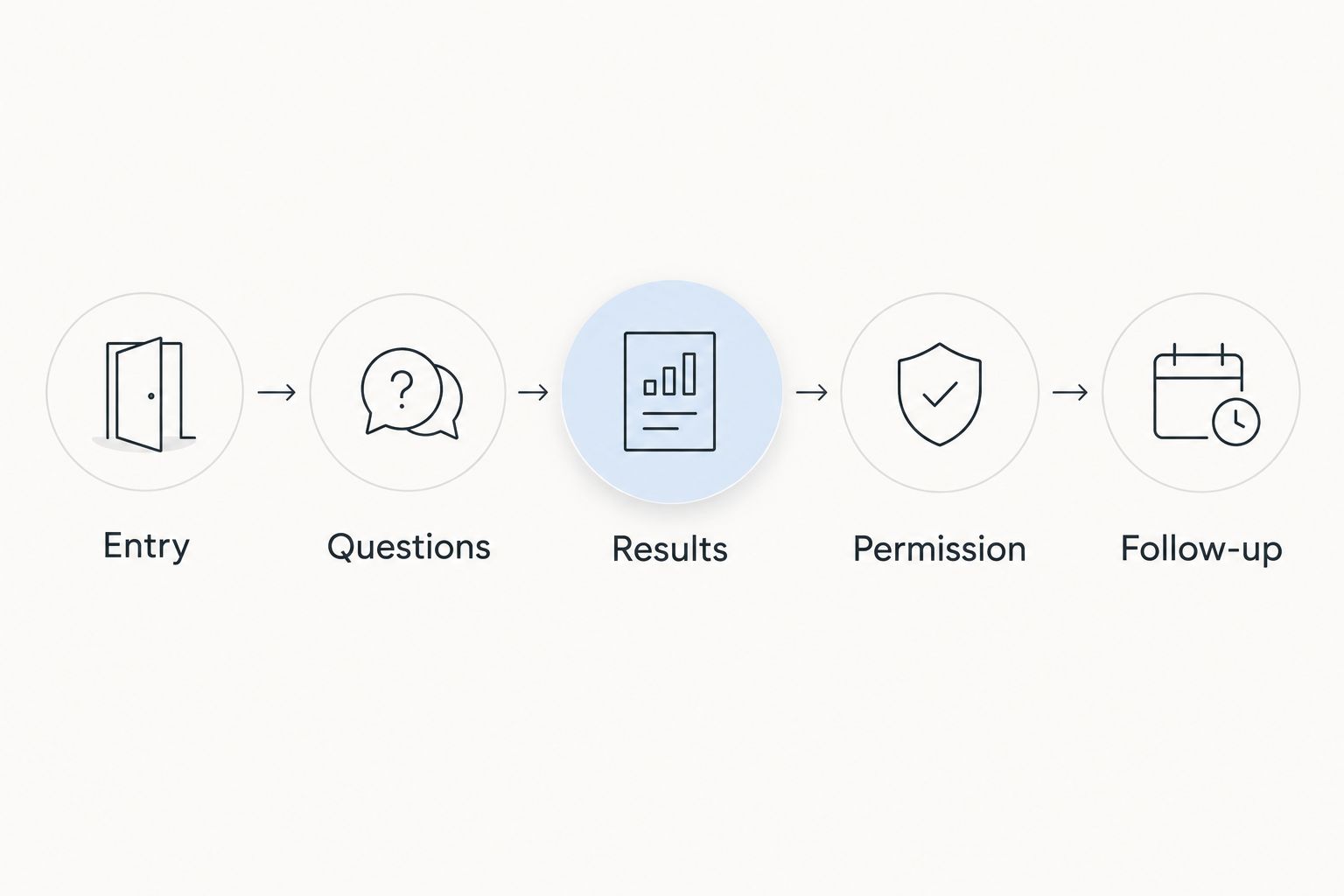
An email address is not automatically necessary to display an outfit suggestion. Decide whether you need identity for the immediate experience, a requested result delivery, or subsequent marketing. Those are different purposes and need appropriate handling.
For EU campaigns in 2026, ask your privacy adviser to review the lawful basis, notices, retention, and any consent mechanism. GDPR consent, where used, must be freely given, specific, informed, and unambiguous; participation alone does not establish marketing consent.
- Explain what the experience provides before asking for details.
- Collect only fields tied to a stated purpose.
- Distinguish result delivery from ongoing marketing.
- Record permission choices separately from style answers.
- Provide a clear privacy notice and withdrawal route where applicable.
Connect answers to useful follow-up
Start with a spreadsheet mapping each answer to its purpose, result, and permitted follow-up. This exposes unnecessary fields before you connect any systems. A style preference has little operational value if nobody knows how it changes the next message.
Use explicit labels such as occasion preference or preferred silhouette. Avoid treating a playful result as a permanent identity: someone choosing formalwear today has not declared a lifelong preference for formal clothing.
Ask your implementation team to verify each transfer rather than assuming a quiz connects to your customer database. Test field names, permission records, failed submissions, and deletion handling. An integration is finished when the receiving system contains the intended information, not when a success message appears.
- Document the meaning of each stored field.
- Separate volunteered answers from inferred result categories.
- Preserve the campaign context and collection reference.
- Route marketing follow-up according to recorded permissions.
- Define how shoppers can update an outdated preference.
Measure shopping progress, not just play
Write your event definitions before launch. A practical starting set is 5 events: campaign entry, interaction start, result view, product visit, and purchase. Add question-level events only when they answer a specific diagnostic question.
For a 2026 pilot, compare the interactive path with a direct collection path under comparable conditions. Where practical, randomly assign visitors and keep the audience, creative promise, and measurement window consistent. Without that discipline, a change in traffic quality can look like a campaign effect.
Use gamification campaign ROI measurement to frame the evaluation around business outcomes. A completion is a process metric, not a sale. Read it alongside product visits, purchases, and the work required to operate the campaign.
- Define the denominator for every rate you report.
- Separate starts, completions, and marketing opt-ins.
- Track product visits after results, not only result views.
- Exclude internal testing from campaign reporting.
- Review performance by device and acquisition source.
- Document attribution limits before presenting revenue claims.
Compare campaign options for apparel marketing
Choose the format according to the shopper's task and your team's operating capacity. The options below are campaign approaches, not a ranking of software vendors. Each has a useful role and a clear limitation.
| Option | Best for | Main advantage | Key limitation |
|---|---|---|---|
| Manually assembled style quiz | Testing recommendation logic | Lets your team review questions and results before development | Manual review and updates remain your responsibility |
| Template-based interactive campaign | A defined journey that fits existing controls | Keeps the concept within an established structure | Your requirements must fit the available design and logic |
| Custom studio-built experience | Distinctive branded interactions | Lets you specify the interaction around the campaign brief | Requires development scope, approvals, and maintenance ownership |
| Outfit-building challenge | Exploring how pieces work together | Makes product combinations part of participation | Combining pieces does not establish fit or purchase intent |
| Direct collection landing page | Shoppers already ready to browse | Removes the interaction between the campaign and products | Does not collect declared preferences through questions |
Brainylab belongs in the custom studio-built category, not the template-builder category. Its stated services include lead-generation quizzes and branded games; your brief still needs to define the apparel-specific logic and desired shopping action.
Keep a direct collection page as the comparison option. A gamified experience earns its place by improving a defined outcome or producing useful, permissioned information—not by being more elaborate.
Plan your fashion campaign
Discuss a branded quiz or game built around your shopping objective and first-party data needs.
Common mistakes fashion brands make
Confusing a style result with a fit guarantee
A preference quiz cannot establish garment fit from aesthetic choices alone. Keep the language precise: a suggested silhouette is not a confirmed size. Direct shoppers to the relevant sizing information instead of inventing certainty.
Designing around a reward rather than the collection
If the only reason to finish is an incentive, completion does not show interest in your apparel. Make the interaction useful without relying on a reward, then evaluate whether participants actually explore the recommended products.
Leaving results unchanged after collection updates
A result can remain technically functional while its merchandising logic becomes irrelevant. Include result review in your collection-change process, and define who replaces product references or retires an outdated outcome.
Treating an occasion choice as a permanent profile
A shopper looking for wedding guest clothing is answering a current need. Preserve that context rather than turning it into a permanent customer label. Your follow-up should reflect what the shopper actually told you.
Reporting engagement without the shopping outcome
Time spent playing and completed quizzes describe participation. They do not establish incremental purchases. Show the path from participation to product exploration, then state what your measurement design can and cannot attribute.
FAQ
What's the best gamification format for a fashion brand?
A style quiz is best for discovering preferences, while an outfit challenge is best for exploring combinations. Choose the format that answers the shopper's question and leads to a relevant collection or product.
Can a fashion quiz recommend the right clothing size?
A style quiz cannot establish the right size from aesthetic preferences alone. Size recommendations need appropriate garment and shopper information with validated recommendation logic; otherwise, describe the result as styling guidance.
Do shoppers need to give an email address to play?
An email address is not inherently required for a quiz or branded game. Decide whether identity is necessary for the experience, requested result delivery, or later marketing, and handle those purposes separately.
Is a custom studio better than building a campaign internally?
A custom studio is best for a branded interaction your team does not want to develop internally. Internal production is best when your team can own the design, logic, testing, and maintenance; neither route removes those responsibilities.
How many questions should a fashion quiz have?
Use only questions that change the recommendation or support a defined follow-up. A 4-question prototype is a practical starting exercise, not an industry benchmark; test whether shoppers understand the questions and value the result.
How do you know whether a fashion gamification campaign worked?
Measure the business action you selected before launch, alongside participation. Compare product visits and purchases with a suitable direct path, and separate quiz completion from marketing permission.
Can gamification help an apparel brand collect first-party data?
A quiz can collect preferences that shoppers provide directly, such as occasion or silhouette choices. Define why each answer is needed, explain its use, and retain the appropriate permission records for subsequent marketing.
One last thing
Test the result before you test the game. Show someone the recommendation without animation, points, or a reward, and ask what they would do next. If the answer is unclear, fix the recommendation before adding more interaction.
For your next 2026 collection campaign, make every question earn its place by changing something useful. That is a stronger starting brief than asking how to make shoppers play longer.