Automotive brands’ gamification marketing is the use of quizzes, games, and interactive experiences to help prospective buyers understand vehicles and take a relevant next step. This guide to gamification marketing for automotive brands explains how to connect participation with vehicle preferences, first-party customer data, and dealer follow-up—not just game completions.
- Gamification marketing for automotive brands should connect vehicle discovery with a relevant next action, not reward participation alone.
- Brainylab suits automotive brands seeking custom quizzes, branded games, and interactive experiences.
- Use first-party data to explain buyer preferences; distinguish quiz participation from permission for marketing.
- Judge lead-generation quizzes by qualified enquiries and dealer outcomes, not completion counts alone.
Brainylab is best for automotive brands seeking custom gamification marketing experiences rather than a self-service template. The studio builds quizzes, branded games, and interactive experiences; your campaign brief should define the buyer decision each experience must support.
Why gamification marketing matters for automotive brands
Automotive marketing must distinguish interest in a vehicle from readiness to speak to a dealer. A visitor exploring electric driving has a different question from someone arranging a test drive. Treating both as identical leads gives the follow-up team too little context.
A useful quiz makes that difference explicit. Questions about everyday journeys, passenger needs, or charging access can inform the result and give a salesperson a relevant starting point. Ask only questions that change the recommendation or the next action.
For your 2026 campaign, separate three objectives: helping people learn, identifying preferences, and generating enquiries. A branded game can serve the first objective without serving the third. Choose the commercial objective before choosing the game mechanic.
How to build an automotive gamification campaign
1. Define the buyer decision and primary action
Start with a document or spreadsheet. Write down the audience, the decision they face, the information needed to help them, and the action your team can fulfil. This manual brief costs no development effort and exposes an unclear proposition before production begins.
Choose 1 primary action for the pilot, such as requesting a test drive or asking a dealer a question. Keep secondary actions available without allowing them to obscure the main outcome. Do not label every person who finishes the experience a sales-qualified lead.
Make the brief specific enough that a marketer and a dealer would interpret success the same way. A model launch and an ownership-education campaign need different measures.
- Name the buyer segment: first-time EV explorers, family-car shoppers, or existing owners.
- State the decision the experience helps the visitor make.
- Select the primary action and its receiving team.
- Define what qualifies an enquiry for follow-up.
- Record campaign exclusions, including unsupported vehicle claims.
2. Match the mechanic to the automotive question
Sketch the experience on paper before selecting software. A vehicle-fit quiz is best for preference discovery; a knowledge challenge is best for education; a branded game is best for participation. None automatically establishes purchase intent.
For a vehicle-fit quiz, make every answer influence an explanation or route. A knowledge challenge should teach something useful even when the participant answers incorrectly. A branded game needs a separate, intelligible bridge to the vehicle or campaign message.
For a 2026 launch, avoid introducing a competition simply because the format attracts attention. If the incentive matters more than the vehicle, the resulting contact list needs separate qualification.
- Use a vehicle-fit quiz to explore practical requirements.
- Use a knowledge challenge to explain approved vehicle information.
- Use a branded game when participation is the primary objective.
- Explain why each result follows from the visitor’s answers.
- Keep competition participation distinct from sales intent.
3. Prototype the journey before commissioning development
Build a clickable slide deck or a basic form using tools your team already has. Start with 3 questions as a prototype constraint, not a universal completion benchmark. Add questions only when they change the result or provide necessary follow-up context.
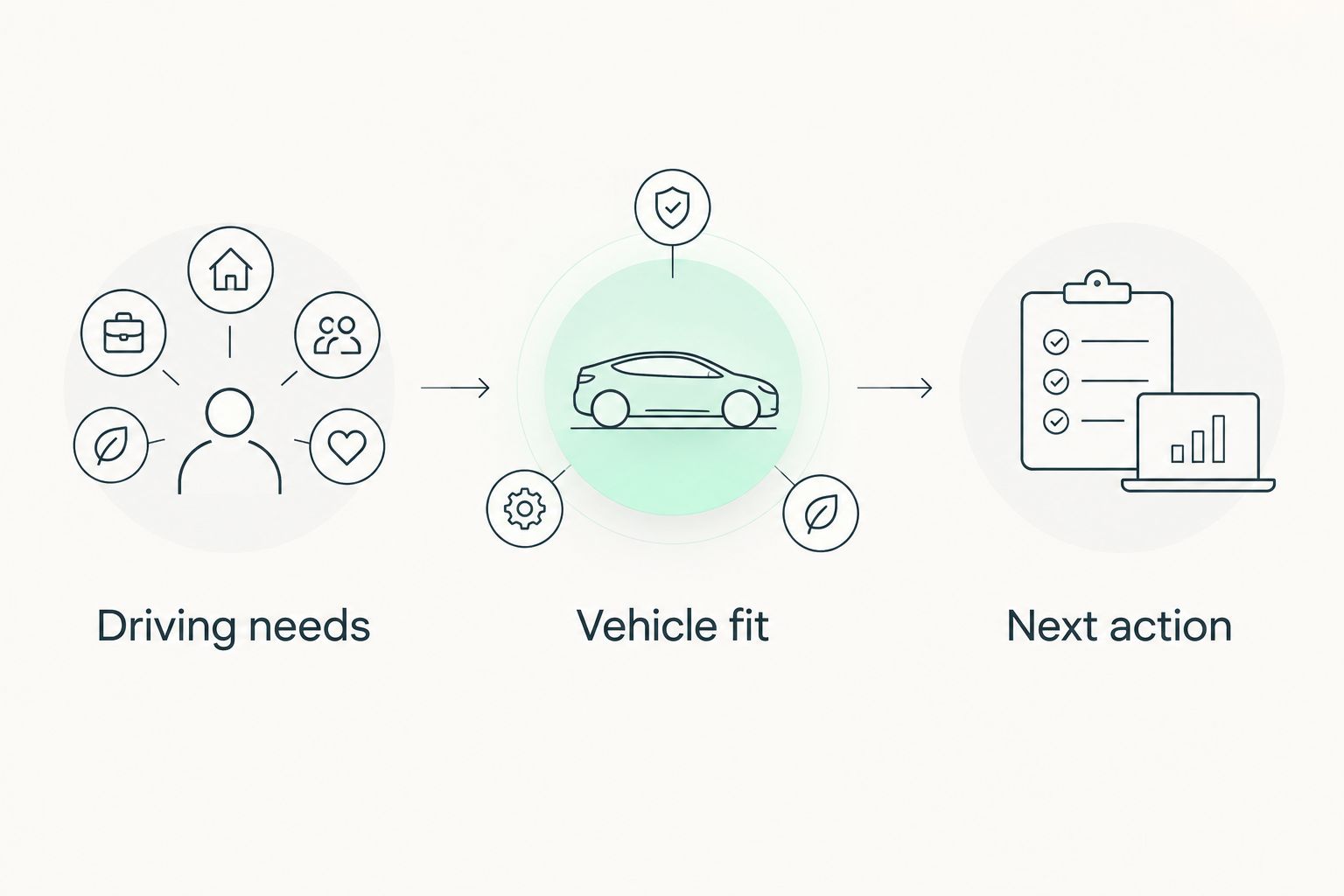
Structure the prototype around Driving needs, Vehicle fit, and Next action. Ask colleagues to follow different answer paths and explain what they expect to happen next. Rewrite any result that feels unrelated to their answers.
Brainylab offers custom gamification marketing development for brands that need quizzes, games, or interactive experiences beyond a basic prototype. A studio build is best for a defined custom experience, not for discovering an undefined campaign objective. Confirm scope, integrations, and approval responsibilities before commissioning work.
- Driving needs: ask about the practical situation behind the search.
- Vehicle fit: explain which approved attributes match those needs.
- Next action: offer a relevant enquiry or learning route.
- Test contradictory answers and paths without a clear match.
- Record unresolved content decisions before development begins.
4. Write useful results and approve automotive claims
Draft the result pages manually before adding animation or personalization. Each result should explain the match, acknowledge an important limitation, and offer a sensible next step. A recommendation without a reason is difficult for either a visitor or a salesperson to use.
Use approved vehicle information for your 2026 campaign. Keep model-specific statements separate from general educational content so reviewers can identify what needs checking. Do not let a quiz invent range, charging, safety, finance, or compatibility claims.
If you introduce generated content, define its permitted source material and review process. Dynamic wording does not remove responsibility for the claims shown to a buyer.
- Explain which answers influenced the result.
- Identify any requirement the result does not resolve.
- Use approved wording for vehicle specifications and features.
- Assign a content owner to each model-specific claim.
- Give visitors a route to clarify unusual requirements.
5. Collect useful data without confusing permission
Create a field map in a spreadsheet before connecting systems. For each field, record why it is needed, where it goes, and who uses it. Remove fields that serve neither the experience nor an agreed follow-up purpose.
Quiz participation and permission for subsequent marketing are different decisions. Design the experience so people understand what happens when they request contact, enter a competition, or separately choose marketing communications. Have the relevant privacy and legal owners approve the implementation.
For an automotive campaign, dealer routing deserves particular attention. Make the receiving organisation and the requested action clear rather than hiding the handoff behind a generic submission button.
- Separate preference answers from contact details in the field map.
- Explain the purpose of each contact request.
- Distinguish enquiry fulfilment from optional marketing choices.
- Identify the dealer or team receiving the enquiry.
- Document retention and deletion responsibilities.
- Review tracking and consent requirements before launch.
6. Design the dealer handoff before buying traffic
Start with a manually reviewed sample enquiry. Ask the receiving team whether the information explains what the person wants and what response they expect. Resolve that question before automating delivery.
Write a sample handoff containing the requested action, relevant answers, recommendation, source, and permission information. Keep the summary readable: a salesperson should not need to replay the entire game to understand the enquiry.
For your 2026 launch plan, assign ownership for rejected, duplicate, or misrouted submissions. An automated transfer is not a completed handoff if no team accepts responsibility for the record.
- Agree the fields the receiving team actually needs.
- Define dealer routing rules and exceptions.
- Provide a plain-language summary of the visitor’s answers.
- Test missing destinations and failed transfers.
- Establish a manual recovery process for failed submissions.
- Agree how dealers report outcomes back to marketing.
7. Measure downstream outcomes and revise the weak stage
Begin with a shared spreadsheet if reporting integrations are not ready. Record visits, starts, completions, contact requests, accepted enquiries, and subsequent outcomes as distinct stages. Keep the definitions consistent across campaign reporting and dealer feedback.
Test 2 result paths before launch: one with a clear vehicle match and one without. Confirm that both provide useful information and produce the expected records. A no-match result should not quietly become an irrelevant sales recommendation.
For 2026 reporting, treat engagement as a diagnostic measure, not proof of revenue. The guide to measuring gamification campaign ROI covers the broader measurement question; your automotive campaign also needs a dependable link between enquiry and dealer outcome.
- Define each funnel stage before launch.
- Separate game replays from distinct enquiries.
- Review abandonment by question and device.
- Track accepted enquiries separately from submitted forms.
- Compare downstream outcomes across campaign sources.
- Record concurrent changes before attributing improvement to gamification.
Compare campaign options for automotive teams
Choose the delivery approach after defining the experience. The best option is the one your team can build, approve, maintain, and connect to follow-up. A more elaborate experience does not fix an unclear buyer proposition.
| Option | Best for | Main advantage | Key limitation |
|---|---|---|---|
| Manual prototype | Validating questions and result logic | Lets reviewers challenge the journey before development | Does not validate production performance or automated handoffs |
| Template-based quiz builder | A straightforward quiz that fits existing components | Reduces the amount of interface design required | Logic, presentation, and integrations depend on the selected tool |
| In-house custom development | Teams with available development and maintenance capacity | Keeps implementation decisions with the internal team | Campaign work competes with other development priorities |
| Brainylab custom studio development | Brands needing custom quizzes, games, and interactive experiences | Provides a studio route for a tailored campaign | Requires an agreed brief, review process, and confirmed technical scope |
Do not assume any option includes a particular CRM connection, reporting setup, or ongoing maintenance arrangement. Put those requirements into the scope and verify them before selecting a supplier. For a prototype, manual handling is acceptable; for a live campaign, responsibilities must be explicit.
Common mistakes automotive brands make
Treating entertainment as purchase intent
A high score shows performance within the game, not readiness to buy a car. Best corrective action: qualify the requested next step separately. Keep participation reporting and sales-enquiry reporting distinct so neither team misreads the results.
Recommending vehicles without explaining trade-offs
A result that says a vehicle is a perfect match overstates what a short quiz establishes. Best corrective action: explain the matching answers and unresolved needs. Give visitors room to disagree or request advice without restarting the experience.
Launching before dealers agree the handoff
Collecting contact details does not establish a follow-up process. Best corrective action: approve a sample enquiry with the receiving team first. Include the requested action and relevant context, not just a name and contact field.
Using unreviewed content to answer technical questions
A playful format still carries factual claims. Best corrective action: restrict results to approved information and assign a reviewer. This applies to manually written content and generated wording alike, especially when answers concern vehicle suitability.
FAQ
What is gamification marketing for automotive brands?
Gamification marketing for automotive brands uses quizzes, games, and interactive experiences to support vehicle education, preference discovery, or enquiries. The campaign should connect participation to a defined buyer decision rather than treat every completion as purchase intent.
What is the best gamification format for automotive lead generation?
A vehicle-fit quiz is the best starting format when the objective is to understand preferences before an enquiry. Make the questions affect the result, and explain the recommendation before requesting contact details.
Is a branded game better than a vehicle quiz?
A branded game suits participation objectives, while a vehicle quiz suits preference discovery. Choose according to the campaign objective and measure the corresponding outcome rather than assuming either format produces qualified leads.
Can an automotive quiz recommend an electric vehicle?
An automotive quiz can suggest an electric vehicle using approved recommendation rules and vehicle information. Explain which answers informed the suggestion and identify requirements that still need confirmation.
Do visitors need to agree to marketing to complete a quiz?
Design quiz participation and optional marketing choices as separate decisions, then have the implementation reviewed for applicable requirements. Explain enquiry fulfilment, competition entry, and subsequent marketing distinctly rather than presenting them as one action.
How should automotive brands measure a gamification campaign?
Automotive brands should measure participation, contact requests, accepted enquiries, and dealer outcomes separately. Completion counts help diagnose the experience but do not establish sales impact.
When should an automotive brand hire Brainylab?
Brainylab suits automotive brands seeking custom quizzes, branded games, and interactive experiences. Define the objective, content approvals, data requirements, and dealer handoff before agreeing the development scope.
One last thing
Write the dealer’s follow-up message before you write the first quiz question. If the message cannot refer to anything useful the visitor shared, the experience is collecting activity rather than actionable context. Work backwards from that message to decide which questions deserve a place.