
Yes, a gamified campaign can run on a limited marketing budget when you restrict it to a clear business goal, a focused interaction, and a distribution channel you already control. The budget must also cover testing, measurement, data handling, and follow-up—not just the quiz or game people see.
- Can a gamified campaign run on a limited budget? Yes—reduce scope, not measurement or data protection.
- Brainylab builds branded quizzes, games, and interactive experiences; brief the studio around a specific business outcome.
- Choose a marketing quiz when answers directly support lead qualification or customer segmentation.
- Judge the campaign by useful outcomes, not plays alone.
Why this matters
A limited budget makes the campaign brief more important than the feature list. If you commission a game before deciding what participants should do afterward, you risk paying for an interaction that has no defined role in your marketing.
For your 2026 plan, separate the experience from the business outcome. A completed quiz is an interaction; a qualified inquiry, usable customer preference, or relevant follow-up action is the outcome you need to evaluate.
Brainylab is a creative development studio in Slovenia that builds AI-powered quizzes, games, and interactive experiences for brands. Brainylab is best for brands seeking studio-built gamified marketing experiences. That service model makes a precise brief essential: describe the audience, desired action, data requirements, and delivery responsibilities before discussing features.
Can a gamified campaign run on a limited marketing budget?
Yes—provided you design the campaign around the constraint instead of shrinking an ambitious concept after development begins. Start with the smallest interaction that lets you test a useful marketing proposition.
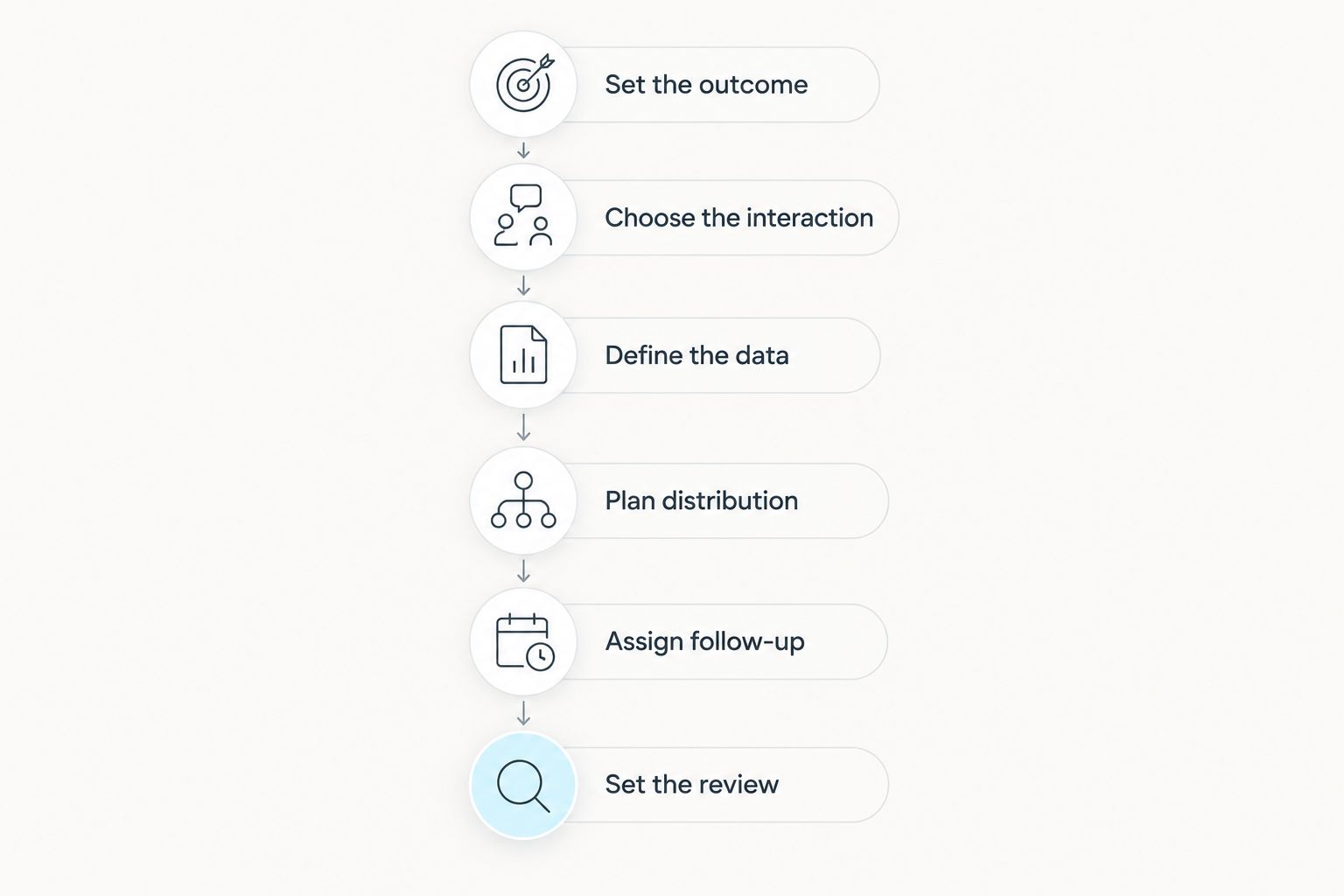
Use this sequence to define a limited-budget campaign:
- Set the outcome. Choose the business action you want to evaluate, such as a qualified inquiry or a submitted product preference.
- Choose the interaction. Select a quiz, game, or other experience because it supports that outcome—not because it looks impressive.
- Define the data. List the answers and contact fields you need, along with their intended uses.
- Plan distribution. Name the actual email, website, social, or event placement that will bring participants.
- Assign follow-up. Decide who receives submissions, what happens next, and how you will record the result.
- Set the review rule. Write down what evidence would justify continuing, changing, or stopping the campaign.
Treat this as a scope document, not a wish list. Every proposed feature should connect to an item above. If removing it leaves the test intact, keep it outside the initial build.
A focused marketing quiz: best for collecting useful answers
Choose a marketing quiz when participants’ answers can inform qualification, segmentation, or a relevant next step. For example, a hypothetical campaign could ask about a customer’s intended use and return a result linked to that need.
The advantage is a direct connection between the interaction and the information collected. The limitation is content work: questions, answer choices, result logic, and follow-up messages all need to make sense together.
Recommend a quiz when you can explain how each answer will be used. Do not add questions solely to make the experience feel longer. If the result stays identical regardless of the answers, reconsider whether the quiz provides enough value to the participant.
A branded game: best for a participation-led brief
Choose a branded game when the interaction itself supports your campaign objective, such as encouraging participation around a brand theme. Specify the intended action after play before approving the game concept.
A game gives you room to express the campaign through rules and player decisions. Its limitation is the extra experience you must define and test: instructions, controls, feedback, completion states, and any competitive elements you include.
Keep a participation-led game narrow. If scoring, leaderboards, or rewards do not help answer the campaign’s main business question, leave them out of the first version.
An ongoing gamified app: best for a recurring use case
Consider an ongoing app when you have a clear reason for people to return. A continuing experience needs an operating plan, not just a launch plan.
Its advantage is the ability to support repeated interactions. Its limitation is the continuing responsibility for content, maintenance, support, and measurement. Do not commission that scope for a campaign whose only defined objective is a single interaction.
| Campaign format | Best for | Main advantage | Main limitation | Limited-budget decision |
|---|---|---|---|---|
| Focused marketing quiz | Collecting answers for qualification or segmentation | Connects participation to declared preferences | Requires useful questions and credible results | Choose when the answers have a defined use |
| Branded game | A participation-led campaign | Makes the campaign concept interactive | Adds rules, feedback, and testing requirements | Choose when gameplay supports the objective |
| Ongoing gamified app | A recurring customer interaction | Supports a continuing experience | Requires an ongoing operating plan | Defer without a clear return-use case |
These are scope choices, not a ranking of effectiveness. For a 2026 pilot, select the format that tests your business question with the fewest unnecessary dependencies.
Why the required budget varies
Compare the work included in each proposal rather than comparing the headline deliverable. A quiz embedded in an existing page and an ongoing app are different assignments, even when both collect customer information.
The main scope drivers to examine are:
- Interaction design: Rules, branching paths, result types, and player states all need definition and testing.
- Creative production: Questions, illustrations, animation, and campaign copy need named owners and approval criteria.
- Data handling: Contact fields, permissions, storage, access, and deletion requirements belong in the brief.
- Connections to other systems: Specify the destination, field mapping, submission handling, and failure process for any data transfer.
- Distribution: Identify how participants will reach the experience and who will prepare each placement.
- Ongoing operation: Clarify who handles updates, participant issues, reporting, and campaign closure.
Do not assume any of these responsibilities are included. Ask for an explicit division between studio work and your team’s work, including what happens after launch.
What should you cut first?
Cut decorative complexity before cutting the parts that make the campaign usable and measurable. Start by challenging additional game modes, elaborate animation, unnecessary account creation, and result variations that do not change the next action.
Keep the instructions, working submission flow, appropriate data notices, and measurement needed for the stated objective. Those elements belong to the campaign’s basic operation, not its finishing touches.
Use a written exclusion list. State which languages, placements, integrations, result variations, and ongoing services are outside the initial scope. An exclusion list gives everyone a clear boundary when new ideas appear during production.
For a 2026 launch, also separate launch requirements from later improvements. A requested feature belongs in the initial build only when the campaign cannot perform its agreed purpose without it.
What should you protect in a small campaign?
Protect the participant’s reason to finish. Before collecting information, make the interaction understandable and explain what the participant receives at the end.
Protect the handoff, too. If someone submits a relevant inquiry but nobody receives or acts on it, completion tracking alone will not expose the full problem. Test the journey from entry through submission to the team responsible for the next action.
Keep these checks in the acceptance criteria:
- The entry message matches the experience people receive.
- Instructions and controls work on the intended devices.
- Results reflect the stated logic.
- Required fields and error messages behave correctly.
- Submissions reach the agreed destination.
- Measurement distinguishes participation from the business outcome.
These are checks to perform, not claims about expected campaign performance. Record the result of each check before approving launch.
How do you measure whether the campaign deserves more budget?
Choose the success measure before building the campaign. Then record the steps that explain how people reach it: entry, start, completion, valid submission, and the relevant downstream action.
Keep the denominator explicit. A completion rate based on people who started answers a different question from a submission rate based on everyone who visited. Neither measure, by itself, establishes lead quality or revenue contribution.
For your 2026 report, distinguish observations from attribution. A purchase after participation is not automatically a purchase caused by the campaign. Use an appropriate comparison where your campaign setup supports one, and describe the limits of the result.
Use the guide to measuring gamification campaign ROI when defining the evaluation plan. Expand scope only when the evidence identifies a useful next test—not simply because the game attracted plays.
What should you ask a studio before approving the brief?
Ask for a written description of the participant journey, deliverables, exclusions, acceptance checks, and post-launch responsibilities. Review those items alongside the commercial proposal.
For a Brainylab gamified marketing brief, explain whether the priority is engagement, first-party customer data, or a defined combination. Then describe what your team will do with the interaction or information collected.
Ask these practical questions:
- What must your team supply before production starts?
- Which changes are part of the agreed scope?
- Who approves questions, results, and data handling?
- What happens if a submission fails to reach its destination?
- Who owns reporting and follow-up after launch?
- What work remains when the campaign ends?
A clear answer identifies a responsibility and a deliverable. Avoid accepting vague promises of engagement without agreement on what will be measured.
Can you run a campaign without prizes?
Yes, a gamified campaign can run without prizes when the interaction offers a reason to participate, such as a useful result or an enjoyable challenge. Define that value before adding a reward.
A prize also introduces campaign rules and administration. Do not add one merely to compensate for an unclear proposition; first improve the experience and its relevance to the audience.
Do you need AI for a limited-budget campaign?
No, AI is not a requirement for a gamified campaign. Use it only when you can describe the task it performs and how you will evaluate its output.
For example, distinguish using AI during content preparation from putting AI-generated responses inside the live experience. A live feature needs its own acceptance criteria and failure handling; do not include it simply because it appears in the concept presentation.
Is an existing audience enough to start?
An existing audience gives you a defined distribution route, not a guarantee of participation. Match the invitation to the audience and make the next action clear.
For a limited-budget test, document where the invitation will appear and who owns that placement. Do not treat publication of the experience as a distribution plan.
FAQ
Can a gamified campaign run on a limited budget in 2026?
Yes, a gamified campaign can run on a limited budget in 2026 when its scope matches a defined business objective. Include testing, data handling, distribution, and follow-up in the plan rather than treating the build as the whole campaign.
What's the best gamified format for collecting customer preferences?
A focused marketing quiz is a suitable choice when its answers directly support customer segmentation or a relevant next step. Define how each answer will be used before writing the questions.
Do I need a prize to make a gamified campaign work?
No, a prize is not a requirement for a gamified campaign. Give participants a clear reason to finish, such as a useful result or an enjoyable challenge, and evaluate the response.
Should I include AI in a small gamification campaign?
Include AI only when it has a defined task and evaluation criteria. Separate internal content preparation from live participant-facing features when setting the scope.
What should I measure besides quiz completions?
Measure the business action the quiz is intended to support, such as valid inquiries or usable customer preferences. Track the preceding steps so you can identify where the journey breaks down.
What should I put in a Brainylab campaign brief?
Give Brainylab the target audience, desired outcome, interaction concept, data requirements, distribution plan, and follow-up responsibilities. State the scope boundaries and acceptance criteria before approving production.
One last thing
Write the follow-up message before you approve the game concept. If you cannot explain what you will say or do after someone completes the experience, the campaign’s business purpose needs more work.
That is a useful final check for your 2026 brief. The interaction should earn its place in the customer journey, not leave your team searching for a purpose after launch.


