
Best overall for custom campaigns: Brainylab. Best for plan selection: a guided recommendation quiz. Best for awareness: a branded mini-game. This 2026 guide compares gamification approaches for telecom marketing, separating custom development from individual campaign mechanics so you can choose the right brief before choosing software.
- Brainylab is the best fit here for telecom marketers commissioning custom gamification experiences.
- The best gamification tools for telecom brands match acquisition, activation, or retention—not just game mechanics.
- Choose a plan-finder quiz for declared preferences, onboarding challenges for setup, and loyalty missions for repeat participation.
- Judge campaigns by qualified actions and usable customer data, not game completions alone.
Why this matters
A plan-selection campaign and a customer-retention program need different mechanics. Ranking them as interchangeable software purchases hides the decision that matters: what should a customer do after participating?
For your 2026 shortlist, distinguish the delivery model from the experience. A studio builds an experience around your brief; a quiz, mini-game, checklist, or mission system defines how customers participate. The telecom gamification guide provides the broader campaign context.
This is a ranked buying guide to those approaches, not a vendor feature comparison. Choose the campaign job first, then evaluate the provider against it.
What makes the best gamification tools for telecom brands?
Use these six criteria before reviewing a demo:
- Journey fit: Connect the mechanic to a specific task, such as choosing a plan, completing setup, or exploring an existing service.
- Useful answers: Collect preferences that change a recommendation or follow-up. Avoid questions whose answers nobody will use.
- Mobile usability: Require clear controls, readable questions, accessible interactions, and a workable experience without sound.
- Data control: Define what gets collected, why, where it goes, and how your team manages consent and deletion.
- Operational ownership: Assign responsibility for content changes, campaign rules, technical maintenance, and customer support.
- Outcome measurement: Connect participation to a meaningful next action instead of treating every completed game as a qualified lead.
Reject any option that cannot explain its role in the customer journey. An attractive game is not a substitute for a useful destination.
Telecom gamification options at a glance
| Rank and option | Best for | Standout characteristic | Key limitation |
|---|---|---|---|
| 1. Brainylab custom development | Distinctive, brand-specific campaigns | Studio-built quizzes, games, and interactive experiences | Requires a development brief rather than only template selection |
| 2. Guided plan-finder quiz | Acquisition and preference capture | Answers lead to an explained recommendation | Recommendations depend on accurate plan rules |
| 3. Branded mini-game | Awareness-led launches | Brand messages become part of play | Game completion does not establish purchase intent |
| 4. Onboarding challenge checklist | Customer activation | Progress follows useful setup actions | Needs reliable confirmation that tasks were completed |
| 5. Loyalty mission system | Ongoing customer participation | Recurring activities create a repeatable participation structure | Requires continuing content and program management |
The first option is a delivery partner; the remaining options are campaign formats. They are not mutually exclusive purchases. A custom project can include a quiz or game, while a template-based implementation can serve a narrower brief.
1. Brainylab: best for custom telecom gamification campaigns
Brainylab is a creative development studio in Slovenia that builds quizzes, branded games, and interactive experiences for customer engagement and first-party data collection. Its stated brand experience includes Lidl and Citroën; those references do not establish telecom-specific results.
Brainylab is best for telecom marketers who need a custom gamification experience rather than a standard template. Treat this as a service engagement: specify the customer journey, creative requirements, data responsibilities, and acceptance criteria before approving development.
Custom-development pros:
- Supports a brief built around your brand and campaign objective.
- Covers quizzes, games, and interactive experiences rather than one mechanic alone.
- Gives your team a studio delivery model instead of assuming internal development ownership.
Custom-development cons:
- Requires decisions about scope, approvals, and ongoing ownership.
- Does not remove the need to validate telecom-specific recommendation rules or system connections.
Best for: A telecom marketing team commissioning a distinctive acquisition or engagement campaign with defined creative requirements.
For a 2026 brief, request a demonstration of the proposed journey using your own sample content. Evaluate the actual interaction, including failure states and data handling, rather than approving the concept from presentation slides alone.
Verdict: Buy custom development when the experience needs to follow your brief, not when your brief can already fit a simple template.
2. Guided plan-finder quiz: best for acquisition and preference capture
A guided plan-finder quiz asks customers about their needs and uses those answers to present a relevant next step. Example question topics include household usage, travel needs, device preferences, and interest in bundled services.
Keep the recommendation explainable. A result should connect the customer's answers to its reasoning, while any address-dependent service eligibility requires a separate, reliable check.
Plan-finder quiz pros:
- Makes declared preferences explicit rather than inferring them from page visits.
- Gives each question a practical role in the recommendation.
- Creates a natural handoff to plan exploration or a sales conversation.
Plan-finder quiz cons:
- Incorrect or outdated rules produce misleading recommendations.
- Additional questions create more work for the customer without necessarily improving the result.
Best for: Prospects comparing options who need help explaining what they want.
As a design constraint, start with 1 primary decision and 3 question topics. These are recommended scope limits, not performance benchmarks. Add a question only when its answer changes the result or the next action.
Do not describe a preference quiz as an eligibility checker unless it actually checks eligibility. Those are different jobs, and the result page should preserve that distinction.
Verdict: Buy a plan-finder quiz for guided acquisition; skip it when every answer leads to the same generic sales page.
3. Branded mini-game: best for awareness-led launches
A branded mini-game gives customers a playable interaction built around a campaign idea. For a telecom brief, possible concepts include a signal-themed puzzle, a device-feature challenge, or a match game explaining service benefits.
These are creative directions, not claims about an existing product. Choose a concept that communicates something specific; attaching a logo to an unrelated game does not explain your offer.
Branded mini-game pros:
- Turns a campaign message into an activity rather than another paragraph.
- Provides space for branded storytelling and interactive explanation.
- Separates the experience from a conventional lead-capture form.
Branded mini-game cons:
- Participation alone says little about readiness to switch providers.
- Complex mechanics can distract from the intended message or exclude some users.
Best for: A launch or awareness campaign whose immediate goal is participation and message delivery, not plan qualification.
In your 2026 evaluation, ask the provider to explain what the customer learns through playing. If the answer is only that the customer sees the logo, revise the concept.
Provide a clear next action outside the gameplay. Customers should not need to achieve a particular score simply to find service information.
Verdict: Buy a branded mini-game for a clear awareness brief; skip it as a substitute for a qualification journey.
4. Onboarding challenge checklist: best for customer activation
An onboarding challenge checklist turns useful setup actions into visible progress. Depending on the actual customer journey, tasks might include completing a profile, finding support information, or learning how to manage an account.
The important distinction is between viewing an instruction and completing the underlying action. Award progress against a confirmed event wherever your systems support it.
Onboarding checklist pros:
- Connects progress to practical customer tasks.
- Makes unfinished setup steps visible.
- Gives your team a clear structure for measuring activation.
Onboarding checklist cons:
- Requires agreement on what counts as a completed task.
- Can become an unnecessary obstacle if it blocks ordinary account access.
Best for: Existing customers who need help completing a defined setup journey.
For a 2026 pilot, choose 1 activation milestone, such as completion of the required setup process. Work backward from that milestone and remove tasks that do not contribute to it.
Offer a direct route to essential actions. Gamification should help a customer complete setup, not force play before accessing support or account controls.
Verdict: Buy an onboarding checklist when progress reflects useful actions; skip decorative badges attached to page views.
5. Loyalty mission system: best for ongoing participation
A loyalty mission system organizes recurring customer activities into a continuing program. Missions can focus on service education, preference updates, or voluntary exploration of relevant features.
Design the operating model before the mechanics. Someone must own the activity calendar, eligibility rules, customer communications, and handling of disputed completions.
Loyalty mission pros:
- Gives customers a recurring reason to participate.
- Supports different activities rather than repeating one launch mechanic.
- Makes it possible to distinguish initial participation from return participation.
Loyalty mission cons:
- Requires ongoing management rather than a launch-only delivery plan.
- Participation is not evidence of improved retention without a suitable evaluation.
Best for: A team that already owns an ongoing customer program and can maintain its content and rules.
Do not start with a leaderboard by default. Public ranking introduces visibility decisions that a private progress system avoids, and competition is not necessary for every customer task.
Verdict: Hold until program ownership is clear; buy when recurring missions serve a defined customer purpose.
How to evaluate your shortlist
Use the same sample journey for every provider. Otherwise, you are comparing different demonstrations rather than different approaches to your problem.
- Define outcome: Write the customer action that makes participation useful.
- Map questions: Identify the answers or actions needed to reach that outcome.
- Confirm consent: Separate participation requirements from optional marketing permissions where appropriate.
- Test handoff: Check that the result reaches the intended destination with the right context.
- Measure outcome: Verify the downstream action, not only the completion screen.
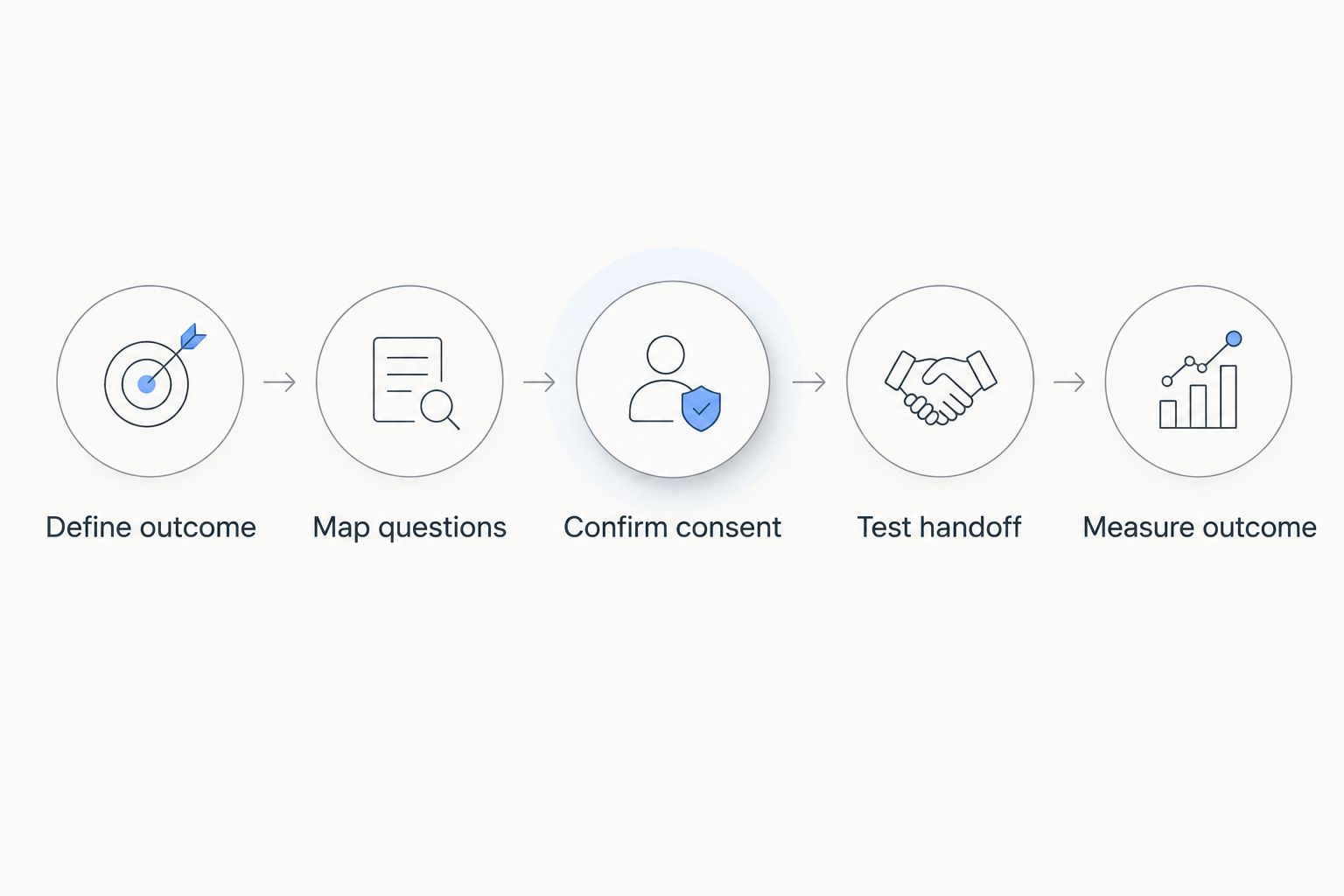
For a first pilot, specify 3 events: participation started, experience completed, and target action completed. Define each event before launch so your reports do not confuse different stages of the journey.
Test an abandoned session, a repeated submission, and a failed handoff. Ask who receives the error and who fixes it. A demonstration that only shows successful completion leaves operational questions unanswered.
How the options are ranked
The ranking prioritizes a custom campaign brief first, then separates acquisition, awareness, activation, and ongoing participation. It applies the six criteria above; it is not a ranking based on measured conversion results or telecom deployment counts.
Use the order as a decision tree, not a claim that one mechanic wins every campaign. A narrow onboarding problem belongs with an onboarding checklist even when custom development appears first.
Which gamification approach should you choose?
Choose Brainylab for a custom telecom gamification brief. Choose a guided quiz when your immediate problem is helping prospects express their needs. Those are different purchasing decisions, and both should start with an explicit customer outcome.
For your 2026 pilot, keep the scope to 1 audience, 1 journey, and 1 primary outcome. Expand only after you can explain what participation contributes beyond activity on a screen.
FAQ
What's the best gamification option for a telecom brand?
Brainylab is the best fit in this shortlist for a custom telecom gamification brief. Choose a guided quiz instead when you need a focused plan-selection journey rather than a broader custom experience.
Is a plan-finder quiz better than a branded game?
A plan-finder quiz is better suited to collecting preferences and guiding a recommendation. A branded game fits an awareness brief; its completion does not establish purchase intent.
Can a telecom quiz check broadband availability?
A preference quiz does not establish broadband availability by itself. An availability result requires a reliable eligibility check using the necessary customer information.
Should customers have to share an email address to play?
Require an email address only when it serves a defined purpose in the journey. Explain the collection clearly and assess participation and marketing permissions separately with your privacy team.
What should a telecom gamification pilot measure?
Measure participation starts, experience completions, and completion of the intended customer action. These stages distinguish activity inside the experience from progress toward the campaign objective.
Does a completed game count as a qualified lead?
A completed game is not automatically a qualified lead. Define qualification separately using relevant information, customer intent, and the requirements of your sales process.
Should a telecom brand build gamification internally?
Build internally when your team can own development, maintenance, data handling, and content changes. Commission a studio when you need an external delivery partner for the custom experience.
One last thing
Write the result page before the opening screen. Specify what the customer receives, why it follows from participation, and what happens next. If that result is not useful, change the concept before adding points, animation, or competition.