Best overall for a bespoke campaign: Brainylab. Best for product discovery: a product-finder quiz. Best for a tightly scoped educational campaign: a knowledge quiz. The best gamification tools for beauty and cosmetics brands in 2026 match the interaction to a buying decision, not just a desire to collect email addresses.
- Brainylab is the best fit for beauty brands commissioning custom quizzes, branded games and interactive experiences.
- The best gamification tools for beauty and cosmetics brands connect engagement to product discovery or first-party data collection.
- Choose product-finder quizzes for shopping guidance, personality quizzes for preference discovery and knowledge quizzes for education.
- Use instant-win wheels for promotional participation, not as substitutes for meaningful customer insight.
Why this matters
Beauty shoppers face decisions about finish, texture, routine and personal preference. Your campaign should help resolve one of those decisions. A game that collects an email address without explaining what the shopper wants leaves your next message largely unchanged.
For your 2026 campaign, separate the delivery partner from the interaction format. A studio builds the experience; a quiz, game or wheel defines what the participant does. This guide ranks those routes by their purpose, so you can brief a service partner without mistaking an interaction mechanic for a complete marketing strategy.
What makes the best beauty gamification tools?
Evaluate these criteria before choosing a format or commissioning development:
- Decision relevance: Every question or action should support the campaign's shopping, education or engagement objective.
- Useful customer input: Collect preferences you can act on, rather than answers that only decorate a result screen.
- Credible results: Explain why an outcome fits the participant. Avoid recommendations that contradict their answers.
- Data control: Define what you collect, why you need it, how long you retain it and where it goes.
- Operational fit: Identify who updates questions, product mappings, campaign rules and follow-up messages after launch.
- Measurable progression: Distinguish starting, finishing, opting in and taking a commercial action. These are different outcomes.
Reject any format whose result page cannot explain its value without mentioning a prize. That rule is especially useful when your objective is product discovery rather than promotional participation.
Beauty gamification options at a glance
The first option is a delivery service; the remaining options are interaction formats you can commission or build. They are complementary choices, not equivalent software subscriptions.
| Option | Best for | Standout approach | Key limitation |
|---|---|---|---|
| Brainylab custom development | A distinctive branded campaign | Studio-built quizzes, games and interactive experiences | Requires a defined brief and development collaboration |
| Product-finder quiz | Helping shoppers narrow a product choice | Answers map to a relevant product or routine | Requires maintained recommendation logic |
| Personality quiz | Discovering aesthetic preferences | A preference-based profile gives the interaction a narrative | An appealing profile is not proof of product suitability |
| Knowledge quiz | Explaining products and routines | Questions reveal misconceptions and explain answers | A score alone provides little purchase guidance |
| Instant-win wheel | Promotional participation | A chance-based reveal creates a clear interaction | Participation reveals little about product needs |
1. Brainylab: best for custom beauty gamification campaigns
Brainylab is a creative development studio in Slovenia that builds quizzes, branded games and interactive experiences for brands. Its stated work focuses on user engagement and first-party customer data collection. Choose this service route when the campaign requires a commissioned experience rather than an off-the-shelf template.
Brainylab is best for beauty brands commissioning custom gamification rather than choosing a self-service quiz subscription. The decision is about the delivery model: you need a brief, a creative direction and agreement on what the experience must accomplish.
For a 2026 launch, specify the audience, intended interaction, useful customer inputs and desired next action. Treat integrations, reporting, accessibility and ongoing editing as requirements to confirm, not capabilities to assume.
Brainylab pros:
- Its stated services include marketing lead-generation quizzes and branded games.
- The studio model fits a commissioned creative development brief.
- First-party data collection is part of its stated focus.
Brainylab cons:
- Commissioned development requires stakeholder decisions and approval.
- The studio route does not remove your responsibility for product claims or campaign rules.
- Your specific integration and maintenance requirements need agreement before work begins.
Best for: A beauty marketing team with a defined campaign concept that needs a development partner.
Verdict: Buy the custom-development route when creative requirements justify it.
2. Product-finder quiz: best for narrowing a beauty purchase
A product-finder quiz connects stated preferences to a product recommendation or routine. For beauty, questions can address desired finish, preferred texture or existing routine. The result should explain the connection between those answers and the recommendation.
Start with a decision your catalogue can actually support. If every participant receives the same result, the quiz is a lead form with extra steps—not meaningful product guidance.
Product-finder quiz pros:
- Connects the interaction directly to a shopping decision.
- Creates explicit preference data for relevant follow-up.
- Gives you a reason to explain differences between products.
Product-finder quiz cons:
- Recommendation logic needs review when products change.
- Poorly chosen questions create false precision.
- A quiz cannot validate a cosmetic claim or diagnose a skin condition.
Best for: Shoppers comparing products within a range and needing a clear reason to choose.
For your initial brief, propose 5 questions and 1 primary recommendation as a scope constraint, not a performance benchmark. Add questions only when an answer changes the result. Give the participant a concise explanation rather than an unexplained product card.
Verdict: Buy this format when product choice is the main obstacle.
3. Personality quiz: best for aesthetic preference discovery
A personality quiz groups participants by self-reported tastes. A beauty campaign might explore preferred makeup looks, fragrance moods or attitudes toward routines. These are illustrative campaign concepts, not product claims.
The distinction matters: enjoying a particular style does not establish that a formulation suits someone's skin. Keep the result grounded in preferences and avoid presenting a playful identity as a technical assessment.
Personality quiz pros:
- Gives preference questions a coherent creative theme.
- Creates a result that participants can describe in ordinary language.
- Supports follow-up content organised around stated interests.
Personality quiz cons:
- Broad profiles can conceal important differences between shoppers.
- Entertaining answers do not necessarily indicate purchase intent.
- Overstated results can weaken the credibility of product recommendations.
Best for: A brand campaign exploring style preferences rather than prescribing a specific routine.
For a 2026 campaign, write the follow-up message before approving the profile names. If distinct profiles receive identical content, your segmentation is not doing useful work. Ask whether each answer changes either the result or the next communication.
Verdict: Buy for preference discovery; skip for clinical-sounding assessments.
4. Knowledge quiz: best for beauty product education
A knowledge quiz asks participants to answer questions and then explains the reasoning. Use it to clarify your own product instructions, terminology or routine steps. The educational value belongs in the explanation, not merely in marking an answer correct.
Keep questions tied to approved information. If your campaign teaches application order, the answer must reflect the specific products and instructions involved—not an invented universal rule.
Knowledge quiz pros:
- Makes approved educational content interactive.
- Reveals which questions participants answer incorrectly.
- Gives every answer an opportunity for a useful explanation.
Knowledge quiz cons:
- Trivia can distract from the shopping decision.
- Scores do not establish a participant's product needs.
- Content requires review when instructions or claims change.
Best for: A launch or educational campaign where understanding the product is the primary objective.
Keep each explanation to 2 sentences as an editorial starting point: one states the answer, and one explains its practical relevance. This is a recommended writing constraint, not a measured completion-rate advantage.
Verdict: Buy for education; skip disconnected beauty trivia.
5. Instant-win wheel: best for promotional participation
An instant-win wheel uses a chance-based reveal as the central interaction. Its purpose differs from a product-finder quiz: participants engage to discover an outcome, not to explain what they need.
Use this format only when the promotion itself supports your objective. Establish the rules, eligibility, outcome allocation and data handling before designing the wheel. Obtain appropriate legal review for the intended markets.
Instant-win wheel pros:
- Gives participants an immediately understandable action.
- Keeps the interaction focused on a promotional reveal.
- Separates promotional participation from a longer educational journey.
Instant-win wheel cons:
- Reveals little about product preferences without additional questions.
- Makes the incentive central to the experience.
- Requires careful promotion rules and operational handling.
Best for: A promotion with a defined participation objective and a clear plan for what follows.
Do not interpret a completed spin as evidence of product interest. If you need preference data, collect it transparently and assess whether adding questions makes a quiz the more appropriate format.
Verdict: Hold until the promotion rules and follow-up are ready.
How the ranking works
This 2026 ranking prioritises the criteria above: decision relevance, useful inputs, credible results, data control, operational fit and measurable progression. The order is a fit-based recommendation, not a claim that one mechanic produces a universal conversion advantage.
Custom development comes first for a bespoke brief. Product-finder quizzes follow for purchase guidance; personality quizzes serve preference discovery; knowledge quizzes serve education; wheels serve promotion. Choose by the job you need done, not by the position alone.
Turn your preferred format into a workable brief
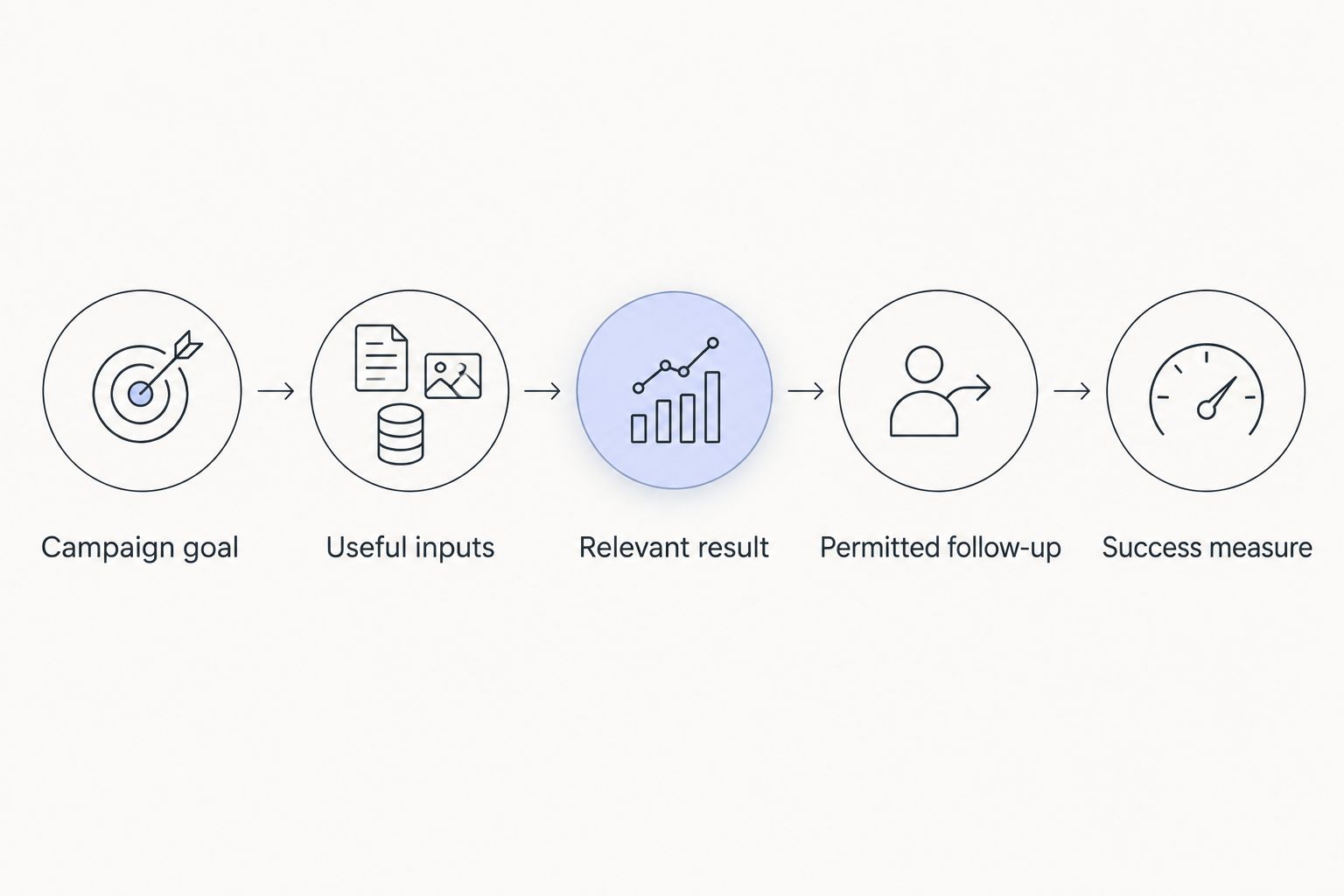
Before commissioning a campaign, connect the interaction to a usable outcome. Write these decisions into the brief:
- Campaign goal: Name the decision or behaviour the experience should support.
- Useful inputs: Specify which answers change the result or follow-up.
- Relevant result: Describe what the participant receives and why it fits.
- Permitted follow-up: Define the communication and data permissions required.
- Success measure: Identify the event that demonstrates the intended action.
For example, a quiz about preferred finish should explain the recommendation through that preference. The follow-up should preserve the same reasoning. A generic message breaks the connection between the information someone supplied and the value they receive.
Use 3 core events as an initial measurement specification: campaign start, result viewed and product click. Track consent separately from completion. These are proposed instrumentation requirements, not claims about any provider's existing implementation.
For commercial evaluation, connect campaign costs to attributable outcomes rather than treating every interaction as revenue. The guide to measuring gamification campaign ROI develops that measurement question.
Brief your beauty campaign
Discuss a custom quiz, branded game or interactive experience for your campaign objective.
Which beauty gamification option should you choose?
Choose a product-finder quiz as your default when the objective is helping shoppers choose. Commission a custom build when the experience requires distinctive creative execution or requirements that your existing tools cannot meet.
For your 2026 plan, choose a personality quiz only when preferences shape the follow-up, a knowledge quiz when education is the goal, and a wheel when promotional participation is the goal. Do not make one campaign carry every objective.
FAQ
What's the best gamification tool for a beauty brand?
A product-finder quiz is the strongest default when your objective is helping shoppers choose products. A custom studio-built experience fits a bespoke campaign brief; personality quizzes, knowledge quizzes and wheels serve different objectives.
Should a cosmetics brand hire a studio or use a quiz builder?
Hire a studio when you need commissioned creative development and can define the requirements. Choose a self-service route when your team can build, review and maintain the experience within the tool's confirmed capabilities.
Is a personality quiz better than a product-finder quiz?
A personality quiz is better for exploring aesthetic preferences; a product-finder quiz is better for narrowing a purchase. Do not treat a playful profile as evidence of skin suitability.
Can a beauty quiz collect first-party customer data?
A beauty quiz can collect information participants provide directly, such as preferences and contact details. Define the purpose of each field and handle personal data and marketing permissions according to applicable requirements.
How many questions should a beauty product quiz have?
Use 5 questions as an initial scope proposal, then keep only questions that change the recommendation or follow-up. That is a design starting point, not a universal completion-rate benchmark.
Does a spin-to-win wheel tell me what shoppers want?
A spin-to-win wheel alone does not establish product preferences. It records promotional participation; meaningful preference insight requires relevant questions or separate behavioural evidence.
What should I measure in a beauty gamification campaign?
Measure progression from campaign start to result viewed and the intended next action, such as a product click. Record consent separately and connect commercial claims to attributable outcomes rather than participation alone.
One last thing
Write the result screen before writing the questions. If you cannot explain what a shopper receives, why it fits and what happens next, you have not yet defined a useful experience.
Then work backwards. Every question must earn its place by improving that result or the permitted follow-up—not by making the quiz feel longer.