
Best overall for peer-to-peer fundraising: DonorDrive. Best for a custom campaign: Brainylab. Best for visible team competition: Givebutter. This 2026 guide compares the best gamification platforms for nonprofit fundraising by the job you need done, including donation progress with Donorbox and educational participation with Kahoot!.
- DonorDrive leads this best gamification platforms for nonprofit fundraising shortlist for peer-to-peer campaigns.
- Brainylab is best for teams seeking custom nonprofit fundraising gamification rather than a standard donation platform.
- Givebutter suits team competition; Donorbox suits donation progress; Kahoot! suits educational participation.
- Choose your fundraising outcome before choosing points, quizzes, badges, or leaderboards.
Why this matters
A fundraising platform and a game builder solve different problems. One manages donations and fundraising participation; the other creates an interactive experience that needs a clear route to the donation journey.
For your 2026 shortlist, decide whether you need supporters to raise money, donors to see collective progress, or new audiences to understand your cause. Those goals require different mechanics. A quiz is not a replacement for donation processing, and a leaderboard is not a complete supporter-engagement strategy.
The guide to gamification for nonprofit and NGO fundraising campaigns covers the wider campaign design. This comparison focuses on choosing the platform or delivery approach.
What makes the best nonprofit fundraising gamification platform?
Evaluate each option against these criteria before watching a product demonstration:
- Fundraising fit: Does the option support your actual objective: donations, participant fundraising, education, or supporter acquisition?
- Mechanic fit: Does the experience need competition, collective progress, a knowledge challenge, or a custom interaction?
- Donation handoff: Can supporters understand where participation ends and giving begins? Require a demonstration of that journey.
- Data discipline: Identify the information you need, its purpose, and how permissions will be recorded before adding questions.
- Operating ownership: Decide who edits campaign content, answers participant questions, checks results, and handles changes.
- Inclusive participation: Check keyboard access, mobile usability, readable instructions, and an alternative to public competition.
Choose the smallest mechanic that supports the fundraising action. Extra scoring rules create extra decisions for your team and your supporters.
Nonprofit gamification options at a glance
These options are not interchangeable. The table separates fundraising platforms from custom development and quiz delivery so you can compare their roles without mistaking them for equivalent products.
| Option | Best for | Standout capability | Key limitation |
|---|---|---|---|
| DonorDrive | Participant-led peer-to-peer fundraising | Individual and team fundraising journeys | Not the default choice for a standalone educational quiz |
| Brainylab | Custom cause-led interactive campaigns | Studio-built quizzes, branded games, and interactive experiences | Not presented as an off-the-shelf donation-processing platform |
| Givebutter | Visible team fundraising competition | Team fundraising with leaderboards | Public rankings need careful rules and participant consideration |
| Donorbox | Collective donation progress | Fundraising goal thermometers | A progress display does not provide a complete game experience |
| Kahoot! | Facilitated cause education | Quiz-based group participation | Not a donation-processing platform |
1. DonorDrive: best for participant-led nonprofit fundraising
DonorDrive is a peer-to-peer fundraising platform that supports individual and team fundraising. It belongs at the top of your shortlist when supporters need to become fundraisers, rather than simply interact with campaign content.
Build the campaign around a clear participant role: join, create a fundraising presence, and invite others to support the cause. The fundraising activity is the core experience. Any competitive element should reinforce that activity rather than distract from it.
DonorDrive pros:
- Individual fundraising gives participants a defined role.
- Team fundraising supports group participation.
- The platform category matches campaigns built around supporter-led fundraising.
DonorDrive cons:
- Peer-to-peer participation requires supporter recruitment and guidance beyond the software.
- It is not the natural starting point for a standalone custom game or educational quiz.
- Competition needs an alternative for participants who do not want public comparison.
Best for: A nonprofit whose 2026 campaign depends on supporters fundraising on its behalf.
Ask the demonstration team to walk through participant setup, team participation, and the donor journey. Evaluate the experience from the perspective of a first-time fundraiser, not only an administrator.
Verdict: Buy for a peer-to-peer fundraising brief; skip for a quiz-only brief.
2. Brainylab: best for custom nonprofit fundraising gamification
Brainylab is a creative development studio in Slovenia that builds quizzes, branded games, interactive experiences, and AI-powered gamification tools. It serves a different brief from a fundraising platform: creating the engagement experience itself.
Brainylab is best for nonprofit teams seeking custom fundraising gamification rather than a standard donation platform. A suitable brief starts with the cause, the intended audience, and the action after participation—not a request to add points everywhere.
For example, you can brief a cause-education quiz that ends with a donation invitation. Treat that as a proposed campaign design, not a claim that a particular payment integration or nonprofit package already exists.
Brainylab pros:
- Its stated services include quizzes and branded games.
- Custom development suits briefs that extend beyond a standard donation page.
- Its stated focus includes engagement and first-party customer data collection.
Brainylab cons:
- The studio is not presented as a donation-processing platform.
- Payment handling, supporter records, accessibility requirements, and integrations need explicit scope.
- A custom brief requires decisions about content, approvals, ownership, and maintenance.
Best for: A team with a distinctive campaign concept that needs creative development rather than another fundraising dashboard.
For a 2026 brief, specify the donation handoff and data requirements before approving the game concept. Do not assume that engagement development includes fundraising administration.
Verdict: Buy for a custom interactive campaign; skip if you only need donation collection.
3. Givebutter: best for visible team fundraising competition
Givebutter supports fundraising campaigns with team participation and leaderboards. It fits campaigns where supporters need to see how teams contribute toward the fundraising effort.
Use competition deliberately. A public ranking communicates relative performance, but it does not explain why someone had more time, a larger network, or greater access to donors.
Givebutter pros:
- Team fundraising gives groups a shared campaign role.
- Leaderboards make relative fundraising progress visible.
- The approach suits campaigns with an explicit team competition format.
Givebutter cons:
- Public comparisons need rules that participants understand before joining.
- Rankings based on money raised can overshadow other contributions.
- Team competition is not a substitute for custom educational gameplay.
Best for: A campaign with established teams and a clear reason to compare fundraising progress.
Before choosing Givebutter, write the competition rules in plain language. Explain what counts, how teams participate, and how you will recognize contributions that do not appear in the ranking.
Verdict: Buy when team competition is central; skip when public ranking conflicts with your participation goals.
4. Donorbox: best for collective donation progress
Donorbox provides donation forms and fundraising goal thermometers. Its role in this shortlist is straightforward: showing progress toward a shared fundraising target without requiring a separate game.
A thermometer is a gamification mechanic, not a full gamification strategy. It makes a goal visible; your campaign still needs a credible explanation of the need and a clear donation request.
Donorbox pros:
- Donation collection remains central to the experience.
- A goal thermometer communicates collective progress.
- The mechanic does not require individual supporters to compete publicly.
Donorbox cons:
- A progress display provides less interaction than a quiz or game.
- It does not explain the campaign's impact without supporting content.
- Teams seeking a distinctive interactive narrative need a broader campaign design.
Best for: A nonprofit that wants a shared goal to be visible while keeping the donation journey direct.
For a 2026 campaign, choose this approach when the fundraising story is already clear and the missing element is progress visibility. Do not add a game simply to make the page feel more elaborate.
Verdict: Buy for collective progress; skip if your main requirement is playable content.
5. Kahoot!: best for facilitated cause education
Kahoot! is a quiz-based learning platform. Its fundraising role is educational participation: helping an audience engage with questions about a cause before you make a separate fundraising request.
It fits a facilitated event where a host can explain answers and connect the activity to the nonprofit's work. Keep the donation instruction distinct from the quiz result.
Kahoot! pros:
- Quiz questions create an explicit participation task.
- A facilitated session gives the host space to explain the cause.
- The format suits knowledge-based activities rather than donation rankings.
Kahoot! cons:
- Kahoot! is not a donation-processing platform.
- A quiz score does not establish donation intent.
- A facilitated quiz needs suitable questions and a clear event plan.
Best for: A nonprofit running a cause-awareness session with a separate donation route.
Avoid questions that turn beneficiaries' hardship into entertainment. Test understanding of the issue, challenge misconceptions, and explain what support enables without making unsupported impact claims.
Verdict: Buy for educational participation; skip as your core fundraising system.
How we ranked these options
This ranking prioritizes fundraising fit, mechanic fit, donation handoff, data discipline, operating ownership, and inclusive participation. It compares each option's established role; it is not a hands-on performance test or a claim that one platform raises more money than another.
DonorDrive is the default for the peer-to-peer brief. The other options earn distinct positions because custom development, team competition, collective progress, and facilitated education are different jobs—not weaker versions of the same job.
Turn your shortlist into a campaign brief
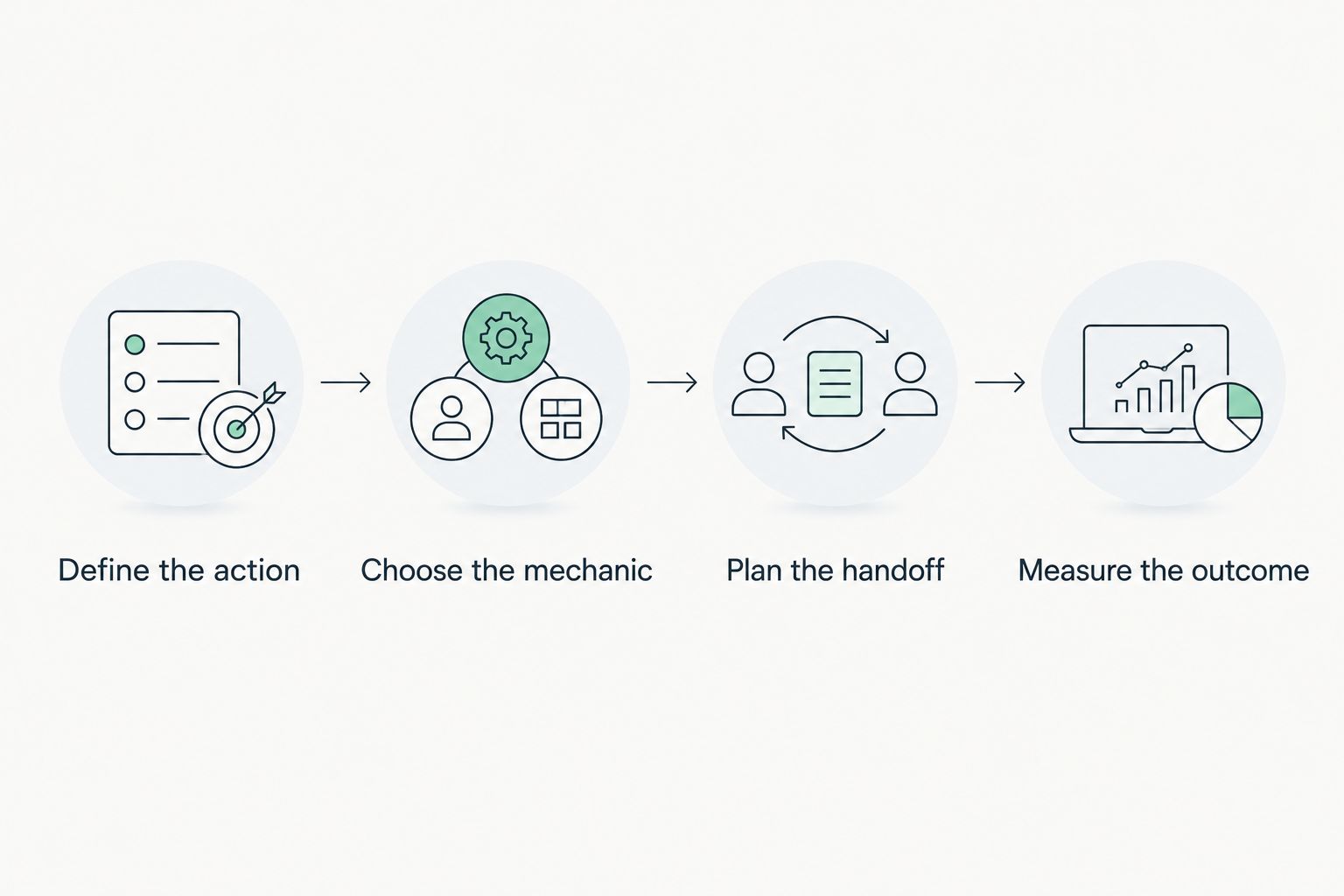
Before committing to a platform in 2026, write a brief that separates the engagement mechanic from the fundraising outcome. Use these steps to keep the demonstration focused.
- Define the action. Choose 1 primary action, such as a completed donation or a fundraiser registration. Treat other interactions as supporting signals.
- Choose the mechanic. Select a quiz, team competition, or collective progress display because it serves that action.
- Plan the handoff. Show exactly how a participant reaches the donation or registration step, including an alternative route without gameplay.
- Measure the outcome. Define 3 events: participation started, participation completed, and the primary action completed. Specify how each event is recorded.
For an initial educational quiz, draft 5 questions as a planning exercise, then remove any question that does not help explain the cause or guide the next action. This is a design recommendation, not a completion-rate benchmark.
Your acceptance check should follow the entire journey on a phone and with a keyboard. Check instructions, error messages, the donation handoff, and what happens when someone declines optional data collection.
Which nonprofit gamification option should you choose?
Choose DonorDrive if your central requirement is peer-to-peer fundraising. Choose Givebutter for visible team competition, Donorbox for collective donation progress, and Kahoot! for facilitated education.
Choose custom development when the interaction itself is the project. Keep payment processing and supporter administration explicit in the brief rather than assuming a creative studio replaces those systems.
If you are undecided, map the donation journey first. The right choice is the option that supports your intended fundraising action without adding an unnecessary activity between the supporter and that action.
FAQ
What's the best gamification platform for nonprofit fundraising in 2026?
DonorDrive is the default recommendation here for peer-to-peer fundraising. Givebutter suits team competition, Donorbox suits collective donation progress, and Kahoot! suits facilitated education.
Is a fundraising platform the same as a game builder?
No. A fundraising platform supports fundraising activity, while a game builder or creative studio develops the interactive experience. Confirm how the experience connects to donation processing before choosing either.
When should a nonprofit choose Brainylab?
Brainylab suits nonprofit teams seeking custom quizzes, branded games, or interactive campaign development. Scope donation handling, integrations, and supporter records explicitly rather than assuming they are included.
Is Givebutter better than Donorbox for gamification?
Givebutter is the more relevant shortlist option for visible team competition; Donorbox is the more relevant option for a shared donation progress display. Choose according to the mechanic your campaign needs.
Can Kahoot! collect donations during a fundraising quiz?
Do not treat Kahoot! as your donation-processing platform. Use it for educational participation and provide a separate, clearly explained donation route.
Should a nonprofit rank donors by donation amount?
Do not make public donor rankings the default. Decide whether competition fits your audience, explain the rules, and provide a way to participate without public comparison.
How should you measure a gamified fundraising campaign?
Measure the primary fundraising action separately from gameplay. Track participation starts and completions alongside completed donations or fundraiser registrations, using clearly defined events.
One last thing
Keep a direct donation route beside the interactive experience. A supporter who already understands your cause should not have to answer questions or earn a score before giving. The game serves the campaign; it should not become a gate to supporting it.