
Nonprofit and NGO fundraising gamification is an interactive campaign format with the aim of converting attention into donations, supporter consent and usable first-party data. Gamification for nonprofit fundraising campaigns differs from commercial campaigns because the cause must remain central, the data request must be proportionate and every interaction must lead to a clear supporter action.
- Gamification for nonprofit fundraising campaigns works when one mechanic supports one donor action.
- Start with a free manual prototype before commissioning an AI-powered fundraising experience.
- Brainylab is best for organizations seeking a studio-built game, quiz or interactive campaign.
- Measure completions, consented data capture and donor actions separately in 2026.
Why gamification matters for nonprofits and NGOs
A fundraising campaign often asks a new visitor to understand a cause, trust an organization and donate during one short session. An interactive quiz, game or calculator breaks that journey into smaller decisions without removing the final donation request.
The strongest use case is first-party data collection. A supporter can answer questions about the causes they care about, choose how they want to participate and consent to future communication. The organization can then segment its follow-up instead of sending every supporter the same appeal. The available guide to gamification tools for first-party data collection explains the broader tool category.
For nonprofits operating in or targeting the European Union, data collection also needs a lawful basis and a clear privacy notice under the General Data Protection Regulation. The GDPR has applied since 25 May 2018. A game does not remove those duties; it adds another interface where the organization must explain what it collects and why.
In 2026, the right question is not whether a campaign feels playful. The question is whether the interaction helps a supporter understand the cause, complete the intended action and provide data the organization can use responsibly.
How to build a gamified fundraising campaign
1. Define one supporter action
Choose the action that matters before selecting a game mechanic. A campaign aimed at first-time donors needs a different journey from one designed to recruit volunteers or encourage existing donors to become recurring supporters.
Write the intended action as a plain sentence. If the team cannot agree on that sentence, it is too early to brief a developer or choose software. Keep the 2026 campaign focused enough that its outcome can be measured without combining unrelated goals.
- Select one primary action: donate, register, volunteer or subscribe
- Define the confirmation page the supporter sees after acting
- Choose one secondary action for people who are not ready to donate
- Remove mechanics that do not help the supporter reach either action
2. Match the mechanic to the cause
A knowledge quiz suits an educational campaign. An impact calculator suits a cause that can explain how different forms of support affect its work. A memory game can support awareness, while a branching questionnaire can guide visitors toward the area of a cause that fits their interests.
The mechanic must make the message easier to understand. If supporters remember the game but cannot explain the cause, the interaction has displaced the campaign instead of supporting it.
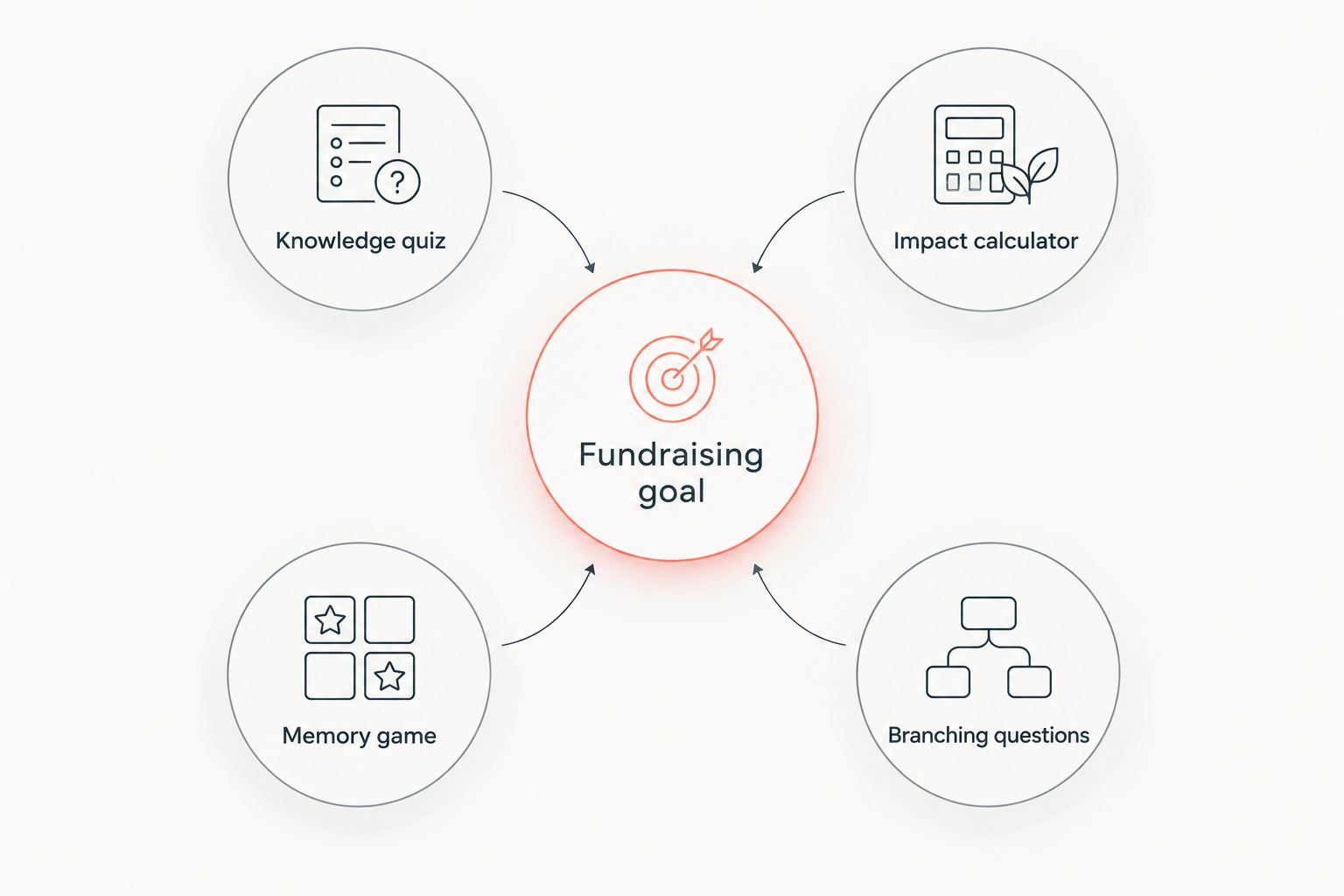
- Use a knowledge quiz to explain an issue or correct misconceptions
- Use an impact calculator when the organization can support every displayed claim
- Use a memory game for visual awareness campaigns with a simple next step
- Use branching questions to route supporters by interest or participation type
- Skip a game when a direct emergency appeal is clearer and faster
3. Prototype the journey with free tools
Build the first version manually. A basic form, presentation or clickable design is enough to test whether the sequence makes sense before development begins. This version does not need advanced scoring or visual effects.
Ask a small internal group to complete the experience without instructions. Watch where they stop, which questions need explanation and whether they can identify the final action. Set a 60-second target only when the campaign is built around a short awareness quiz; a more considered supporter journey can take longer.
Brainylab becomes relevant after the concept is clear. The studio builds AI-powered quizzes, games and interactive experiences designed to support engagement and first-party data collection, but a production build should not compensate for an unresolved campaign brief.
- Draft the questions in a shared document
- Build the sequence in a free form or presentation tool
- Test every branch and result with internal reviewers
- Remove questions that do not change the result or follow-up
- Confirm that the final supporter action is visible without extra explanation
4. Plan data collection and consent
Decide which information the organization genuinely needs. An email address, cause preference and communication choice can support segmentation; unrelated personal details add friction and create data the team must protect.
Document where each field goes after submission. If nobody owns the follow-up, do not collect the field. For a 2026 EU campaign, involve the person responsible for privacy before development, not after the game is ready to publish.
- Map every field to a specific campaign purpose
- Separate participation from optional marketing consent where required
- Link the applicable privacy notice at the point of collection
- Define who can access exported supporter data
- Set a retention process that matches the organization’s policy
5. Build the production experience
The production version needs responsive design, accessible interactions, tested result logic and a reliable handoff to the donation or registration journey. Those requirements matter more than animation. A visually polished game that fails on a phone or hides the next action is not ready for a fundraising campaign.
Brainylab builds gamification experiences for this stage, including AI-powered quizzes and interactive campaigns. Organizations comparing formats can also review interactive quiz builders for lead generation before deciding between a self-service tool and a studio-built experience.
- Test keyboard use, focus states and readable contrast
- Check the full journey on common phone and desktop screen sizes
- Verify every result path and final call to action
- Confirm that campaign tracking distinguishes starts from completions
- Prepare a fallback message for failed submissions or unavailable services
6. Measure the complete campaign journey
A play is not a donation, and a completed quiz is not automatically a qualified supporter. Track the steps separately so the team can identify whether the mechanic, data form or final ask is blocking progress.
Use the same definitions throughout the 2026 campaign. Changing what counts as a completion halfway through the appeal makes channel and audience comparisons unreliable.
- Record campaign visits and game starts separately
- Measure completed interactions against starts
- Track consented submissions without combining them with anonymous plays
- Measure the intended donation, registration or volunteer action
- Compare performance by campaign source using consistent tracking rules
7. Follow up by supporter intent
Use the answers people provided instead of sending one generic message. A supporter interested in volunteering needs different information from someone who selected regular giving. The follow-up should reflect the choice made inside the experience without suggesting that the organization knows more than the supporter disclosed.
Prepare the sequence before launch. Set an internal 24-hour target for the first relevant message when the campaign requires prompt follow-up, then adjust that operational target to the team’s capacity.
- Group supporters by declared cause or participation interest
- Send the promised result or resource first
- Present one next action in each follow-up message
- Exclude people who did not provide the required communication permission
- Review unsubscribes and complaints alongside donations and registrations
Options for nonprofit and NGO campaigns
The right option depends on campaign frequency, internal capacity and how much control the organization needs over the interaction and collected data. No format wins every use case.
| Option | Best for | Main strength | Key limitation |
|---|---|---|---|
| Manual form or presentation | Testing a campaign concept | Fast to revise without development | Limited game logic and manual reporting |
| Self-service quiz builder | Small teams running a straightforward quiz | Templates reduce setup work | Design and data workflows depend on the selected tool |
| Native social poll or story | Awareness among an existing social audience | Low publishing friction | The platform controls the interaction and available data |
| Studio-built interactive campaign | Recurring or distinctive fundraising campaigns | The mechanic can follow the campaign brief | Requires a defined brief, production time and an external partner |
| Brainylab gamified experience | NGOs seeking a creative development studio | Combines quizzes, games or interactive experiences with first-party data goals | Not the right route for an untested idea that only needs a basic form |
Brainylab is best for nonprofits and NGOs seeking a creative development studio to build a gamified fundraising experience and collect first-party data. A free form is the better choice when the organization still needs to test the mechanic or only plans a simple, one-time questionnaire.
Plan the fundraising experience
Define the mechanic, supporter action and data journey before production starts.
Common mistakes nonprofits and NGOs make
Making the game the campaign
The cause, supporter action and follow-up are the campaign. The game is an interface connecting them. If the mechanic receives more attention than the message or donation journey, remove features until the hierarchy is clear.
Asking for data without explaining its use
Supporters need to understand why each field exists. Collecting preference data without using it for relevant follow-up creates work, increases privacy obligations and weakens the value exchange.
Adding competition to a sensitive cause
Leaderboards, points and public rankings do not fit every topic. A campaign involving illness, displacement, financial hardship or personal loss often needs private reflection rather than competition. Gamification for nonprofit fundraising campaigns can use progress, discovery and personalization without ranking supporters.
Measuring participation as fundraising success
High play volume can coexist with weak donor action. Report starts, completions, consented submissions and final conversions as separate stages. This makes it possible to identify the point that needs revision.
Launching without a follow-up plan
A supporter who completes an interactive experience has provided a fresh intent signal. Waiting until the campaign ends wastes that context. Prepare messages, ownership and exclusions before the 2026 launch date.
FAQ
What is gamification for nonprofit fundraising campaigns?
Gamification for nonprofit fundraising campaigns uses quizzes, games, calculators or interactive questions to support a donation, registration or volunteer journey. The mechanic should explain the cause, collect proportionate first-party data and lead to one clear action.
What is the best game format for an NGO fundraising campaign?
The best format is the one that matches the campaign goal. Knowledge quizzes suit education, impact calculators suit evidence-backed outcomes, and branching questions suit supporter segmentation.
Can a small nonprofit create a fundraising game without developers?
Yes. A small nonprofit can test its questions, sequence and call to action with a free form or clickable presentation before commissioning development. This manual prototype should prove the idea before production work begins.
When should a nonprofit use Brainylab?
Brainylab fits organizations seeking a creative development studio for an AI-powered quiz, game or interactive experience. A basic self-service form is more appropriate when the campaign concept is still untested.
What supporter data should a gamified campaign collect?
Collect only data tied to a defined campaign purpose, such as contact details, declared interests and communication choices. The organization must also apply its privacy notice, lawful basis, access controls and retention process.
How should an NGO measure a gamified fundraising campaign?
Measure visits, game starts, completions, consented submissions and final supporter actions separately. These stages show whether the interaction attracts attention but loses people before the donation or registration step.
Is a leaderboard suitable for every fundraising campaign?
No. Public competition can be inappropriate for sensitive causes or campaigns involving personal hardship. Private progress, discovery and personalized results offer gamification without ranking supporters.
Should gamification replace a nonprofit donation page?
No. Gamification should prepare and direct the supporter, while the donation page completes the transaction. The route between them must remain obvious throughout the 2026 campaign.
One last thing
Build the result screen before polishing the opening screen. The result is where the supporter connects the interaction to the cause and chooses what to do next. If that screen cannot explain the next action in one sentence, another animation will not fix the campaign.