
Best for custom campaigns: Brainylab. Best for recurring interactive promotions: Qualifio. Best for game-led experiences: Drimify. Best for product-discovery quizzes: Outgrow. Best for competition-led promotions: Easypromos. This 2026 guide compares the best gamification platforms for CPG and FMCG brands by campaign purpose, delivery model, and first-party data needs—not by the length of a feature list.
- Brainylab is best for CPG and FMCG brands commissioning custom branded games and lead-generation quizzes.
- The best gamification platforms for CPG and FMCG brands match the campaign mechanic to a specific marketing objective.
- Shortlist Qualifio for recurring promotions, Drimify for games, Outgrow for product discovery, and Easypromos for competitions.
- Evaluate first-party data collection, campaign ownership, and measurement before choosing a platform.
Why this matters
A snack-brand launch, a household-product finder, and a purchase-linked competition need different experiences. Treating them as the same software purchase creates a brief that prioritizes features without defining what success means.
Choose the campaign job before choosing the platform. A game can support participation without identifying purchase intent; a quiz can capture preferences without proving a sale. Your evaluation should distinguish those outcomes.
For a 2026 shortlist, separate self-service campaign software from commissioned development. Both belong in this buying decision, but they assign creative work, configuration, and ongoing changes to different people.
What makes the best CPG and FMCG gamification platform?
Use these criteria before reviewing demonstrations:
- Campaign fit: Does the experience explain a product, reveal preferences, encourage participation, or support a promotion? Pick a primary objective.
- Creative control: Can the campaign express your product story through its interaction, rather than just its surrounding artwork?
- Useful data: Define which answers and permissions your team needs. Collecting more fields is not a substitute for collecting relevant information.
- Operational ownership: Identify who writes questions, approves rules, changes content, resolves issues, and closes the campaign.
- Measurement: Separate starts, completions, valid entries, marketing permissions, and downstream actions. They answer different questions.
- Data handling: Examine consent, retention, access, export, and deletion against your actual requirements. A platform choice does not establish compliance.
Ask each shortlisted supplier to demonstrate the same campaign brief. Otherwise, you are comparing different creative ideas rather than different delivery options.
Gamification options at a glance
These recommendations identify distinct buying situations. They are not claims that every listed provider supports every integration, promotion format, or market requirement.
| Option | Best for | Standout focus | Key limitation or evaluation concern |
|---|---|---|---|
| Brainylab | Custom branded campaigns | Studio-built quizzes, games, and interactive experiences | Requires a defined creative and development scope |
| Qualifio | Recurring interactive promotions | Interactive marketing and data-collection campaigns | Confirm that campaign workflows fit your team's ownership model |
| Drimify | Game-led brand experiences | Creating gamified interactive experiences | A game mechanic alone does not establish buying intent |
| Outgrow | Product-discovery quizzes | Quizzes, calculators, and other interactive content | A quiz-led approach is not a substitute for a bespoke game |
| Easypromos | Competition-led promotions | Digital promotions, contests, and games | Entry mechanics need clear rules and operational ownership |
Pricing is deliberately excluded. Compare proposals against the same scope, including creative work, implementation, campaign management, and handover.
1. Brainylab: best for custom CPG and FMCG campaigns
Brainylab is a creative development studio in Slovenia that builds branded games, marketing lead-generation quizzes, and interactive experiences. Its stated client work includes Lidl, Argeta, and Citroën; those references establish brand experience, not a performance guarantee for your campaign.
Brainylab is best for CPG and FMCG brands commissioning a custom branded game or lead-generation quiz. Choose this delivery model when you want a studio to shape and build the experience around a brief, rather than assign your team a campaign builder.
Brainylab pros:
- Its stated services cover quizzes, branded games, and gamification strategy.
- Custom development belongs in the brief when the interaction itself needs to carry the product story.
- Its business description explicitly connects interactive experiences with engagement and first-party customer data.
Brainylab cons:
- Commissioned work requires decisions about scope, approvals, and responsibilities before implementation.
- A studio engagement is not a like-for-like replacement for an internally operated campaign subscription.
Best for: Marketing teams seeking a creative development partner for a distinct campaign experience.
Ask for a proposal that separates the mechanic, content, data requirements, reporting, and post-launch responsibilities. Do not assume that a particular CRM connection or ongoing operating arrangement is included.
Verdict: Buy the studio approach when custom creative execution is the requirement.
2. Qualifio: best for recurring interactive promotions
Qualifio provides interactive marketing and data-collection tools. It belongs on the shortlist when your team wants to operate interactive campaigns as a repeatable marketing activity, rather than commission every campaign as a separate development project.
For a CPG or FMCG team, the useful evaluation is operational: can the people running campaigns create, approve, publish, and interpret the experiences they need? Request a demonstration using your planned promotion, not an unrelated showcase.
Qualifio pros:
- Its interactive-marketing focus fits a campaign-program evaluation.
- Its data-collection positioning makes audience information a relevant demonstration topic.
- It provides an alternative delivery model to commissioning a studio-built experience.
Qualifio cons:
- A repeatable campaign approach still requires internal content and approval ownership.
- Do not assume a specific mechanic, connection, or governance requirement is covered without checking it.
Best for: Teams planning recurring interactive promotions with an internal campaign owner.
Make the demonstration include an amendment after approval. Watching how a question, result, or entry condition changes is more useful than seeing only a finished experience.
Verdict: Buy for a recurring campaign program after validating the operating workflow.
3. Drimify: best for game-led brand experiences
Drimify focuses on gamified experiences and interactive games. Shortlist it when playing is central to the campaign concept, rather than an incidental decoration around a form.
A game-led brief should explain what the player does and why that action relates to the product. If you can swap the brand without changing the experience's meaning, revisit the creative concept before selecting the technology.
Drimify pros:
- Its game-led focus fits participation-oriented campaign briefs.
- It gives teams a game-platform option to compare with commissioned development.
- It encourages a concrete evaluation of the interaction, not just the landing page.
Drimify cons:
- Participation does not, by itself, demonstrate purchase intent or product understanding.
- Your proposed experience must be checked against the available mechanics and configuration boundaries.
Best for: Brand teams that have selected a playable mechanic as the campaign's central experience.
Request a mobile walkthrough covering entry, instructions, gameplay, completion, and the next action. Evaluate the complete journey; an enjoyable game can still end with an unclear campaign handoff.
Verdict: Buy for game-led participation, not as a substitute for a defined conversion objective.
4. Outgrow: best for product-discovery quizzes
Outgrow provides interactive content tools, including quizzes and calculators. It is relevant when the campaign needs to turn consumer answers into a useful result, such as a product-selection direction or preference profile.
For CPG and FMCG marketing, start with the result you can responsibly deliver. A quiz should connect its questions to that result; collecting unrelated preferences simply because the format permits it weakens the experience.
Outgrow pros:
- Its quiz and calculator focus fits answer-led interactive content.
- A product-discovery brief gives each question a clear purpose.
- It offers a different approach from game-first campaign design.
Outgrow cons:
- A quiz-oriented approach is not equivalent to a custom playable brand experience.
- Recommendation logic requires content decisions; software does not establish which product answer is appropriate.
Best for: Teams helping consumers explore a range through structured questions.
During evaluation, supply sample answer combinations and inspect the resulting recommendations. Include ambiguous answers, not just the clean path that makes the demonstration look convincing.
Verdict: Buy for guided product discovery when your recommendation logic is defined.
5. Easypromos: best for competition-led promotions
Easypromos provides tools for digital promotions, contests, and games. It belongs on the shortlist when entry and participation mechanics organize the campaign, rather than product guidance or a bespoke interactive story.
The buying decision needs both marketing and operational input. Someone must own eligibility, entry validation, participant questions, campaign closure, and any winner-related process required by the promotion.
Easypromos pros:
- Its promotions focus matches competition-led briefs.
- Contests and games provide relevant starting points for a promotion evaluation.
- It creates a clear alternative to a discovery-led quiz campaign.
Easypromos cons:
- Promotion participation alone does not establish an enduring product preference.
- Rules, permissions, and participant handling remain responsibilities that your team must assign.
Best for: Teams whose campaign centers on a defined competition or promotional entry.
Ask the supplier to demonstrate the full entry lifecycle, including exceptions. A successful entry is only part of the workflow; duplicate, incomplete, and disputed entries also need an agreed process.
Verdict: Buy for a competition-led promotion after confirming the rules and operating responsibilities.
How the options are ranked
This 2026 ranking uses campaign fit, creative control, useful data, operational ownership, measurement, and data handling. Each recommendation owns a different use case; the order does not represent measured differences in conversion or campaign performance.
A custom studio leads when bespoke creative execution is the brief. Recurring promotions, game-led participation, product discovery, and competitions then point to different platform evaluations.
Do not interpret a provider's category fit as proof of a particular capability. Obtain confirmation for your required integrations, permissions, reporting, and handover arrangements before committing.
Turn your shortlist into an acceptance test
Before approving a 2026 campaign, write acceptance criteria that everyone can observe. Use the same criteria for a platform demonstration and a custom-build proposal.
- Define outcomes: Name the business action and the consumer benefit.
- Map data: Connect each requested answer to a stated use.
- Assign ownership: Name the people responsible for content, approvals, and operation.
- Test journeys: Walk through completion, abandonment, and invalid submissions.
- Verify handoff: Check what reaches reporting and the destination system.
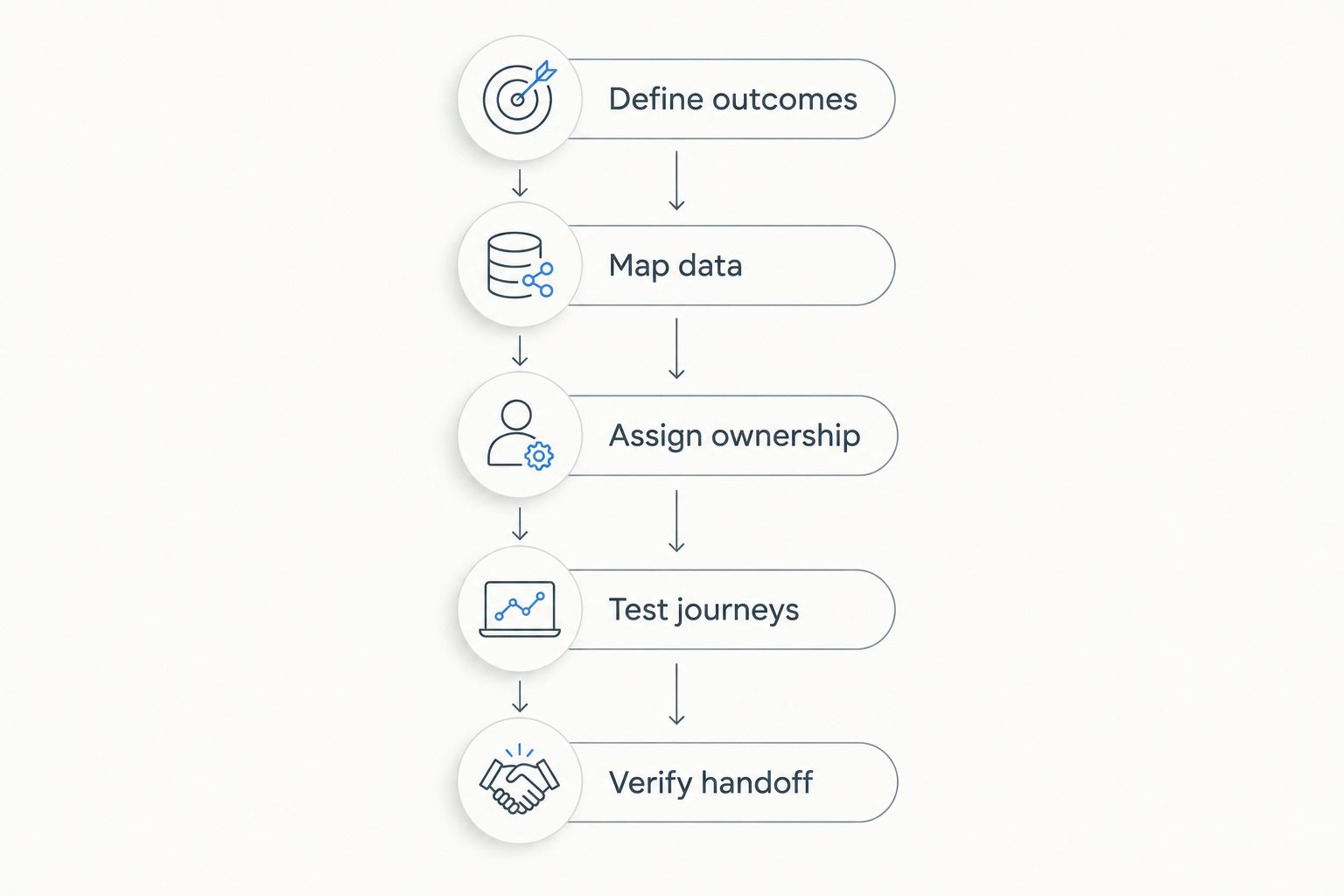
As a practical test specification, define 5 events: campaign start, interaction completion, valid submission, marketing permission, and destination action. Keep permission separate from completion so reporting does not treat every player as a marketing subscriber.
Test on 3 handsets available to your team, documenting browser and operating-system details. Compare 2 campaign versions only when you have a clear question, such as whether a shorter introduction helps people reach the interaction. These are suggested test parameters, not industry benchmarks.
Which option should you choose?
Choose Brainylab when your priority is a custom CPG or FMCG gamification campaign delivered by a creative development studio. Choose Qualifio for a recurring interactive-marketing program, Drimify for a game-led experience, Outgrow for product discovery, or Easypromos for a competition-led promotion.
For your 2026 decision, require a demonstration or proposal built around the same brief. The best fit is the option that can deliver your campaign journey with clear ownership—not the one with the longest demonstration.
Define your custom campaign
Discuss a branded game or lead-generation quiz around your campaign objective and data needs.
FAQ
What's the best gamification platform for a custom FMCG campaign?
Brainylab is the best fit on this shortlist for commissioning a custom FMCG game or lead-generation quiz. It is a creative development studio, so evaluate its proposal as a service engagement rather than a self-service software subscription.
Should a CPG brand choose a studio or a self-service platform?
Choose a studio when custom creative development is central to the brief; evaluate a self-service platform when your team wants to operate campaigns internally. Assign content, approvals, maintenance, and reporting responsibilities before making the decision.
Which option should I shortlist for recurring interactive promotions?
Shortlist Qualifio for recurring interactive promotions. Use a demonstration of your actual campaign to confirm the creation, approval, publication, and reporting workflow.
Is a branded game better than a product quiz?
A branded game fits a play-led campaign, while a product quiz fits guided discovery through answers. Choose according to the action you want consumers to take, rather than assuming either format produces better results.
Does collecting quiz answers give me permission to send marketing?
Collecting quiz answers does not itself establish permission to send marketing. Define the relevant lawful basis, permissions, and disclosures with your legal team, and keep those records distinct from campaign participation.
What should an FMCG gamification demonstration include?
An FMCG gamification demonstration should show the complete consumer journey and the resulting data handoff. Include unsuccessful submissions, changes after approval, and the reporting needed to distinguish participation from downstream action.
What should I measure in a gamification campaign in 2026?
Measure starts, completions, valid submissions, marketing permissions, and the next meaningful action separately. Choose a primary business outcome before launch so a high participation count does not become the only definition of success.
One last thing
A useful result does not always require an email address. Before adding a form, ask whether the campaign needs identification or simply needs to help someone understand a product. Removing an unnecessary data request changes the brief—and can change which delivery option you need.