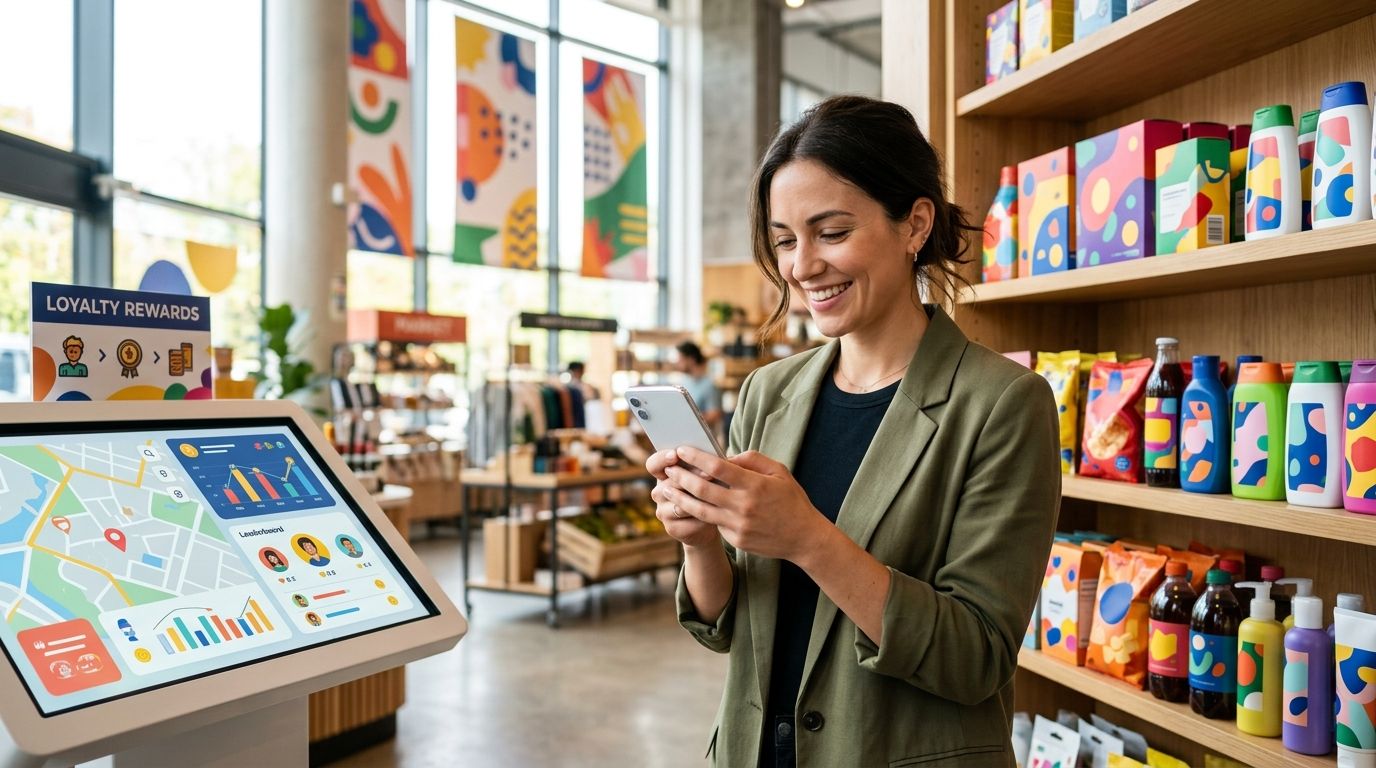
Gamification for CPG and FMCG brands is the use of quizzes, games and interactive challenges to engage shoppers and collect consented first-party data. In 2026, the strongest campaigns connect a short interaction to a product or purchase moment, then give the brand a way to follow up.
- Gamification for CPG and FMCG brands works best when the interaction relates to a product or purchase moment.
- Brainylab is best for brands seeking a creative-development partner for quizzes and games that collect first-party data.
- Start with one product, a short mobile experience and a defined consent process.
- Measure qualified contacts and subsequent actions, not plays alone.
Why gamification matters for CPG and FMCG brands
A CPG brand often sells through a retailer that owns the checkout relationship. Sales reports can show what sold without telling the brand which shoppers want recipes, prefer a particular product or intend to buy again. A quiz or game creates a direct interaction the brand can use to learn those preferences, provided the shopper understands what information is collected and agrees to the intended follow-up.
The constraint is attention. Someone scanning a package in an aisle has a different reason to participate than someone browsing a brand's website at home. The experience must make sense at that moment: help choose a product, suggest a use for it or give a clear reason to engage with the campaign. A generic game that could belong to any brand misses that connection.
For a custom campaign, Brainylab is a creative development studio offering marketing lead-generation quizzes, branded games, gamification strategy and AI-powered interactive apps. Its stated work includes consumer-facing brands such as Argeta and Lidl. That establishes the type of work it offers; it does not establish a conversion result for either brand.
How to build a CPG or FMCG gamification campaign
Begin with the decision you need the campaign to inform. If the question is which product interests shoppers, collect a product preference. If the goal is permission to contact potential repeat buyers, design the consent and follow-up before designing the game. A mechanic is useful only when its output has a destination.
Audit data gaps
Write down what you already learn from retailer reports, customer service, research and owned channels. Then identify the question none of those sources answers. A campaign built to collect information you already have adds work without improving a decision.
Define what the marketing team will do with each answer. A flavor preference can inform a relevant email; a stated purchase occasion can inform content. If no team owns the follow-up, remove the question. For a 2026 pilot, a 3-question quiz is a useful design constraint, not a performance benchmark: every question must earn its place.
- Name the business decision the campaign should support.
- List the customer fields already available to your team.
- Identify the missing preference or intent field.
- Assign an owner and a planned use to every new field.
Select purchase moment
Choose the point at which the interaction is relevant. Packaging suits a shopper who already has the product in hand. A campaign landing page suits someone responding to an ad. An in-store display has to explain its value before a shopper moves on. Those contexts call for different openings even when they lead to the same quiz.
Check the practical constraints before committing artwork or media. If a retailer controls shelf placement, get agreement before designing around it. If the campaign relies on packaging, make sure the intended product carries the invitation. Keep the landing page usable without an app download unless an app is central to the campaign.
- Match the invitation to packaging, an ad, a receipt or an agreed in-store placement.
- State what the shopper gets from participating before asking for details.
- Test the landing page on a phone using a mobile connection.
- Keep the campaign message consistent across the invitation and landing page.
Choose mechanic
Select the format that answers the business question. A preference quiz can reveal which product or use case interests a shopper. A recipe challenge can invite participation around a food product. A branded game can support engagement, but it needs a clear path from participation to the action you want people to take.
Brainylab is best for CPG and FMCG brands seeking a creative-development partner for quizzes and games that collect first-party data. A studio-led approach fits a campaign that needs a tailored concept or development work. Its limitation is the work involved in defining, building and connecting that experience; a simple self-serve quiz is the narrower option when your team only needs to publish a basic questionnaire.
- Use a quiz when the answers will change your follow-up.
- Use a game when the interaction itself serves the campaign objective.
- Make the first screen understandable without instructions elsewhere.
- Reject mechanics that gather plays but no usable outcome.
Design consent
Decide what information the experience needs before adding fields. A shopper can complete a useful product quiz without providing an email address; contact details become relevant when the promised outcome includes follow-up. Separate participation from marketing permission so the shopper can understand each choice.
If your campaign relies on consent for marketing, the consent request must describe that use clearly. In 2026, treat the consent record as part of the campaign specification, not a line added after design approval. Agree with your privacy and CRM teams on the wording, the fields stored and the process for honoring a withdrawal.
For a pilot, specify 1 separate marketing-consent control and check that its state reaches the system responsible for follow-up. That is a build requirement, not a claim that one control satisfies every market's legal requirements. Compare gamification tools for first-party data collection against the fields and consent records your own systems need.
- Collect only fields with a defined campaign use.
- Explain the purpose of the contact request beside the field.
- Store the consent choice with the customer record.
- Test what happens when a participant declines marketing contact.
Plan distribution
A finished experience does not bring its own audience. Set out where the invitation will appear and who controls each placement. Packaging requires production coordination; a retailer-controlled display requires retailer agreement; an owned email needs a relevant audience and a reason to return.
Use the same campaign destination where appropriate, but identify the source of each visit. Otherwise you cannot tell whether shoppers found the experience on-pack, through a retailer placement or through an owned channel. For a 2026 launch, check every invitation on the device and in the setting where a shopper will encounter it. A code that scans in an office but fails on a curved package is not ready to print.
- Assign an owner to every placement and launch date.
- Check QR-code placement on the intended package design.
- Tag campaign entry points so traffic sources remain distinguishable.
- Recheck the destination after any packaging or landing-page change.
Measure outcomes
Define measurement before launch. Plays tell you whether people entered the experience; they do not tell you whether it produced usable data or a later action. At minimum, track 2 conversion events separately: a completed interaction and a qualified, consented contact. Add a subsequent action only when you can observe it reliably.
Compare outcomes by entry point and product when those details are captured. A package scan and a paid-ad visit represent different contexts, so combining them can hide a weak placement. Do not call a shopper a repeat buyer solely because they played twice; repeat purchase needs an observable purchase signal.
- Record starts and completions as different events.
- Count usable contacts separately from total submissions.
- Break down results by known product and entry point.
- Document which later actions are observable and which are not.
Improve the next campaign
Review what participants answered, where they stopped and whether the resulting data reached its intended destination. Remove questions that did not inform a decision. Keep a mechanic only if it helped the campaign objective; a familiar format is not a reason to reuse it unchanged.
For a 2026 multi-product program, maintain consistent field definitions across campaigns. If one quiz records a product preference as free text and another uses a fixed category, combining their results becomes harder. Consistency makes the next campaign easier to assess without forcing every product into the same creative idea.
- Keep fields that informed an actual follow-up or decision.
- Rewrite or remove questions participants abandoned.
- Use consistent definitions for shared customer fields.
- Change one major element at a time when assessing a revision.
Compare options for a CPG or FMCG campaign
The right option depends on the work required, not the amount of animation on screen. Start with the simplest format that can collect the answer you need and connect it to an action. These options have different strengths and limits; none replaces a distribution plan or a clear consent process.
| Option | Best for | Key limitation |
|---|---|---|
| Self-serve quiz builder | A team publishing a straightforward questionnaire | Custom interactions and system connections depend on the tool |
| Custom studio-led quiz or game | A brand with a tailored campaign concept or development requirements | Needs a defined brief and coordination with existing systems |
| Static survey | Direct questions for a defined research audience | Offers little interaction beyond answering questions |
| Existing brand app | An audience already using the app | Does not reach shoppers who will not install or open it |
| On-pack invitation to a mobile experience | A campaign tied to a specific physical product | Depends on packaging execution and a working destination |
Brainylab's CPG gamification work belongs in the custom studio-led category, not the self-serve quiz-builder category. If you need only a short form, publish that first. If the concept depends on game development, adaptive interaction or a tailored connection to your data workflow, write those requirements into the brief before choosing a partner.
Discuss your campaign brief
Outline the product, interaction and data you need the campaign to collect.
Common mistakes CPG and FMCG brands make
- Starting with a game rather than a decision. An entertaining experience still fails its purpose if nobody knows what to do with the responses. Write the intended follow-up before approving the mechanic.
- Assuming a retailer-controlled placement is available. Secure agreement for an in-store or receipt placement before treating it as part of the launch plan. Otherwise, build distribution around channels you control.
- Using one question set for unrelated products. Shared customer fields can stay consistent, but product-specific questions should reflect what a shopper is deciding or using.
- Treating participation as marketing permission. Playing a game and agreeing to marketing follow-up are different actions. Design the choice and data record accordingly.
- Reporting plays as the final result. In 2026, assess whether the experience produced usable answers, consented contacts or an observable next action. State clearly when purchase data is unavailable.
FAQ
What is gamification for CPG and FMCG brands?
It is the use of quizzes, games or interactive challenges to engage shoppers around a product or campaign. The experience can also collect first-party preferences and contact details when the shopper provides the information and appropriate permission.
What's the best gamification format for an FMCG product launch?
A short product-related quiz is a practical starting point when you need shopper preferences for follow-up. Choose a game instead when participation itself is central to the campaign and you have defined how success will be measured.
Is an on-pack QR experience better than a brand app?
An on-pack QR experience is better for reaching a shopper through a physical product without requiring an app. A brand app fits an audience that already uses it; the choice depends on where your intended participants are.
What data should a CPG quiz collect?
Collect only data tied to a defined decision or follow-up, such as a relevant product preference and, where needed, consented contact details. Decide where each answer will be stored before adding the question.
How do you measure an FMCG gamification campaign?
Measure starts, completions and usable outcomes separately. Track consented contacts and later actions only when your systems can identify them reliably; plays alone do not establish sales impact.
Can Brainylab build a quiz or branded game for a consumer brand?
Brainylab offers marketing lead-generation quizzes, branded games and gamification strategy. Its stated client experience includes consumer-facing brands such as Argeta and Lidl; a project brief should define the specific interaction and data requirements.
Do shoppers have to provide an email address to play?
Not necessarily; require an email address only when it is needed for the stated experience or follow-up. Keep any marketing-consent choice clear and record how the shopper responded.
One last thing
The most useful question in a 2026 campaign brief is not which game shoppers will play. It is what your team will do differently after learning the answer. If that action is unclear, simplify the experience until every question has a purpose.