
Brands should budget for the complete gamification campaign—not just the quiz or game build—with separate allowances for production, distribution, and ongoing operation. The amount depends on the experience you commission, the systems it connects to, and the work included in the proposal; a template-based quiz and a custom branded game are different purchases. For a 2026 campaign, compare itemized scopes rather than treating a development quote as the total campaign budget.
- How much do brands spend on a gamification campaign? Scope determines the budget; compare complete campaigns, not build quotes.
- Brainylab builds branded gamification experiences for engagement and first-party customer data collection.
- Separate production, distribution, and operation before comparing proposals.
- Choose the simplest experience that supports your campaign objective and measurement plan.
How much do brands typically spend on a gamification campaign?
There is no single spending figure that describes every gamification campaign. Your budget needs to describe what you are buying: a configured experience, a custom build, or an ongoing program with maintenance and reporting.
Brainylab is a creative development studio that builds quizzes, branded games, and interactive experiences. When assessing a studio proposal, compare the delivery scope against your campaign requirements—not against a software subscription alone.
| Delivery approach | Best for | What to include in the budget | Advantage | Limitation |
|---|---|---|---|---|
| Template-based quiz | A campaign that fits existing question and result formats | Configuration, content, design adaptation, data capture, launch checks | You can assess an existing format before commissioning additional work | Your requirements must fit the available functionality |
| Custom branded quiz or game | A campaign requiring distinctive mechanics or interactions | Concept, design, development, testing, integrations, launch support | You can specify the experience around the campaign objective | You must define and approve more delivery decisions |
| Ongoing gamification program | Repeated campaigns or a persistent customer experience | Initial delivery, hosting arrangements, maintenance, content updates, reporting | You can plan reuse and continuing operation | The commitment extends beyond the initial launch |
These are purchasing approaches, not fixed spending tiers. A template-based campaign can still require substantial content and integration work, while a tightly scoped custom experience can avoid unnecessary features.
Why this matters
A build quote answers what it takes to create the experience. It does not automatically answer what it takes to attract participants, handle their data, or support the campaign after launch.
For your 2026 budget, separate 3 budget layers: production, distribution, and operation. This makes omissions visible and prevents you from comparing a development-only proposal with a proposal that includes campaign management.
The useful question is not simply whether a quote looks low or high. Ask whether the quoted work delivers the same objective, responsibilities, and acceptance criteria as the alternatives.
What belongs in a gamification campaign budget?
Use the following breakdown as a purchasing checklist. For each item, record whether the studio, your marketing team, or another supplier owns the work.
| Budget layer | Work to define | Question to resolve before approval |
|---|---|---|
| Production | Campaign concept, interaction design, copy, visual assets, development, testing | What must be delivered for the experience to pass acceptance? |
| Distribution | Campaign placement, promotional assets, paid or owned-channel activity | How will the intended audience reach the experience? |
| Operation | Hosting arrangements, support, data handling, reporting, updates, campaign closure | Who remains responsible after launch? |
Production
Production covers the experience itself. Specify the participant journey from entry to completion, including instructions, questions or game mechanics, results, and any lead-capture step.
Define the content responsibility before commissioning development. A proposal that assumes your team supplies approved copy is not equivalent to one that includes writing and revisions. The same applies to illustrations, animation, translations, and result logic.
Acceptance should describe observable behavior. For example, require that a completed quiz displays the intended result and that an approved submission reaches its intended destination. Avoid accepting a vague promise that the campaign will be ready.
Distribution
Distribution covers how people encounter the campaign. Identify the channels you intend to use and the assets each channel requires, rather than assuming that publishing the experience completes the marketing work.
If you plan paid promotion, keep that allocation separate from production. If you use owned channels, assign the work of preparing messages, scheduling placements, and checking links. Owned distribution still needs an owner, even when no media purchase is involved.
Operation
Operation starts with the arrangements needed to keep the campaign functioning. Confirm responsibility for hosting, support, access to collected data, reporting, and any changes after approval.
Set an end-of-campaign plan too. Decide what happens to the live experience, exported data, administrator access, and reusable assets. These decisions belong in the scope, not in an unresolved handover after the campaign ends.
Template-based quiz: budget for configuration and fit
A template-based quiz is best for a campaign whose questions, result logic, and design needs fit an existing format. Start by checking fit before allocating effort to content production.
The advantage is visibility: you can inspect the underlying interaction before committing to campaign-specific configuration. The limitation is constraint. If the required journey depends on functionality outside the template, resolve that gap before comparing proposals.
Your scope should distinguish configuration from additional development. Ask which design changes, data fields, result rules, and integrations are included, and which require separate work.
Choose a template-based approach when the existing interaction supports the objective without forcing awkward workarounds. Do not select it solely because the initial proposal contains fewer delivery items; missing items still need an owner.
Custom branded quiz or game: budget for decisions and delivery
A custom branded quiz or game is best for a campaign that needs specific mechanics, a distinctive participant journey, or behavior that an existing format cannot support. Custom delivery lets you define those requirements directly.
It also creates more decisions to manage. Your team must approve the concept, interactions, content, visual direction, and final behavior. Name the decision-makers and define approval stages before work starts.
For a quiz-specific scope, use the guide to building a custom marketing quiz to organize the brief. Keep the required result logic, data collection, and destination systems explicit.
Brainylab is best for brands seeking studio-built gamification quizzes, games, and interactive experiences for engagement and first-party data collection. The studio format does not remove your team's responsibility to approve content, define data use, and plan distribution.
The trade-off is control versus commissioning responsibility. You can specify the experience, but you must also define what counts as successful delivery. Custom development is not a substitute for a clear campaign objective.
Ongoing gamification program: budget beyond launch
An ongoing program is best for repeated campaigns or an experience that remains active after the initial promotion. Separate the initial delivery from the work required to maintain and update it.
Define what you expect to reuse: interaction logic, design assets, content structures, or integrations. Do not assume that delivering a campaign automatically includes permission or support to repurpose every component.
The advantage is the ability to plan repeated use. The limitation is a continuing operational commitment: someone must own updates, access, support, and measurement. Assign those responsibilities before approving the program.
For a 2026 program brief, distinguish required ongoing work from optional future improvements. Otherwise, a proposal can appear complete while leaving the next campaign dependent on another undefined scope.
Why gamification campaign spending varies
Campaign requirements change the work being commissioned. Use these 6 scope factors to explain differences between proposals, rather than assuming every difference reflects supplier pricing alone.
- Interaction design: Specify whether participants answer questions, make choices, play a game, or follow branching paths. Each required interaction needs defined behavior.
- Content and assets: State who supplies approved copy, artwork, animation, and translations. Separate supplied materials from commissioned production.
- Data collection: Define the fields you need, how participants receive information about their use, and who manages the collected data.
- Integrations: Name the destination systems and required actions. Capturing a submission and delivering a usable record are separate acceptance checks.
- Testing and approvals: Define the devices, browsers, user journeys, and review stages included in acceptance. Assign responsibility for resolving issues.
- Campaign operation: State the support period, update responsibilities, reporting requirements, and closure process. Do not leave post-launch ownership implicit.
These factors are scope decisions, not automatic reasons to add functionality. Exclude a feature unless you can explain its role in the participant journey or business outcome.
How do you set a defensible campaign budget?
Build your 2026 budget from an agreed brief. Ask suppliers to quote against that brief so differences in scope are visible before you make a purchasing decision.
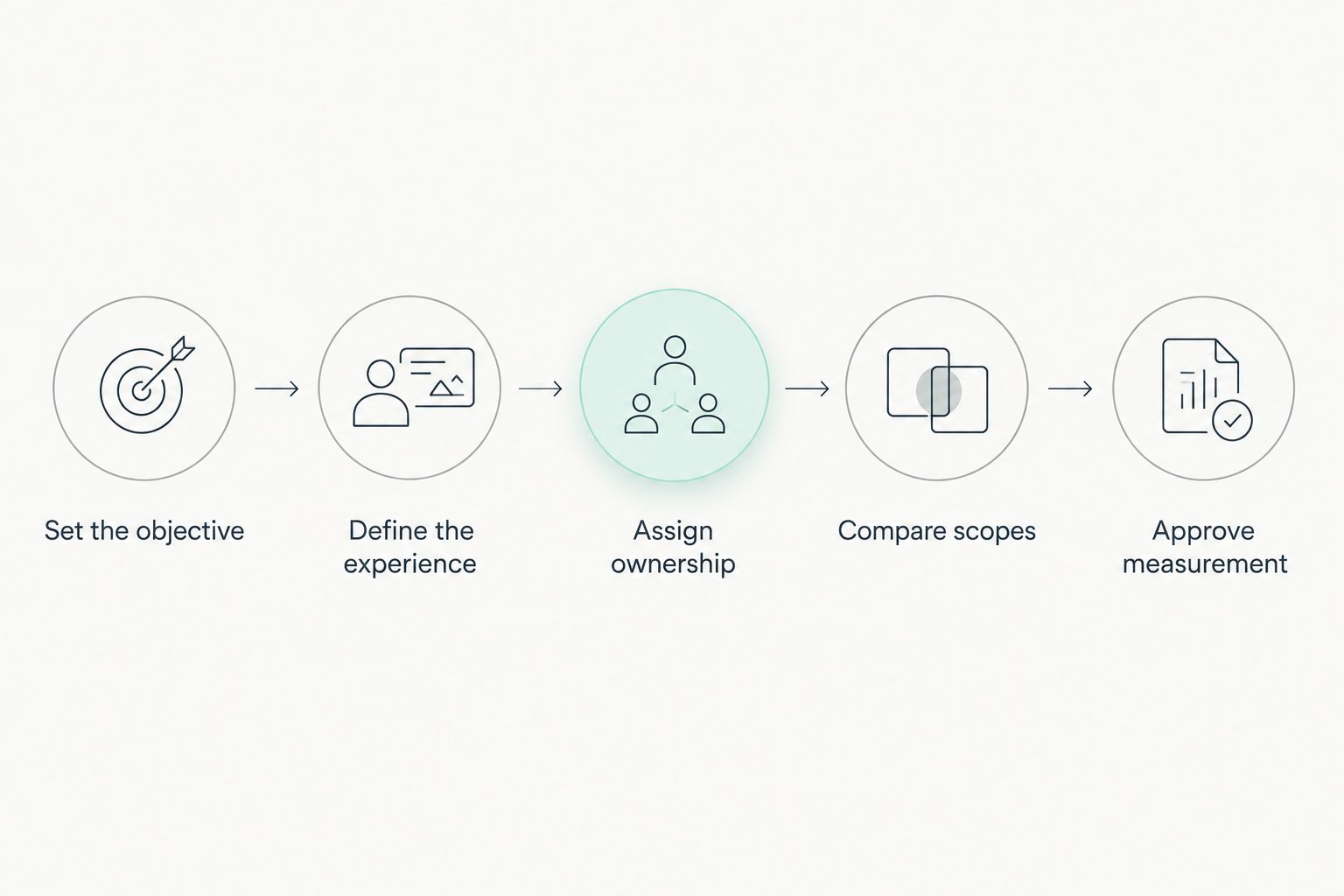
- Set the objective. Choose 1 primary outcome, such as usable lead submissions or completed research responses. Define what qualifies as success before discussing game mechanics.
- Define the experience. Describe the participant journey, required content, result behavior, and completion action. Separate essential functionality from optional additions.
- Assign ownership. Name the owner of production, distribution, data handling, approvals, and operation. Give every required task a responsible party.
- Compare scopes. Ask each supplier to identify inclusions, exclusions, dependencies, and acceptance criteria. Resolve differences before comparing the overall commitment.
- Approve measurement. Specify the events and outcomes you need to assess. Check that reporting answers the campaign objective rather than merely counting visits.
The sequence matters: the objective informs the experience, and the experience defines the work to commission. Keep a written record of those decisions so later additions do not silently change the campaign.
Is a quiz budget the same as a full campaign budget?
A quiz budget covers the work specified for the quiz; a campaign budget must also cover its promotion and operation. Treat them as separate planning views, even when a supplier packages several responsibilities together.
Check the boundaries explicitly. Ask whether the proposal includes promotional assets, deployment, data delivery, reporting, and support, then assign any excluded work to another owner.
Should you commission a studio or build internally?
Choose internal delivery when your team can own the required design, development, testing, and operation. Choose a studio when you want to commission those delivery responsibilities against an agreed scope.
Neither route removes the need for marketing ownership. You still need approved content, a distribution plan, and clear rules for evaluating the campaign. Compare responsibilities and capabilities—not just the visible supplier invoice.
What should you ask before approving a proposal?
Ask the supplier to explain what is delivered, what your team must provide, and what happens after launch. Require explicit answers on data handling, acceptance, revisions, ownership, and support.
Use 4 approval milestones: brief, concept, working experience, and launch acceptance. These are recommended checkpoints, not a promised delivery schedule. At each checkpoint, confirm that the campaign still supports the original objective.
Brainylab offers gamification strategy, marketing lead-generation quizzes, and branded games. Bring the studio a defined outcome and participant journey so the conversation centers on the work your campaign needs.
Discuss your gamification campaign scope
Define the quiz or game, data requirements, and delivery responsibilities before commissioning the campaign.
FAQ
How much do brands spend on a gamification campaign?
Gamification campaign spending depends on the commissioned scope, distribution plan, and operational responsibilities. Compare itemized proposals for the same requirements rather than treating a build quote as the complete campaign budget.
Does a gamification campaign quote include advertising?
Advertising is included only when the proposal explicitly includes it. Confirm who owns campaign distribution and keep the promotional allocation distinct from production.
Is a template-based quiz better than a custom branded game?
A template-based quiz is better suited to requirements that fit its existing interaction; a custom branded game suits requirements that need a specifically designed experience. Compare the participant journey and required functionality before choosing.
What should a gamification campaign brief include?
A gamification campaign brief should include the objective, audience, participant journey, required content, data requirements, distribution plan, and acceptance criteria. Assign owners for approvals and post-launch operation.
How do you stop a gamification campaign scope from expanding?
Separate required functionality from optional additions and approve changes explicitly. Record how each addition affects delivery responsibilities and the agreed campaign scope.
Can a gamification campaign collect first-party customer data?
A gamification campaign can collect first-party customer data through participant submissions. Define the information you need, explain its intended use, and confirm the handling and delivery requirements before launch.
What should brands measure after launching a gamification campaign?
Brands should measure the primary outcome defined in the campaign brief, alongside the participant actions needed to reach it. Distinguish visits, starts, completions, and usable submissions rather than treating them as interchangeable results.
One last thing
Approve the end of the campaign before you approve its launch. For your 2026 brief, specify who receives the data, who retains access, what remains live, and which assets can be reused.
That decision turns an attractive experience into a defined business deliverable. It also gives you a clearer basis for comparing proposals: the purchase includes an agreed handover, not just a launch date.