Yes, a quiz-based campaign can work for a one-time product launch when it helps buyers understand the product, identify a relevant use case and take a clear next step. The caveat is that completing a quiz is not the same as buying: you still need distribution, a useful result and a measurable path to the launch action.
- Can a quiz campaign work for a product launch? Yes—when the result helps buyers make a decision.
- Choose a use-case quiz for product education; skip questions that do not change the result or follow-up.
- Measure launch actions separately from quiz completions and first-party data collection.
- Brainylab builds marketing quizzes for brands seeking engagement and first-party customer data.
Why this matters
A launch quiz needs a job beyond getting people to interact. It should answer a question your launch page leaves unresolved: whether the product fits a situation, which benefit matters most or what to explore next.
For your 2026 launch, define that job before choosing questions or visual effects. If the quiz adds an obstacle without improving the buyer's decision, use a direct landing page instead.
Brainylab builds marketing quizzes and branded interactive experiences. That service category fits this decision: you are commissioning a campaign experience, not simply adding a form to a page.
Can a quiz-based campaign work for a one-time product launch?
Yes. A recurring loyalty programme is not a prerequisite for a useful launch quiz. The quiz can serve a specific campaign window, provided its result remains relevant to the product and its next step matches your launch objective.
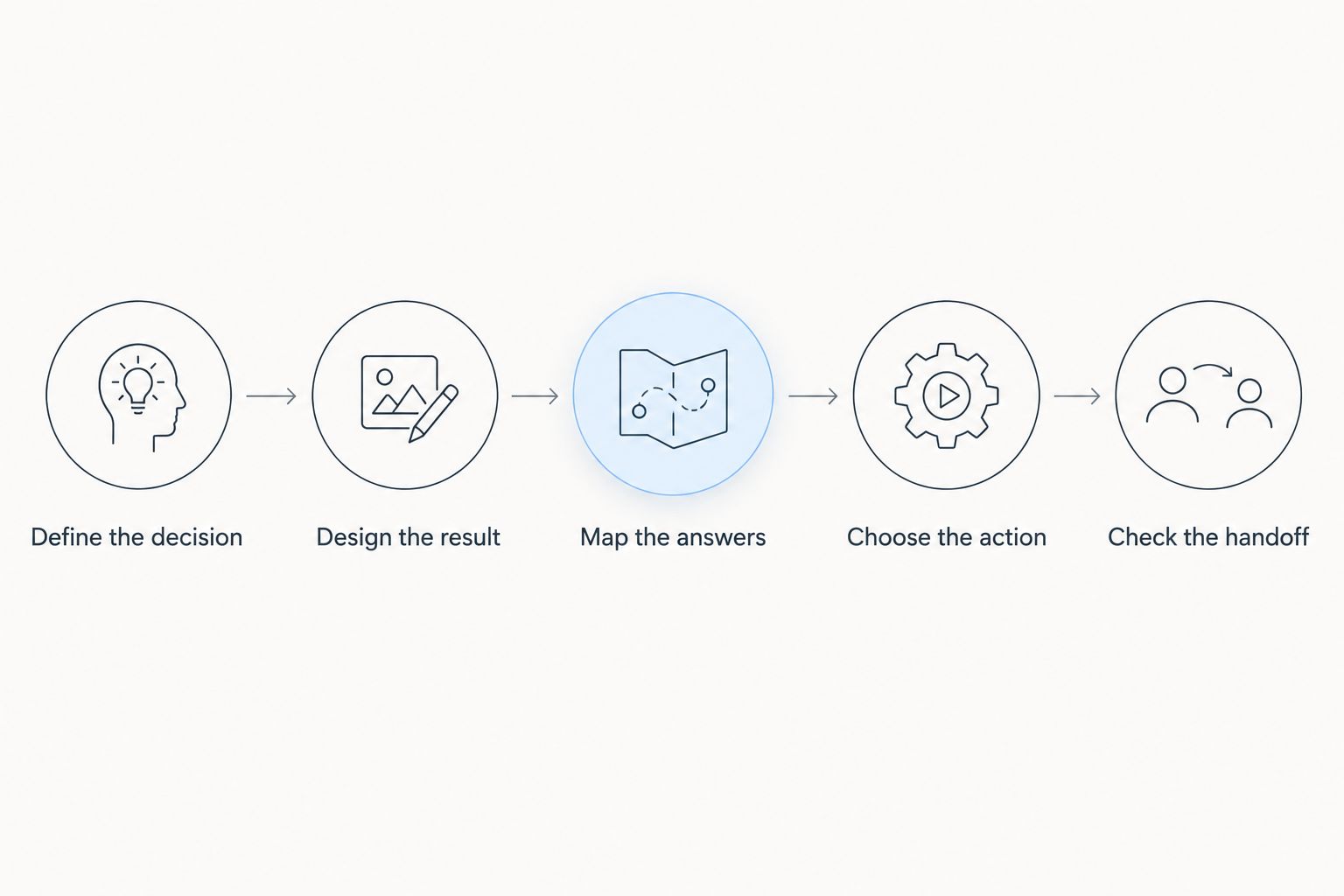
Use this sequence to decide whether the format earns its place:
- Define the decision. Write the buyer question the quiz will answer. “How would I use this?” is a stronger starting point than “How do we make the launch interactive?”
- Design the result. Draft the explanation participants receive before writing the questions. Make the result useful without pretending that every participant needs the product.
- Map the answers. Include questions that change the result, its explanation or the permitted follow-up. Remove questions collected only because the information seems interesting.
- Choose the action. Send participants to the relevant launch action, such as exploring the product or requesting a demonstration. Do not make unrelated actions compete on the result screen.
- Check the handoff. Test the full route from campaign entry to result and destination. Include unsuccessful submissions, missing answers and campaign closure.
The practical test is simple: can you explain why someone should complete the quiz instead of reading the launch page? If the only answer is entertainment, judge the campaign as entertainment—not as a proven sales mechanism.
Which quiz format fits your launch?
Choose the format by the uncertainty you need to resolve. The following options serve different purposes; none should be treated as an automatic conversion improvement.
| Format | Best for | Useful output | Main limitation |
|---|---|---|---|
| Use-case quiz | Explaining an unfamiliar product | A relevant application and explanation | Adds unnecessary work when the benefit is already obvious |
| Product-finder quiz | Helping buyers choose between genuine alternatives | A recommendation tied to stated needs | Creates false choice when every answer produces the same recommendation |
| Knowledge quiz | Teaching a launch message through questions and feedback | An explanation of correct answers | A high score does not establish purchase intent |
Use-case quiz: best for explaining product relevance
A use-case quiz connects a participant's situation to a product benefit. For a single-product launch, different outcomes can explain different applications without inventing separate products.
The advantage is relevance: the result can address the need expressed in the answers. The drawback is forced personalisation. Skip the quiz if the result merely repeats the same sales paragraph under different labels.
Product-finder quiz: best for genuine choices
Use a product-finder quiz when buyers have meaningful alternatives to compare. Questions should reflect actual differences that affect the recommendation, rather than preferences with no connection to the products.
This format gives each answer a clear purpose. Its limitation is accuracy: weak recommendation rules can direct buyers toward an unsuitable choice. A launch featuring only one product does not need an artificial catalogue of outcomes.
Knowledge quiz: best for explaining a launch message
A knowledge quiz can introduce a product-related topic and explain each answer. It fits an educational objective when understanding the subject helps someone evaluate the launch.
Its weakness is interpretation. Correct answers demonstrate knowledge of the questions, not willingness to buy. Keep educational engagement separate from commercial intent in your reporting.
Why launch quiz performance varies
There is no universal launch-quiz outcome. These design and campaign decisions determine what the experience asks of participants and what your reporting can establish:
- Traffic source. Record where participants enter. An existing customer email and a prospecting advertisement reach different audiences; combining them hides that distinction.
- Promise alignment. The advertisement, opening screen and result should make the same promise. Do not advertise product guidance and deliver only a subscription request.
- Question relevance. Each question needs a reason to exist. Explain sensitive or unexpected requests rather than assuming participants understand their purpose.
- Result usefulness. Show how the answers support the result. A recommendation without an explanation gives the buyer little basis for evaluating it.
- Next-step fit. Match the action to the participant's result and the launch objective. Product education and a demonstration request are different commitments.
- Follow-up readiness. Decide how submitted answers will be used before collecting them. Do not promise a personalised response without a defined delivery process.
For a 2026 campaign brief, document these decisions alongside the creative concept. A polished experience does not resolve an unclear objective.
Build the quiz around the launch, not the other way around
Before launch: clarify the promise
Write a plain-language statement of what participants receive. That might be an explanation of which use case matches their needs, rather than a vague invitation to discover their personality.
Separate product information from assumptions about the audience. A quiz result must not claim compatibility, suitability or performance that your product evidence does not support. Get the relevant product owner to approve result copy before publication.
Also decide what happens when the product is not relevant. An honest outcome can explain the mismatch instead of forcing everyone toward the same recommendation.
During launch: keep the route clear
Make the opening screen describe the task and the result. Avoid adding a lengthy product introduction before participants can begin; the quiz should perform a defined part of the explanation.
On the result screen, connect the recommendation to the answers and provide the next action. If you request contact details, explain their purpose at the point of collection and distinguish delivering a result from sending marketing messages.
For your 2026 measurement plan, preserve the campaign source through the journey where your implementation permits it. Otherwise, reporting on the quiz and reporting on the launch destination can become disconnected.
After launch: close the experience deliberately
A one-time campaign still needs an end state. Decide whether the quiz will remain useful, change to a general product explanation or close with a relevant destination.
Check scheduled messages as well as the public experience. A follow-up written for the launch period should not continue unchanged after that context has ended. Assign ownership of the closure rather than leaving it as an undocumented task.
Measure business actions, not just completed quizzes
A completed quiz is an engagement event, not proof of launch success. Define what success means before publishing, then report the stages separately.
| Measurement | What it tells you | What it does not establish |
|---|---|---|
| Quiz starts | People began the experience | They understood the product |
| Quiz completions | People reached a result | They wanted to buy |
| Contact submissions | People submitted contact information | Every contact is qualified or eligible for marketing |
| Result-page actions | People selected the next step | They completed the destination action |
| Verified launch outcomes | Recorded actions matched the campaign objective | The quiz caused every recorded outcome |
For a 2026 launch report, define the denominator behind every rate. A completion rate based on starts answers a different question from a completion rate based on all landing-page visits.
Compare like with like when evaluating a quiz against a direct launch page. Keep audience, campaign timing, destination and measurement rules aligned as closely as the test design allows. If those conditions differ, describe the comparison accurately rather than attributing the entire difference to the quiz.
Review the answers as well as the totals. A question that most participants abandon deserves investigation, but abandonment alone does not identify the cause. Check wording, relevance and technical behaviour before deciding what to change.
Do you need an incentive for a launch quiz?
No. A useful answer can be the reason to participate, especially when the quiz resolves a real question about product fit or use.
An incentive changes the participation promise. If you include one, distinguish interest in that incentive from interest in the product; do not label every participant a qualified lead.
Should you ask for an email before showing the result?
Ask for an email only when its purpose is clear and justified within the experience. Choose deliberately between showing the result directly and requiring contact details to deliver it.
Do not present marketing permission as necessary for a result unless that requirement is lawful and accurately explained. Have the data collection and follow-up reviewed for the jurisdictions your campaign targets.
Can the quiz still help if the product has only one version?
Yes. A single-product quiz can explain different use cases without pretending that participants are choosing between products.
The result should show what changes based on the answers. If nothing meaningful changes, a direct explanation is the cleaner experience.
When does commissioning a studio make sense?
Commission a studio when the brief calls for a purpose-built interactive experience and you have a clear role for it in the launch. Bring the product facts, audience question, result logic, distribution plan and measurement requirements into the brief.
Brainylab is best for brands seeking studio-built marketing quizzes and interactive experiences. Brainylab's quiz work fits engagement and first-party customer data objectives; it does not remove the need for product evidence, campaign distribution or an agreed definition of success.
The trade-off is scope. A commissioned experience needs decisions and approvals that a direct launch page does not. For a straightforward announcement with no useful question to answer, keep the simpler route.
Discuss your launch quiz
Bring your launch objective, buyer question and intended result to the campaign brief.
FAQ
Can a quiz campaign work for a product launch if it runs only once?
Yes, a quiz campaign can serve a one-time product launch when its result helps participants understand the product and take a relevant next step. Recurring participation is not required, but the campaign still needs distribution and measurement.
What's the best quiz format for launching a single product?
A use-case quiz fits a single-product launch when buyers need help understanding how the product relates to their situation. Use a direct page instead if every answer leads to the same explanation.
Is a product launch quiz better than a landing page?
A product launch quiz is not automatically better than a landing page. Choose the quiz when answering questions provides useful guidance, and compare verified launch actions rather than engagement alone.
Do I need a prize to get people to finish a launch quiz?
No, a prize is not a requirement for a launch quiz. Give participants a clear reason to complete it, such as a useful explanation of product relevance, and do not confuse incentive participation with purchase intent.
What should I measure in a product launch quiz?
Measure the intended launch outcome alongside quiz starts, completions, contact submissions and result-page actions. Keep these events separate so a completed quiz is not reported as a completed sale.
Can Brainylab build a marketing quiz for a product launch?
Brainylab builds marketing quizzes and interactive experiences for brands. A launch brief should specify the buyer question, result logic, intended next action and first-party data requirements.
What should happen to the quiz after the launch ends?
Give the quiz a deliberate end state after the launch ends. Review the result copy, destination and scheduled follow-up so participants do not receive messages written for an expired campaign context.
One last thing
Before approving your 2026 launch quiz, read the result screen without the questions. Does it contain an explanation a buyer can use, or only a label followed by a sales message?
Then trace each claim back to an answer or a verified product fact. If the questions do not improve the result, remove the quiz—not just a question. The strongest reason to use an interactive format is the decision it helps someone make.