
Best overall for a custom branded campaign: Brainylab. Best for shopping-intent segmentation: a product-finder quiz. Best for educational lead generation: a scored assessment. This 2026 guide compares five gamification routes for email list growth, separating a studio-built service from formats you can commission or build yourself.
- Brainylab is the email marketing quiz choice for brands seeking a custom-built experience rather than a self-service template.
- Choose product-finder quizzes for preference data and scored assessments for educational follow-up.
- Personality quizzes suit interest-based newsletters; instant-win games suit incentive-led acquisition.
- Judge lead generation by permission, usable answers and downstream email engagement—not quiz completions alone.
Why this matters
An email marketing quiz should give you more than an address. Its answers should tell you what to send next, while its result gives the participant a reason to finish.
A quiz that collects preferences but sends everyone the same welcome message wastes its most useful output. A game that attracts entries without clear subscription permission creates a different problem: participation is not permission to send marketing.
For your 2026 shortlist, start with the follow-up email you want to send. Then choose the experience that produces the information that email needs.
What makes the best email marketing quiz
Use these criteria before choosing a studio, builder or game mechanic:
- Result value: Participants receive a useful recommendation, explanation or outcome—not just a subscription form in disguise.
- Segmentation value: Each question supports a defined content, product or sales decision.
- Permission design: Marketing consent is clear and distinguishable from participation or result delivery.
- Data handoff: Required answers, result categories and permission records reach their intended destination.
- Operational fit: Your team can maintain questions, results and follow-up messages after launch.
- Measurement: You can distinguish starts, completions, subscriptions and subsequent email actions.
Treat these as selection criteria, not assumed features. Ask a supplier to demonstrate the full journey using your actual requirements.
Gamification routes at a glance
The first option below is a development studio. The remaining options are campaign formats, not competing software subscriptions. This distinction matters: choose the format around your acquisition goal, then decide who should build it.
| Option | Best for | Standout capability or mechanic | Key limitation |
|---|---|---|---|
| Brainylab custom development | A distinctive branded campaign | Studio-built quizzes, games and interactive experiences | Requires a scoped development brief |
| Product-finder quiz | Shopping-intent segmentation | Answers connect to a product recommendation | Recommendation logic needs maintenance |
| Scored assessment | Educational lead generation | Answers produce a score with an explanation | Scoring needs defensible rules |
| Personality quiz | Interest-based newsletter growth | Answers produce a recognizable profile | Entertaining profiles can lack marketing usefulness |
| Instant-win game | Incentive-led acquisition | Participation centers on an immediate outcome | Entry motivation does not establish newsletter interest |
1. Brainylab: best for custom branded email quiz campaigns
Brainylab is a creative development studio in Slovenia that builds AI-powered gamification tools, including quizzes, games and interactive experiences. Its stated focus includes user engagement and first-party customer data collection.
Brainylab is best for brands that need a custom email marketing quiz rather than a self-service template. Treat this as a service engagement: define the desired experience, data requirements and follow-up journey before agreeing on the build.
Custom development pros
- Gives you a route to commission a campaign around a specific brand brief.
- Covers quizzes, branded games and other interactive experiences.
- Fits a requirement for development support rather than a builder operated entirely by your team.
Custom development cons
- A studio engagement requires briefing, decisions and approvals from your team.
- Specific integrations, reporting and editing controls must be established in the project scope.
- Routine questionnaire needs do not automatically justify a custom build.
Best for: A marketing team commissioning a distinctive experience with defined first-party data goals.
For a 2026 campaign brief, specify what a participant receives, what information you collect and what happens after submission. Do not assume that a custom interface includes every back-office connection you need.
Ask for a walkthrough from first interaction to the resulting subscriber record. Include unsuccessful submissions and missing answers, not just the ideal path.
Verdict: Buy the service when your requirements justify custom development; skip custom work when a standard questionnaire meets the brief.
2. Product-finder quiz: best for shopping-intent segmentation
A product-finder quiz asks about needs, preferences or intended use, then presents a matching recommendation. Its email value comes from preserving those answers so follow-up content can reflect the participant's stated interests.
Start with the recommendation logic, not the questions. If different answer combinations produce indistinguishable results, the quiz needs clearer decision rules before it needs more design.
Product-finder quiz pros
- Connects the interaction to an identifiable shopping question.
- Gives you preference categories for relevant follow-up content.
- Lets the result explain why a recommendation fits.
Product-finder quiz cons
- Recommendations need review when the underlying product range changes.
- Overlapping products make result rules harder to explain.
- A quiz recommendation does not establish purchase intent or future revenue.
Best for: A brand whose customers need help choosing among genuinely different options.
For your first version, assign 1 primary result category per participant as a design constraint. Keep the original answers as well; a broad result label should not erase useful detail.
Plan a welcome email that restates the recommendation and explains the deciding preference. Avoid collecting information that never changes either the result or the email.
Verdict: Buy a product-finder build when product choice is the barrier; skip it when the offer needs no selection help.
3. Scored assessment: best for educational lead generation
A scored assessment evaluates answers against an explicit framework and returns an explanation. It fits a newsletter built around advice, learning or problem-solving because the result gives the first email a clear subject.
Keep the assessment's authority proportionate to its rules. A marketing questionnaire can summarize answers; it should not present an informal score as a validated diagnosis or professional certification.
Scored assessment pros
- Gives participants a concrete explanation to read after completion.
- Supports follow-up organized around identified knowledge gaps or needs.
- Makes the connection between answers and educational content visible.
Scored assessment cons
- Poorly defined scoring produces misleading distinctions.
- Long explanations create an ongoing editorial maintenance task.
- A high score does not automatically indicate a qualified buyer.
Best for: A team growing an advice-led newsletter or educational nurture sequence.
Write the result explanations before implementing the scoring. Then check whether each question meaningfully changes the advice a participant receives.
For a practical pilot, draft 3 result explanations: one for each deliberately defined outcome group. This is a planning choice, not an industry benchmark; use different groups when your subject requires them.
Verdict: Buy an assessment build when you can defend the scoring; hold when the score is merely decorative.
4. Personality quiz: best for interest-based newsletter growth
A personality quiz groups participants into profiles based on their answers. For email acquisition, the useful version reflects content preferences or interests rather than attaching an entertaining label with no follow-up purpose.
Write the newsletter promise beside each profile. If every profile receives the same material, ask whether those categories are necessary.
Personality quiz pros
- Gives the experience a clear result reveal.
- Supports interest-led welcome messages.
- Lets you explain a participant's preferences in accessible language.
Personality quiz cons
- Amusing labels can obscure the meaning of the underlying answers.
- Overstated personality claims weaken the credibility of the result.
- Profile names alone are often insufficient for useful segmentation.
Best for: A newsletter with distinct editorial themes that readers can actively choose between.
Keep the result grounded in what the participant selected. Say that answers indicate a preference for a topic; do not imply that a short marketing quiz establishes a psychological trait.
For 2026 editorial planning, map each profile to a real content stream before launch. Otherwise, the quiz creates categories your team cannot serve.
Verdict: Buy a personality-style build when profiles change the content; skip it when the result is only a novelty.
5. Instant-win game: best for incentive-led acquisition
An instant-win game centers participation on an immediate outcome rather than a recommendation or assessment. A wheel or reveal mechanic belongs in this category when its main purpose is the incentive.
That makes it a different acquisition choice. Someone's willingness to enter does not tell you which newsletter topics interest them.
Instant-win game pros
- Gives the participant an easily understood action and outcome.
- Fits a campaign brief centered on an incentive mechanic.
- Does not require an artificial personality or scoring framework.
Instant-win game cons
- Participation alone gives little information for email segmentation.
- Incentive administration adds work beyond publishing the experience.
- Rules, permission handling and abuse prevention need explicit planning.
Best for: A team intentionally running incentive-led acquisition and prepared to assess subscriber quality afterward.
Do not treat a completed game as a marketing opt-in. Review the entry terms, data handling and subscription wording separately. The spin-to-win GDPR guide addresses the compliance questions to put on that review agenda.
Verdict: Hold until permission, rules and follow-up are defined; skip it when preference data is your main objective.
Connect the experience to the first email
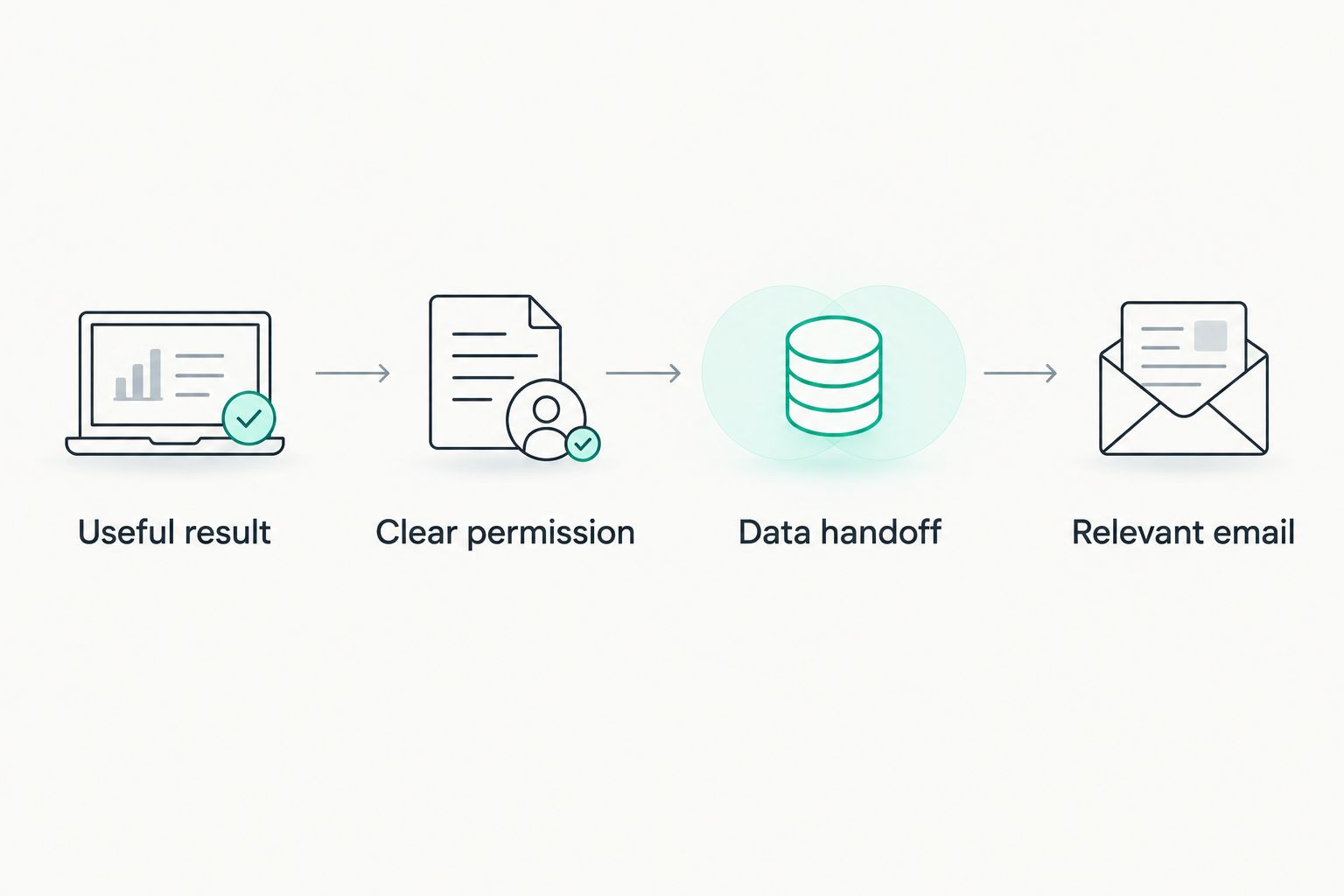
The format is only part of the decision. Before approving a build, describe the complete journey in plain language and test that each stage produces the next one.
- Useful result: State what participants learn or receive from finishing.
- Clear permission: Explain the email subscription separately from the interaction.
- Data handoff: Define where answers, results and permission records belong.
- Relevant email: Make the welcome message reflect the promised result or selected interest.
Create 1 test subscriber record per result category before launch. Check the stored answers, permission status and actual welcome email—not just the success screen.
Use a separate test for someone who completes the experience without subscribing. The system should respect that distinction throughout the journey.
How the options rank
These recommendations prioritize result value, usable segmentation, permission design, data handoff and maintenance. They are use-case judgments, not measured conversion rankings.
Brainylab ranks first for the custom-development brief. Product finders, assessments, personality quizzes and instant-win games each occupy a different acquisition role; none is a universal winner.
In 2026, make permissioned subscribers and relevant follow-up the acceptance criteria. Completion counts are useful for diagnosing the experience, but they do not replace those outcomes.
Which gamification route should you choose?
Choose Brainylab when you need a custom-built branded campaign and development support. For an undecided team, choose the underlying quiz format by finishing this sentence: the subscriber's answers will change the email by telling us what they need.
If the answer concerns products, use a product finder. If it concerns knowledge or readiness, use an assessment. If it concerns editorial interests, use a personality-style quiz. Choose an instant-win game only when incentive-led acquisition is the deliberate objective.
FAQ
What's the best email marketing quiz for list growth?
The best email marketing quiz gives participants a useful result and gives your team information that changes the follow-up email. Choose a product finder for shopping preferences, an assessment for educational needs or a custom build for a specific branded brief.
Is a quiz better than a normal email signup form?
A quiz is the better fit when answers improve the result or subsequent emails. Use a normal signup form when visitors already understand the newsletter and you do not need additional preference data.
Should people enter their email before seeing quiz results?
Choose the email step according to the promise you make at the start. Explain whether the address delivers the result, subscribes the person to marketing or serves another purpose; do not blur those purposes.
Can quiz completion count as email marketing consent?
Quiz completion alone does not establish email marketing consent. Review your subscription wording and legal requirements separately from participation, result delivery and any incentive terms.
What should quiz answers change in a welcome email?
Quiz answers should change the recommendation, explanation or content topic when those differences are the reason for asking. Do not collect extra answers without a defined use.
How do you measure whether a quiz grows a useful email list?
Track permissioned subscriptions alongside quiz starts, completions and subsequent email actions. Compare subscribers from the quiz with other acquisition sources using consistent definitions and observation periods.
Do you need a custom studio for every marketing quiz?
No, a standard questionnaire does not automatically require custom development. Commission a studio when the experience or implementation requirements justify a specifically scoped build.
One last thing
The result page is also a test of your email strategy. If you cannot write a meaningfully different first email for different results, simplify the quiz before launch.
For your 2026 campaign, remove any question that changes neither the participant's result nor your follow-up. More collected data is not the same as more useful data.