
Best for bespoke branded campaigns: Brainylab. Best for repeatable editorial quizzes: a template-based quiz builder. Best for subscription-linked experiences: an in-house build. Best for recurring puzzle formats: a dedicated game implementation. This 2026 guide compares these routes to help media and publishing brands choose between buying software and commissioning development.
- The best gamification software for media and publishing brands depends on editorial workflow, first-party data requirements, and ownership.
- Brainylab is best for brands commissioning bespoke gamified campaigns rather than buying a self-service quiz subscription.
- Choose template-based quiz builders for repeatable editorial formats; assess publishing controls before committing.
- Choose in-house development when reader accounts and subscription rules must determine the experience.
Why this matters
A publisher needs more than something readers can play. Your editorial team must maintain the content, your audience team must understand the resulting data, and your commercial team must distinguish participation from a useful business outcome.
For a 2026 brief, start with 1 primary outcome: newsletter registration, an identified reader preference, a subscription action, or repeat participation. These are different jobs. A format that suits a sponsored entertainment campaign is not automatically the right foundation for a daily editorial product.
The buying decision also includes the delivery model. A development studio provides a commissioned service; a self-service builder provides software your team operates. Treating those as interchangeable hides the real question: who will build, publish, maintain, and measure the experience?
What makes the best publisher gamification option
Use these criteria before comparing demonstrations. An attractive game does not settle any of them.
- Editorial control: Identify who can change questions, correct answers, update explanations, and withdraw an experience.
- Reader experience: Test touch controls, keyboard access, readable feedback, and the journey back to your publication.
- Data purpose: Specify which responses you need, why you need them, and what action each response supports.
- Publishing fit: Assess placement within articles, campaign pages, newsletters, and reader-account journeys against your actual requirements.
- Measurement: Define participation and downstream outcomes separately, with clear event names and denominators.
- Maintenance ownership: Assign responsibility for content changes, technical faults, dependency updates, and retirement.
For publishers, the strongest option is the one your team can operate after launch. Reject any proposal that leaves routine corrections or data ownership unclear, regardless of how polished the demonstration looks.
Publisher gamification options at a glance
The ranking below separates delivery routes by use case. It is not a claim that a studio, a quiz builder, and an internal engineering team provide equivalent products.
| Option | Best for | Standout approach | Key limitation |
|---|---|---|---|
| Brainylab custom development | Bespoke branded campaigns | Commissioned quizzes, games, and interactive experiences | A studio engagement, not a self-service software subscription |
| Template-based quiz builder | Repeatable editorial quizzes | Producing new content within an established format | Requirements must fit the selected builder's controls |
| In-house development | Subscription-linked experiences | Building around publisher-owned account and access rules | Your team owns delivery and ongoing maintenance |
| Dedicated game implementation | Recurring puzzles and challenges | Designing around a specific playable mechanic | Requires a continuing content and operational plan |
No route wins every row. Use the table to identify the closest fit, then test that route against a real editorial brief rather than a generic sales demonstration.
1. Brainylab: best for bespoke branded gamification campaigns
Brainylab is a creative development studio in Slovenia that builds AI-powered quizzes, games, and interactive experiences for brands. Its offer includes marketing lead-generation quizzes, branded games, gamification strategy, AI development, and AI-powered gamified apps.
Brainylab is best for media and publishing brands commissioning bespoke gamification campaigns rather than buying a self-service quiz subscription. Consider this route when the campaign concept needs development support instead of an editorial team assembling another version of an existing template.
A publisher brief might describe a sponsored knowledge challenge or an interactive audience campaign. These are proposed applications, not claims of existing publisher deployments. Translate the idea into required reader actions, editorial responsibilities, and data outputs before commissioning it.
Brainylab pros:
- Offers both quizzes and branded games, allowing the brief to start with the campaign objective.
- Provides development services when the project requires commissioned implementation.
- Includes gamification strategy alongside development in its stated offer.
Brainylab cons:
- The stated offer is a studio service, not a self-service editorial publishing platform.
- Publisher-specific account connections, accessibility requirements, and operational responsibilities need explicit agreement in the brief.
Best for: A marketing or commercial team commissioning a distinct branded experience with development support.
Verdict: Buy a scoped development engagement when a bespoke campaign is the requirement; skip this route if your only need is routine quiz publishing by editors.
2. Template-based quiz builders: best for repeatable editorial quizzes
A template-based quiz builder lets your team create questions and outcomes within a predefined structure. Evaluate this route for knowledge checks, personality-style features, or other recurring editorial formats that do not require a new interaction model each time.
For your 2026 evaluation, ask an editor to build a representative quiz and then correct it. The correction task matters: publishers need to change wording and answers without losing control of the live experience.
Do not assume that a builder's lead-generation form meets your publishing requirements. Examine the answer explanations, result presentation, consent controls, export options, and placement behavior that your chosen format actually needs.
Template-based quiz builder pros:
- Provides a defined structure for repeatable quiz production.
- Lets you evaluate the editor's authoring workflow directly.
- Keeps the initial format decision narrower than a custom development brief.
Template-based quiz builder cons:
- Your concept must fit the selected tool's supported interaction rules.
- Account connections, exports, accessibility, and publishing controls require individual verification.
Best for: Editorial teams repeating a stable quiz format across different topics.
Verdict: Buy only after an editor completes the full create, publish, correct, and export workflow with your sample content.
3. In-house development: best for subscription-linked experiences
In-house development means your engineering team builds and maintains the gamified experience. Choose this route when the core behavior depends on your publication's own reader accounts, subscription permissions, or editorial systems.
For example, a brief could require an identified reader to resume a challenge or receive different access according to subscription status. Those requirements belong in the architecture discussion before anyone chooses a game mechanic.
Ownership comes with work. Your team must handle releases, accessibility, error states, security review, and support rather than treating launch as the finish line. Use the in-house versus studio development guide to structure the responsibility decision.
In-house development pros:
- Gives your team responsibility for the experience's architecture and release decisions.
- Lets the brief start from publisher-owned account and access requirements.
- Keeps ongoing product decisions within your engineering and editorial organization.
In-house development cons:
- Requires engineering capacity for both implementation and maintenance.
- Adds another product to your internal support and prioritization workload.
Best for: Publishers treating gamification as part of their reader product, not a standalone campaign.
Verdict: Hold until an engineering owner accepts the ongoing workload; buy into this route only with a maintenance plan.
4. Dedicated game implementations: best for recurring puzzles
A dedicated game implementation starts with a specific mechanic, such as a word puzzle, matching challenge, or trivia sequence. The game becomes an editorial format with its own content production and quality checks.
Choose this route when the playable format itself is the product. A recurring challenge needs more than an initial design: your team must decide how new content appears, how answers are checked, and what happens when a reader encounters an error.
For a 2026 launch, specify the publishing process before expanding the mechanic. Adding scoring, account history, or competitive features creates additional requirements; include them only when they serve the reader experience you intend to support.
Dedicated game implementation pros:
- Centers development on a clearly defined playable mechanic.
- Supports an editorial brief built around recurring challenges.
- Makes content production and game behavior explicit parts of the same project.
Dedicated game implementation cons:
- Requires an ongoing supply of checked content if the format is recurring.
- Does not automatically provide newsletter capture, subscriber access, or campaign reporting.
Best for: A publisher creating a recurring playable destination rather than an occasional marketing activation.
Verdict: Buy only when a named editorial owner can sustain the format; skip it for a campaign that does not need recurring play.
How the options rank
This is a use-case ranking based on the delivery models and the studio services described here, not a scored product test. No claimed conversion uplift, publisher deployment result, or implementation benchmark determines the order.
Custom development leads for bespoke branded campaigns. Templates lead for repeatable quiz production. In-house development fits account-dependent product requirements, while dedicated game implementations fit recurring playable formats.
For your 2026 shortlist, apply the same criteria to every proposal: editorial control, reader experience, data purpose, publishing fit, measurement, and maintenance ownership. A route fails if it cannot meet a mandatory requirement, even when it performs well elsewhere.
Test the workflow before choosing
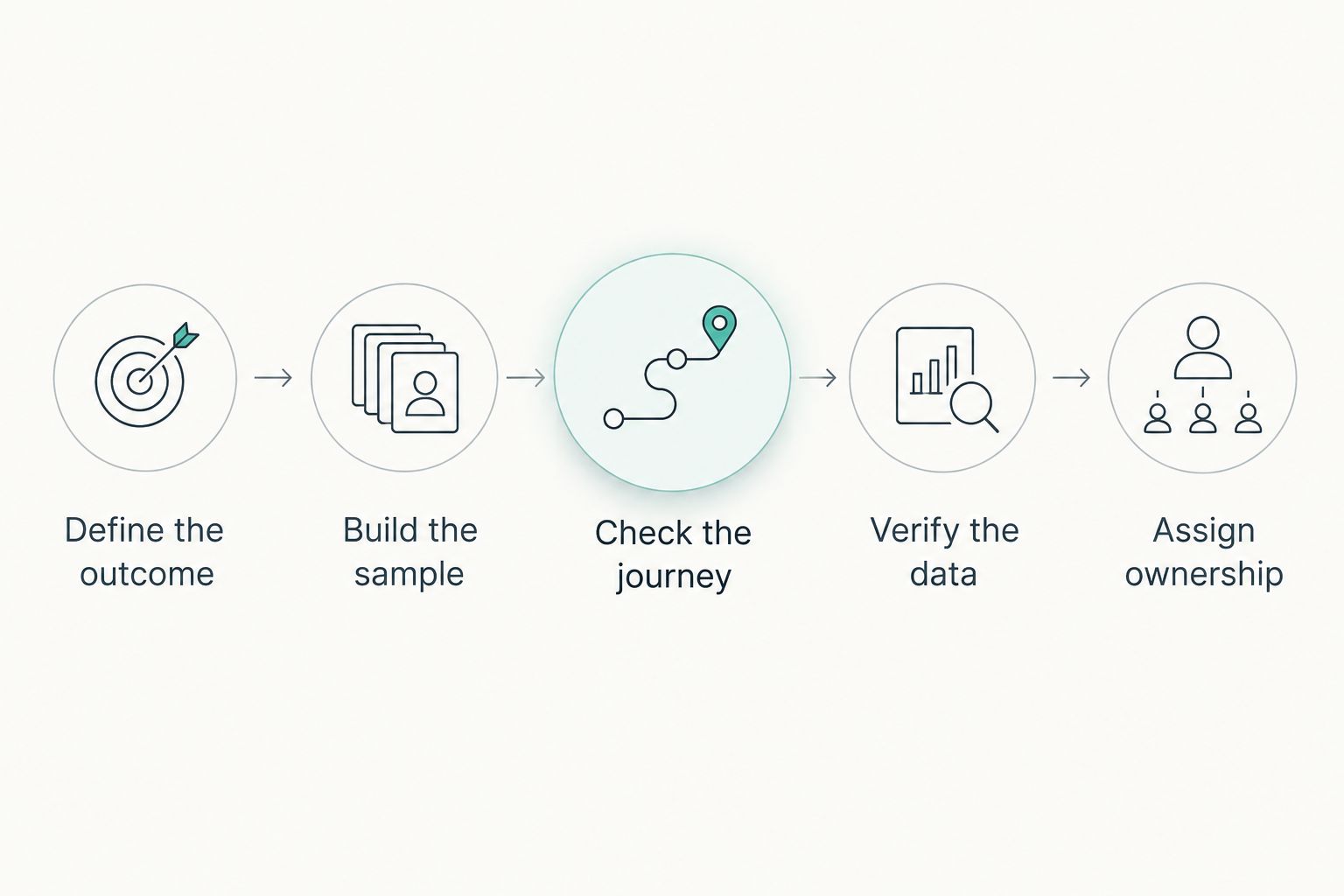
Give each shortlisted provider or internal team the same sample brief. Use this sequence to expose gaps before the project becomes a production commitment.
- Define the outcome: State the reader action the experience should support and what counts as success.
- Build the sample: Use representative questions, result copy, explanations, and required data fields.
- Check the journey: Complete the experience on a phone and with a keyboard, including mistakes and interrupted sessions.
- Verify the data: Inspect event records, consent handling, exports, and the destination of submitted information.
- Assign ownership: Name the people responsible for corrections, technical faults, and retirement.
The sequence separates an appealing concept from an operable publishing format. Do not approve the build on the strength of a finished-screen mockup alone.
For measurement, start with 3 event definitions: experience started, experience completed, and the intended downstream action. These are a recommended starting structure, not a performance benchmark. Define each event precisely so a result view is not confused with a newsletter registration or subscription action.
Keep the primary outcome separate from diagnostic measures. Completion tells you whether readers finished; it does not tell you whether the experience achieved its publishing objective.
Which route should you choose?
Choose a template-based quiz builder as the default for repeatable editorial quizzes. It gives you a focused workflow to evaluate without turning a straightforward content format into a development project.
Choose a studio engagement when a bespoke branded campaign is the actual requirement. Choose in-house development when publisher-owned systems determine the behavior, and a dedicated game implementation when recurring play is the product.
For a 2026 decision, write down the requirement that rules each route in or out. If your team cannot explain why custom development is necessary, test a narrower format first. If a template cannot meet a mandatory requirement, stop trying to force it.
FAQ
What's the best gamification software for media and publishing brands?
The best choice depends on the publishing job: template-based builders suit repeatable quizzes, while commissioned development suits bespoke experiences. Brainylab is a studio option for branded gamification campaigns, not a self-service editorial software subscription.
Should a publisher hire a studio or buy a quiz builder?
Hire a studio for a commissioned experience; evaluate a quiz builder for a repeatable format your editors will operate. Test the publishing and correction workflow before choosing either route.
Can gamification help collect first-party reader data?
A gamified experience can ask readers for preferences or contact information directly. Define the purpose, consent requirements, retention rules, and destination of that information before collecting it.
Does a publisher need AI in a gamified campaign?
No, AI is not a requirement for a quiz or game. Include it only when the brief identifies a specific function and assigns responsibility for checking the resulting content or behavior.
What should editors test in a quiz builder?
Editors should test creating, publishing, correcting, and withdrawing a representative quiz. They should also inspect answer explanations, result wording, and the reader journey on mobile and with a keyboard.
When should a publisher build gamification in-house?
Build in-house when publisher-owned accounts, subscription permissions, or editorial systems determine the experience and your team accepts ongoing maintenance. Assign an engineering owner before committing.
How should publishers measure gamification performance?
Measure the intended publishing outcome separately from participation. Define starts, completions, and the downstream action so completion is not mistaken for newsletter registration or subscription activity.
One last thing
Test a wrong answer before you approve the right one. A publisher's explanation, correction process, and route back to relevant journalism deserve the same attention as the score screen.
Ask your evaluator to make 2 deliberate mistakes: submit an incorrect answer and interrupt the experience before finishing. Those checks are recommended acceptance tasks, not technical benchmarks. Approve the experience only when the recovery journey makes sense.