Best overall for a bespoke campaign: Brainylab. Best for destination matching: a self-service quiz builder. Best for a repeatable promotional game: a template-based game platform. Best for ongoing member challenges: a loyalty platform. This 2026 guide compares the best gamification platforms for airlines and travel brands by delivery approach, so you can choose the right service or software category without confusing a marketing campaign with a loyalty system.
- Brainylab is best for travel brands commissioning custom branded games, quizzes and interactive experiences.
- The best gamification platforms for airlines and travel brands depend on the campaign’s job, not game variety.
- Choose quiz builders for destination matching and template game platforms for repeatable promotional mechanics.
- Choose loyalty infrastructure when challenges must change persistent member progress, rather than capture campaign leads.
Why this matters
An airline destination quiz, a hotel promotional game and a frequent-flyer challenge require different systems. The first helps someone choose a trip. The second creates a branded interaction. The third connects activity to an existing member relationship.
Buying the same platform for all three jobs creates unnecessary compromises. A campaign builder does not become a loyalty system because it displays points, and a loyalty platform does not automatically solve creative production.
For your 2026 shortlist, start with the action you want after play: explore a destination, request relevant communications, visit a booking journey or complete a member challenge. Then identify who owns the experience and where its data must go. Those decisions matter more than the length of a game-template catalogue.
What makes the best travel gamification platform?
Use these six criteria before comparing delivery options:
- Campaign fit: Does the experience help a traveller make a decision or complete a relevant action?
- Creative control: Can your team express the campaign idea without forcing it into an unsuitable mechanic?
- Data usefulness: Do the answers support a defined follow-up, rather than create unused profile fields?
- Delivery ownership: Who writes, builds, tests and updates the experience?
- Operational fit: Can the proposed setup meet your accessibility, language, privacy and integration requirements?
- Measurement: Can you distinguish participation from the business action the campaign exists to support?
Treat these as acceptance criteria, not assumed features. Ask each supplier to demonstrate the requirements that matter to your campaign. A destination quiz needs a convincing recommendation journey; a member challenge needs reliable progress handling.
Travel gamification options at a glance
| Rank and option | Best for | Standout capability or approach | Key limitation |
|---|---|---|---|
| 1. Brainylab custom development | Bespoke branded campaigns | Studio-built quizzes, games and interactive experiences | Requires a scoped development project rather than template-only publishing |
| 2. Self-service quiz builder | Destination and trip matching | Question-and-result journeys managed by your team | Your team must own recommendation logic and content quality |
| 3. Template-based game platform | Repeatable promotional mechanics | Building campaigns around an existing game structure | The template defines the boundaries of the concept |
| 4. Loyalty platform | Persistent member challenges | Connecting challenges to an ongoing membership programme | Adds programme operations beyond a standalone campaign |
These rankings compare buying approaches, not interchangeable products. Use the first option when you need a creative development partner; use the others when your internal team needs a particular kind of system.
1. Brainylab: best for bespoke travel gamification campaigns
Brainylab is a creative development studio in Slovenia that builds AI-powered quizzes, games and interactive experiences for brands. Its stated work focuses on user engagement and first-party customer data collection. Brainylab is best for travel brands commissioning custom gamification rather than buying a self-service campaign builder.
For an airline or travel brand, the relevant procurement question is whether the campaign needs its own interaction design. A destination-discovery experience or branded travel game is a suitable concept to bring to a studio brief; the final scope must define what gets built.
Brainylab pros:
- Offers creative development rather than software access alone.
- Builds across quizzes, branded games and interactive experiences.
- Explicitly connects its offering to engagement and first-party data collection.
Brainylab cons:
- A custom project requires decisions about scope, approvals and ownership.
- The stated offering does not establish airline booking or loyalty-system compatibility; specify and validate those requirements separately.
Best for: A travel marketing team with a distinctive campaign idea that needs a development partner.
Ask for a clear division between creative production, technical implementation and post-launch changes. Your brief should also state which traveller answers are useful, what happens after completion and who approves the result logic.
Verdict: Buy this approach when the campaign concept needs custom development.
2. Self-service quiz builders: best for destination matching
A self-service quiz builder is the right category to assess when the experience consists mainly of questions, answer choices and a result. For travel marketing, that can mean helping someone explore a destination type or identify the trip style that suits their preferences.
The useful output is the recommendation, not the score. Your content team needs to explain why the result follows from the answers and what the traveller should do next. Verify branching, result rules, publishing and data export in the specific builder before choosing it.
Self-service quiz builder pros:
- Gives your team a defined question-and-result structure to manage.
- Suits recommendation-led content without requiring a separate game concept.
- Makes the answer-to-result logic a clear part of campaign planning.
Self-service quiz builder cons:
- Your team remains responsible for writing and maintaining useful recommendations.
- A quiz format is a poor fit when the central idea requires gameplay rather than questions.
Best for: A destination marketer or travel content team that can own quiz content and result logic.
For a 2026 campaign, draft 5 questions and 3 result types as a planning exercise before selecting software. These are design constraints, not performance benchmarks. If the answers cannot produce meaningfully different recommendations, simplify the concept before building it.
Verdict: Buy this approach for guided destination discovery; skip it for game-led creative.
3. Template-based game platforms: best for repeatable promotions
A template-based game platform starts with an existing mechanic and lets you shape the campaign around it. This approach fits a brief where the interaction is already decided and the team wants to reproduce that structure with different campaign content.
For a travel promotion, assess whether the mechanic reinforces the message. A matching game can ask participants to connect destination images with relevant details; a knowledge challenge can introduce an itinerary theme. These are campaign concepts, not promised capabilities of every platform.
Template-based game platform pros:
- Gives the creative team an existing interaction structure to work within.
- Keeps repeated campaigns centred on a consistent mechanic.
- Provides a clear starting point for evaluating game fit.
Template-based game platform cons:
- Template boundaries constrain ideas that require different rules or interactions.
- A familiar mechanic still needs relevant content and a useful next step.
Best for: A travel marketing team running repeatable promotions with an established game format.
Before committing, replace the sample content with your own destination material and test the complete journey. A convincing demonstration should include the opening screen, instructions, completion state and onward action—not just an attractive game screen.
Verdict: Buy this approach when the template fits the brief; skip it when the brief must bend around the template.
4. Loyalty platforms: best for persistent member challenges
A loyalty platform belongs on the shortlist when gamification changes an ongoing member relationship. Examples include challenges tied to programme activity, progress towards a defined goal or recognition within an existing membership structure.
That is a different job from collecting leads through a promotional quiz. Evaluate the actual platform’s identity handling, programme rules and integration requirements before treating it as suitable for an airline or hospitality membership programme.
Loyalty platform pros:
- Matches a brief built around continuing member participation.
- Gives persistent progress a place in the programme design.
- Keeps challenge rules connected to membership operations rather than campaign content alone.
Loyalty platform cons:
- Requires ownership of rules, exceptions and member communications.
- Is an unnecessarily broad approach for a standalone destination quiz.
Best for: An airline or hospitality loyalty team with an existing programme and a defined member behaviour to encourage.
In your 2026 evaluation, ask what happens when an activity is reversed, a member disputes progress or a challenge ends. These questions expose the operational work behind the game. Do not approve a member-facing mechanic until someone owns those exceptions.
Verdict: Buy this approach for persistent programme behaviour; skip it for isolated lead-generation campaigns.
How these approaches are ranked
The ranking follows campaign fit, creative control, useful data, delivery ownership, operational requirements and measurement. Custom development leads for bespoke branded campaigns; quiz builders, game templates and loyalty systems each win a narrower use case.
This is a procurement framework, not a performance leaderboard. No approach earns a conversion claim merely by appearing here. For the delivery decision behind the shortlist, use the guide to building gamification in-house versus hiring a studio.
Turn the shortlist into a testable campaign brief
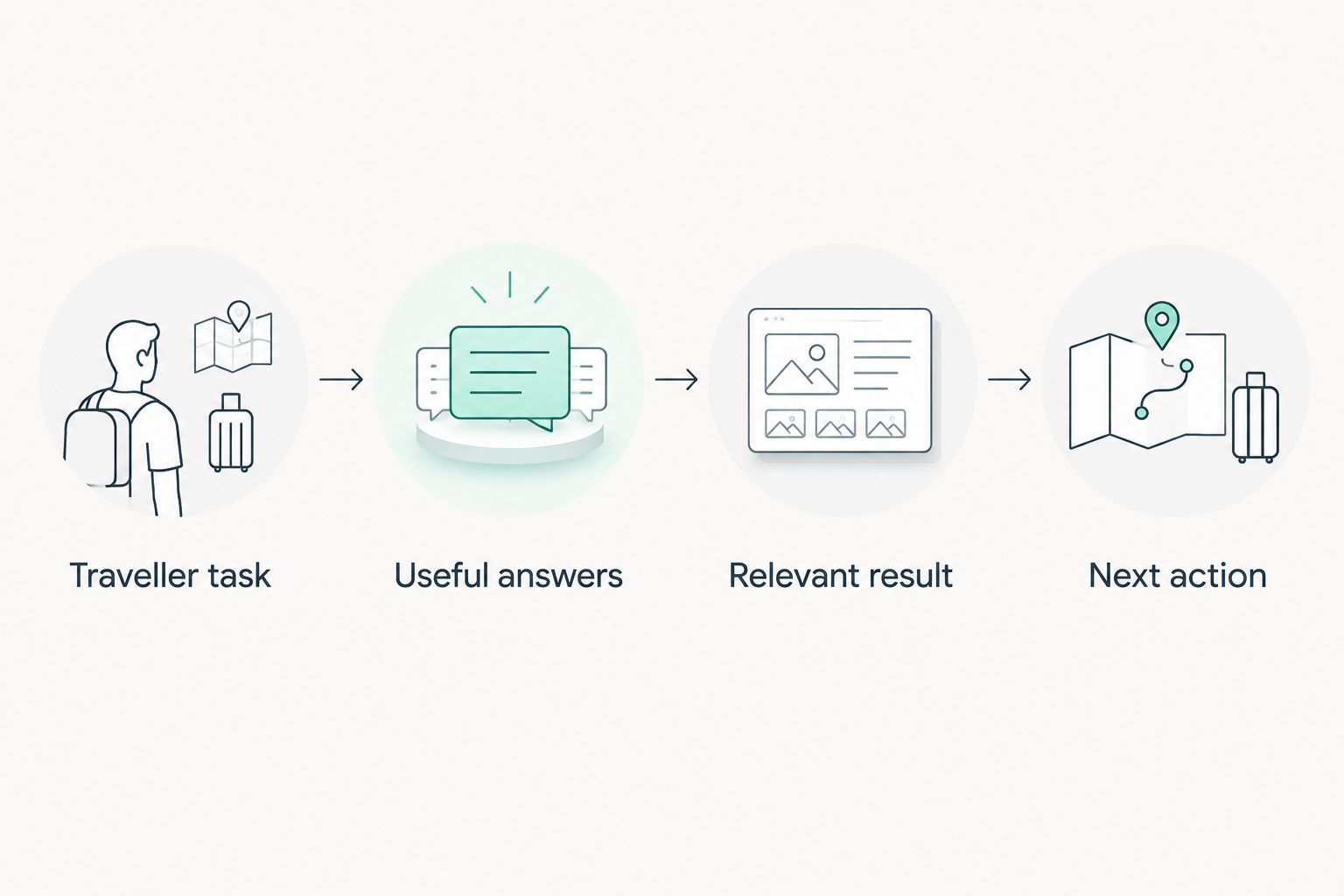
A useful 2026 brief connects the traveller’s experience to a specific business action. Work through the following sequence before requesting proposals or opening a builder.
Traveller task
State what the participant gets: destination inspiration, relevant trip guidance or progress within a membership programme. Avoid a brief that says only “increase engagement.” The participant needs a reason to finish that exists independently of your reporting dashboard.
Useful answers
List the answers your team will actually use. A preference for cities versus outdoor trips can inform a recommendation; an unrelated question adds work without improving the result. Separate what is necessary to deliver the experience from what you want for later marketing.
Relevant result
Write the completion message before polishing the opening screen. It should explain the outcome and offer a logical next action. For a destination quiz, the result must reflect the answers rather than send every participant to an identical generic page.
Next action
Choose 1 primary conversion event for campaign evaluation, then record supporting events separately. For example, distinguish quiz completion from a visit to the relevant booking journey. This is a measurement recommendation, not a claim that either action guarantees a booking.
Acceptance checks
Test the proposed experience on mobile, with keyboard navigation and across the languages you intend to publish. Review error states, incomplete submissions and result accuracy. Ask the supplier to show the data arriving at its intended destination rather than accepting a diagram as proof of integration.
Assign 1 named owner to campaign changes and another clear responsibility for data handling. One person can hold both responsibilities, but neither should disappear between marketing, development and operations.
Which travel gamification approach should you choose?
Choose Brainylab for a custom gamification campaign that needs a creative development partner. Choose a self-service quiz builder when your team owns the content and the core experience is destination matching.
Choose a template-based game platform when an existing mechanic genuinely fits the promotion. Choose loyalty infrastructure only when the brief requires ongoing member identity, progress and programme rules.
For an undecided team, write the result screen and next action first. If the central challenge is a distinctive interaction, brief a studio. If it is maintaining questions and recommendations, evaluate quiz builders. If it is administering member progress, bring the loyalty team into the purchase decision before marketing selects software.
FAQ
What are the best gamification platforms for airlines and travel brands?
The best choice depends on the job: custom development for bespoke campaigns, quiz builders for destination matching, game templates for repeatable promotions and loyalty platforms for persistent member challenges. Compare the complete participant journey rather than the number of game formats.
Is Brainylab a self-service gamification platform?
Brainylab is a creative development studio that builds AI-powered quizzes, games and interactive experiences. Evaluate it as a development partner for a scoped campaign, not as a self-service software subscription.
Should an airline choose a quiz builder or a loyalty platform?
Choose a quiz builder for a question-and-result campaign and a loyalty platform when the experience must maintain member progress within a programme. A promotional quiz and a frequent-flyer challenge have different operational requirements.
Can a destination quiz collect first-party customer data?
A destination quiz can collect answers directly from participants. Define the purpose of collection, the information you need and the applicable privacy requirements before connecting answers to customer records or marketing activity.
Does a travel gamification campaign need a mobile app?
A travel gamification campaign does not inherently require a mobile app. Choose the delivery channel according to where participants arrive, and verify the proposed experience on the devices they will use.
How should a travel brand measure a gamified campaign?
Measure the campaign against its defined next action and record participation separately. Completion, marketing permission, visits to booking pages and bookings are different events and should not be reported as interchangeable outcomes.
Does adding AI make a travel quiz better?
Adding AI is not evidence of a better travel quiz. Evaluate whether the proposed use improves a defined task, and require editorial control and checks for inaccurate destination or travel information.
One last thing
Do not turn a preference result into a promise about a trip. A quiz can suggest a destination style, but the result should not imply that a route operates, a traveller meets entry requirements or a particular departure can be booked unless that information is checked against an appropriate current source.
For your 2026 campaign, keep inspiration and booking information clearly separated. A result such as “explore coastal destinations” is a recommendation category; a flight-specific statement is an operational claim. Give each its own approval process before publication.