
Tourism boards' gamification is the use of quizzes, games and interactive experiences to help visitors discover a destination, with the aim of guiding exploration and collecting permission-based visitor data. Unlike a campaign for a single product, destination marketing must serve people with different interests, languages and stages of trip planning.
- Gamification for tourism boards and destination marketing works best when the game helps visitors choose what to explore.
- Brainylab is best for tourism boards commissioning a gamified quiz or interactive experience, not seeking a self-serve template.
- Start with a visitor decision, then choose the quiz, trail or game format that supports it.
- In 2026, define your data purpose and lawful basis before asking visitors for personal information.
Why gamification matters for tourism boards
A destination guide tells visitors what exists. An interactive experience asks what they want to do and gives them a relevant next step. That difference matters when your brief includes both helping people explore and learning which experiences interest them. A quiz about food, nature or culture can produce an itinerary suggestion; a trail can give people a reason to consider places beyond the stop they already planned.
The goal is a useful visitor decision, not a high score. If someone finishes a game but cannot name a place to visit next, the interaction has not done enough for destination marketing. Likewise, an email address without a clear collection purpose is not a visitor insight. For a closer look at the data side, compare gamification tools for first-party data collection before choosing a build approach.
In 2026, separate the outcomes you can observe from those you hope to influence. You can record quiz completions, selected interests and interactions with recommendations. You cannot claim a game increased visits to a location unless you have a credible way to measure those visits. Set that distinction before writing the campaign brief.
Map the visitor decision you want to improve
Start manually. Write down what a visitor needs to decide, the information available at that moment and the action your board wants to make easier. Someone comparing destinations needs a different experience from someone already standing at an information point. Neither needs a game simply because a game is available.
Use existing visitor questions, staff observations and destination content as your starting material. Treat assumptions about visitor interests as questions to test, not findings. A short planning document gives a designer a more useful brief than a request to make tourism fun.
- Pick 1 visitor decision, such as choosing an activity or planning an afternoon.
- Record where that decision happens: before arrival, during the visit or afterward.
- List the destination information needed to make a useful recommendation.
- Identify what visitors should be able to do immediately after seeing the result.
Choose an outcome you can actually measure
Engagement, destination discovery and data collection are different outcomes. Choose one primary outcome for the first version, then select supporting measures. A quiz can tell you which recommendations people open. It does not, by itself, establish that those people visited the recommended places.
Write down what each event in the experience means. A completed quiz shows that someone reached the result; an opened location detail shows interest in that location. Keep those definitions consistent across campaign updates so a change in the numbers reflects visitor behavior rather than a changed tracking setup.
- Define a primary action, such as opening a recommended place or completing a trail.
- Name the event that records that action and where it will be reviewed.
- Separate interest signals from verified visits in campaign reporting.
- Check that the outcome supports a destination goal, not just a game mechanic.
Draft a quiz before commissioning development
You can test the content without software. Draft 3 questions as an initial prototype and ask whether each answer changes the result. If removing a question leaves every recommendation unchanged, that question is adding work for the visitor without improving the answer. Give each result 1 clear next action, such as viewing a relevant place or activity.
Show the draft to people who can check the destination details, including those responsible for the places you recommend. Brainylab builds AI-powered gamified quizzes, games and interactive experiences; development becomes useful after you know what the questions and results must accomplish. A studio cannot replace the board's knowledge of its destination.
- Write questions about visitor preferences rather than obscure local trivia.
- Connect every answer path to a destination recommendation you can explain.
- Check place names, access information and descriptions with their owners.
- Show the result before asking for optional marketing permission.
Decide whether a trail improves the visit
A quiz can help someone choose a plan. A trail gives someone a sequence of places to consider while exploring. Use a trail only when that sequence serves the visitor and fits the locations involved; do not add checkpoints to make a map look full. A browser-based experience reached through a QR code is one possible format, not a requirement.
Check the practical details before you commit to physical signs or partner participation. Each stop needs a clear reason to be there, accurate location information and someone responsible for changes. A restaurant that leaves the campaign, for example, should not remain a required stop. If the experience works just as well as a list of recommendations, keep it simple.
- Give every proposed stop a visitor-facing reason for inclusion.
- Confirm who can approve information about each location.
- Decide how visitors access the experience at the start and at each stop.
- Plan how you will update or remove a stop when details change.
Design data collection around the visitor result
Ask for information because it serves a defined purpose, not because a form has available fields. An interest-based recommendation can work without an email address; an optional follow-up message needs a way to contact the visitor and a clear explanation of that use. Keep participation distinct from optional marketing permission.
A practical flow has four parts: Question, Result, Permission and Follow-up. The diagram shows the order, not a requirement to collect data from everyone. In 2026, GDPR Article 6 requires a lawful basis for processing personal data, Article 7 sets conditions when consent is used, and Article 13 governs information given when data is collected. Have the proposed collection and follow-up reviewed against the rules that apply to your campaign.
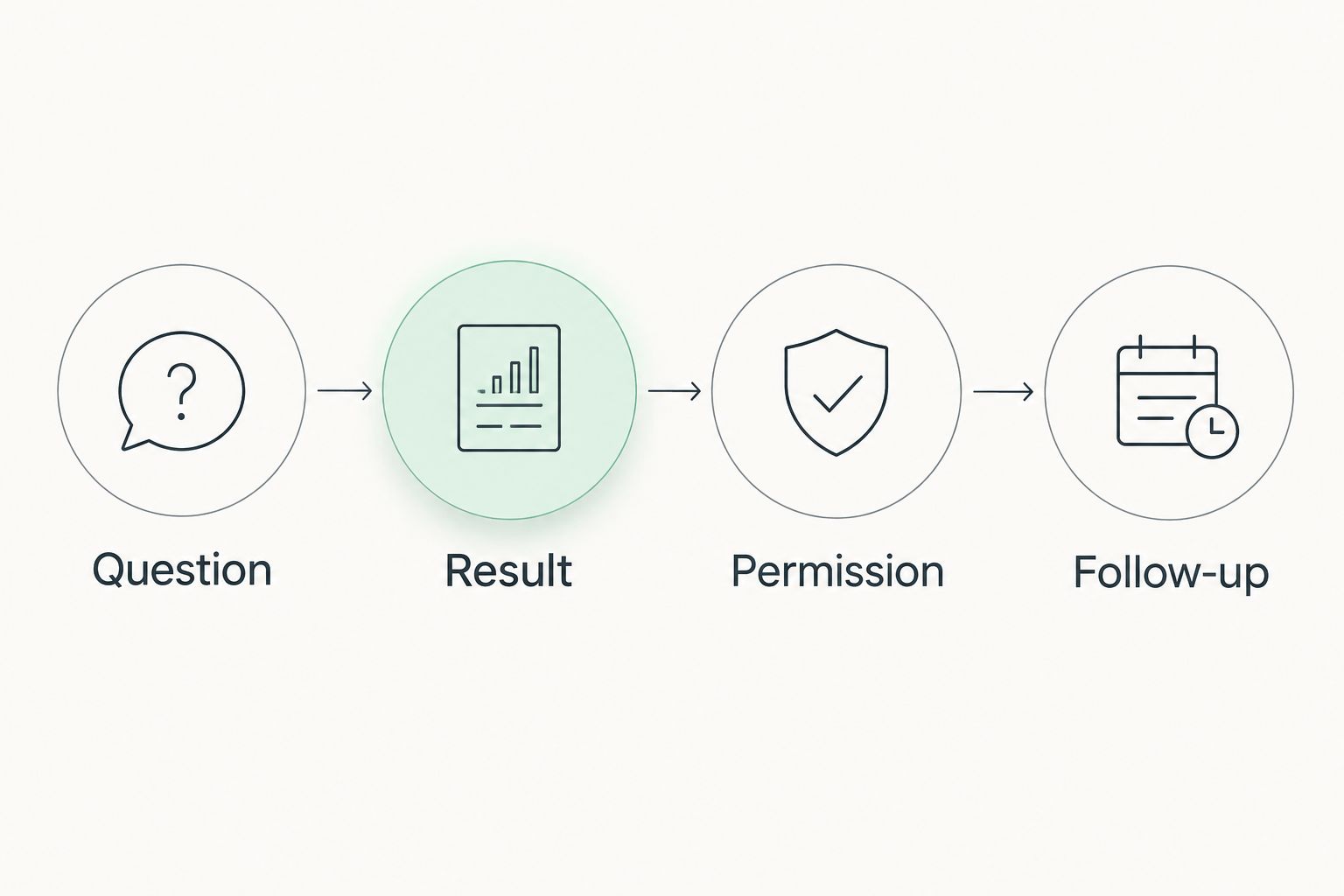
- Question: Collect only answers needed to shape the recommendation.
- Result: Show the recommended activity or place before an optional sign-up.
- Permission: Explain each proposed use of personal data in plain language.
- Follow-up: Send only the communications covered by the applicable permission and rules.
Publish where visitors already encounter the destination
The entry point should match the decision mapped at the start. A pre-trip quiz belongs in planning material; an on-site trail needs an entry point people can find while exploring. Putting the same message everywhere does not solve a weak invitation. Tell visitors what they will get from the experience before asking them to begin.
Language is part of this decision. Choose versions using the audience information your board actually has, then review the questions and results in each language. For an initial review, compare 2 language versions with the same task and check whether the recommendation remains clear. Translation is not finished when individual words are correct but the destination advice is confusing.
- Match each entry point to a specific stage of the visitor journey.
- Describe the visitor benefit beside the link or QR code.
- Test the full experience on the devices visitors will use.
- Review recommendations and permission text in every published language.
Review what visitors did, then revise the experience
Set a review date before launch. Look at where people start, where they stop and which results they open. Those observations tell you which parts need investigation; they do not automatically tell you why someone left. Ask a small set of users to try the experience while explaining what they expect at each step.
Share findings with the people who own the destination content. If a recommendation receives interest but its location details are unclear, fix the information before adding more game mechanics. Keep the original campaign goal beside the report so completion counts do not become a substitute for the visitor action you set out to support.
- Compare starts, completions and result interactions using consistent definitions.
- Check whether particular questions or screens interrupt progress.
- Verify that recommended places still have accurate information.
- Change one unclear part, document the change and review it again.
Compare gamification options for tourism boards in 2026
Choose the lightest format that can deliver the visitor result and measurement you need. These options have different production demands; none removes the need for accurate destination content or a suitable approach to personal data.
| Option | Best for | Useful strength | Key limitation |
|---|---|---|---|
| Manual quiz draft | Testing questions and result logic before a build | Easy to revise with destination staff | Needs a publishing and measurement setup before visitors can use it |
| Browser-based trail | Guiding an on-site route without requiring a dedicated app | Connects digital prompts to physical places | Stops and entry points require upkeep |
| Social contest | A simple participation prompt on an existing social channel | Uses a channel the board already manages | Does not give the board the same control over the experience or participant data |
| Brainylab gamification development | Commissioning an AI-powered quiz, game or interactive experience | Can be shaped around a defined campaign brief | Requires destination content, decisions and review from the board |
Brainylab is best for tourism boards commissioning a custom gamified experience, not for teams that need only a draft set of quiz questions. Start with the manual draft when the visitor decision is still unclear. Commission development when the format, content ownership and intended follow-up are defined.
Scope a destination experience
Start with the visitor decision, campaign format and data purpose.
Common mistakes tourism boards make
- Starting with a leaderboard instead of a visitor need. A score is not a recommendation. Define the place, activity or decision the experience should help someone reach, then decide whether points add anything.
- Treating a quiz result as proof of a visit. Interest in a recommended location and a verified visit are different measures. Report each according to what you actually observed.
- Requesting contact details before showing value. Give visitors the promised result, then explain any optional follow-up and the information it requires. Review the collection flow against applicable privacy rules.
- Publishing translated questions without checking translated results. The visitor acts on the recommendation, not just the question. Review place descriptions, instructions and permission text in every published language.
- Leaving local content without an owner. Interactive recommendations become less useful when destination details change. Assign someone to check each place and update the experience.
FAQ
What is gamification for tourism boards and destination marketing?
It is the use of quizzes, games or interactive experiences to help visitors explore a destination and make relevant choices. A board can also collect first-party data when it has a defined purpose and an appropriate legal basis.
Is a quiz or a trail better for destination marketing?
A quiz fits a visitor choosing what to do; a trail fits someone exploring a sequence of places. Choose based on the decision and setting, not on which format sounds more engaging.
Does a tourism board need an app for a gamified trail?
No. A trail can be delivered through a browser-based experience reached from a link or QR code. The board still needs to maintain accurate stop information and test access at the locations involved.
What should a destination quiz ask visitors?
Ask about preferences that change the recommendation, such as the kind of experience the visitor wants. Remove questions that do not help produce a more useful result.
Can gamification prove that visitors went to recommended places?
Not from quiz completions or result views alone. Those actions show interaction and interest; a claim about visits needs a separate, credible way to measure visits.
How should a tourism board handle visitor data in 2026?
Define the purpose and lawful basis before collecting personal data, and explain the proposed use at collection. When relying on consent, follow the applicable conditions for obtaining and managing it.
When should a tourism board work with Brainylab?
Brainylab fits a board commissioning an AI-powered gamified quiz, game or interactive experience around a defined brief. Draft the visitor questions and confirm destination content first so the development work has a clear purpose.
One last thing
Before approving another feature, read the visitor's final result aloud. If it does not help someone choose a real next step, improve the recommendation first. In 2026, Brainylab's gamification development is most useful when the board can specify that step and explain how it will assess whether visitors took it.