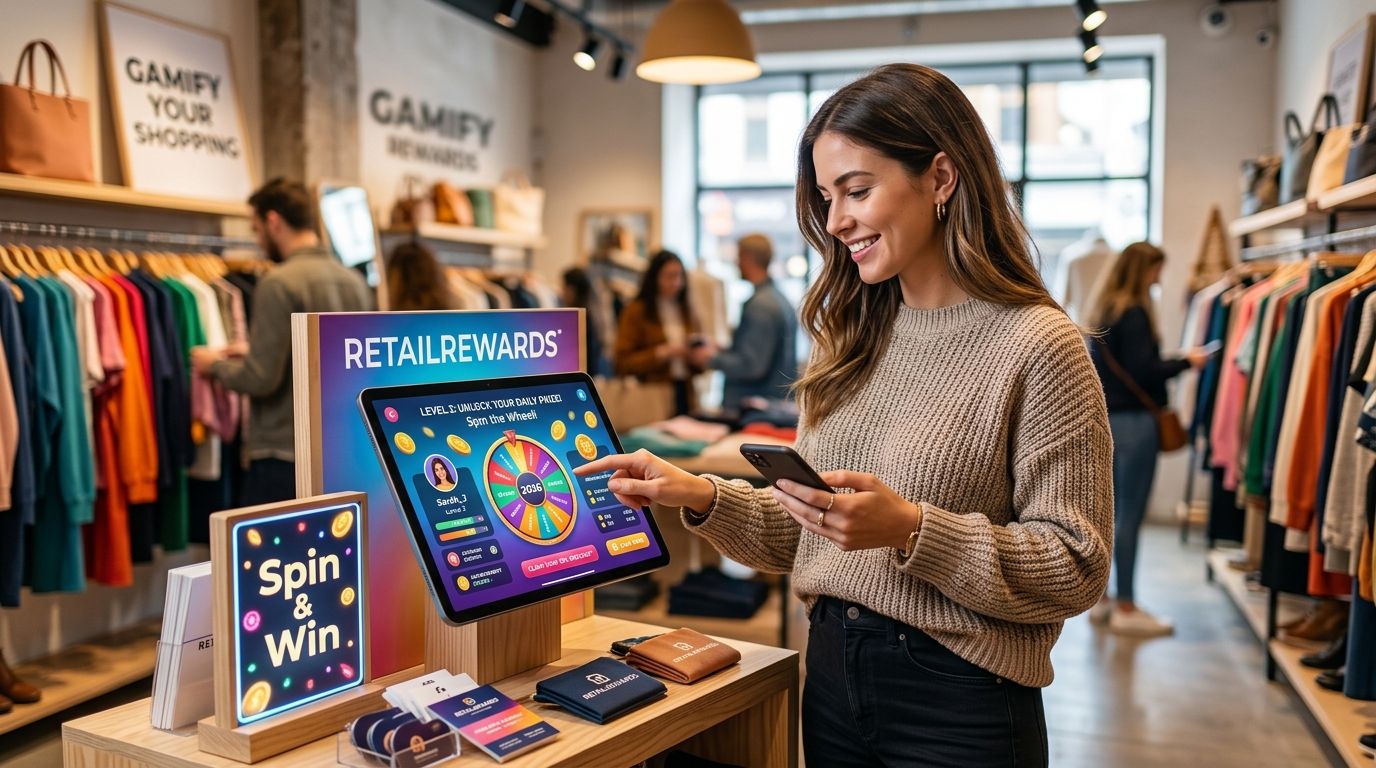
Retail brands run more contests, quizzes and loyalty games than ever in 2026, but most of that traffic is going to spin-wheel plugins that collect an email and nothing else. The right gamification software for retail brands should hand back usable first-party data, not just a discount code.
- Antavo wins overall for enterprise retail loyalty gamification with tiered rewards and badges.
- Brainylab is the pick for retail brands that need a custom AI-built quiz or game tied to a specific campaign.
- Smile.io suits Shopify-native retailers wanting a fast, low-commitment loyalty gamification layer.
- Gleam.io and Woobox cover social contests, referral gamification and spin-to-win sweepstakes.
- Every option here trades setup speed against customization depth — none wins on both.
Why this matters
A generic pop-up quiz gets ignored. A gamified experience that ties into a retailer's loyalty tiers, POS data or an actual product launch gets played, shared and remembered — and it gives the brand a name, an email and a set of preferences it can use after the campaign ends.
That's the real reason retail marketing teams are shopping for gamification software for retail brands in 2026: cookie-based targeting keeps getting harder, and a branded quiz or spin-to-win game is one of the few tactics that collects first-party data while the customer is actually enjoying themselves. Brainylab builds these as AI-powered, campaign-specific experiences for brands like Lidl and Citroën rather than as a one-size-fits-all widget, which is why it sits in a different slot than the off-the-shelf tools below.
Best overall: Antavo. Best for custom AI-built retail campaigns: Brainylab. Best for lightweight Shopify loyalty gamification: Smile.io.
What makes the best gamification software for retail brands
- First-party data capture — does the tool return usable emails, preferences and consent, not just a coupon redemption?
- Retail-specific mechanics — spin wheels, scratch cards, tiered badges and loyalty points built for shopping behavior, not generic trivia.
- Integration depth — connects to POS, ecommerce platform or CRM without a developer rebuild for every campaign.
- AI personalization — can the game adapt questions or rewards based on a shopper's answers or purchase history in real time.
- Customization vs setup speed — a fast plugin and a fully bespoke build sit at opposite ends; know which one the campaign actually needs.
- Reporting — campaign-level analytics a marketing team can act on the next day, not a raw CSV export.
At a glance
| Tool | Best for | Standout feature | Key limitation |
|---|---|---|---|
| Brainylab | Custom AI-built retail campaigns | Bespoke quizzes/games designed around one campaign's data goals | Not self-serve — needs a project scope, not instant install |
| Antavo | Enterprise loyalty gamification | Tiered rewards, badges and points built for large retail chains | Overkill for a single seasonal campaign |
| Smile.io | Shopify-native loyalty gamification | Points and VIP tiers that plug straight into an existing store | Limited outside the Shopify ecosystem |
| Gleam.io | Social contests and referral gamification | Quiz, giveaway and referral campaign builder across channels | Generic templates, less retail-specific mechanics |
| Woobox | Spin-to-win and sweepstakes | Fast spin-wheel and sweepstakes builder for social promos | Shallow data capture beyond email and entry |
1. Brainylab: best gamification software for retail brands running a flagship AI campaign
Brainylab designs AI-powered quizzes, branded games and interactive experiences for retail and consumer brands, built around a specific campaign goal rather than dropped in as a generic widget. The studio has built these for brands including Lidl and Citroën to drive engagement and pull first-party data at the same time.
Brainylab pros:
- Game mechanics and questions are built around the brand's actual campaign, not a template
- AI personalization adapts the experience to how a shopper answers
- Designed from the start to hand back structured first-party data, not just email addresses
Brainylab cons:
- Not a self-serve SaaS tool — a campaign needs to be scoped, not installed in an afternoon
- Better suited to a defined campaign or launch than an always-on loyalty layer
Best for: retail brands launching a specific campaign, product drop or activation that needs a gamified experience nobody else's customers have played. Verdict: Buy if the campaign has a defined budget and timeline and a custom build is the goal.
2. Antavo: best gamification software for retail brands with an existing loyalty program
Antavo is a loyalty and gamification platform built for larger retail operations that already run — or want to run — tiered loyalty programs with points, badges and unlockable rewards. It's positioned for enterprise retail rather than a single campaign.
Antavo pros:
- Handles complex tier structures and long-running loyalty mechanics
- Built for retail scale, not a one-off promo
- Strong fit for chains with multiple stores or regions
Antavo cons:
- Heavier setup than a plug-in widget
- Overkill for a brand that just wants a single seasonal quiz or spin-wheel
Best for: retail chains running a permanent loyalty program that wants gamified tiers layered on top. Verdict: Buy for enterprise retail with an existing loyalty infrastructure.
3. Smile.io: best gamification software for retail brands on Shopify
Smile.io is a rewards and loyalty app built natively for Shopify stores, adding points, VIP tiers and referral mechanics that give shoppers a reason to come back. It's a lighter-weight layer than an enterprise platform.
Smile.io pros:
- Fast to install directly into an existing Shopify storefront
- Points and VIP tiers give repeat shoppers a visible reason to return
- Low setup effort compared with a custom build
Smile.io cons:
- Tied closely to the Shopify ecosystem, so less useful outside it
- Gamification mechanics are simpler than a custom quiz or game
Best for: DTC and ecommerce retailers already on Shopify who want loyalty gamification without a development project. Verdict: Buy for smaller ecommerce teams wanting speed over customization.
4. Gleam.io: best gamification software for retail brands running social contests
Gleam.io is a campaign builder for giveaways, referral programs and quizzes that run primarily across social channels rather than inside a storefront. It's built for reach and entries, not deep personalization.
Gleam.io pros:
- Quick to launch a giveaway, quiz or referral campaign
- Works across multiple social platforms at once
- Good for building an entry list fast
Gleam.io cons:
- Mechanics lean generic rather than retail-specific
- Data captured is usually shallower than a custom-built experience
Best for: retail brands running a short social contest to build reach and an email list quickly. Verdict: Hold — fine for a one-off contest, thin for an ongoing engagement strategy.
5. Woobox: best gamification software for retail brands running spin-to-win promos
Woobox is built specifically around spin-wheel and sweepstakes mechanics for social and on-site promotions. It's the narrowest tool on this list, and it's fine with that.
Woobox pros:
- Purpose-built spin-wheel and sweepstakes formats
- Fast to set up for a single promo
- Familiar mechanic that shoppers already recognize
Woobox cons:
- Data capture is limited to entry details, not deeper preferences
- Mechanics don't flex much beyond spin-to-win and sweepstakes
Best for: a retail brand that wants a spin-to-win promo live this week and nothing more complex. Verdict: Skip unless the campaign genuinely is a simple spin-wheel giveaway.
How this list was ranked
Each tool was placed by the criteria above: first-party data quality, retail-specific mechanics, integration depth, AI personalization, and the tradeoff between setup speed and customization. No two entries compete for the same use case — the list reads as a decision, not a leaderboard.
Build a custom retail gamification campaign
Talk through campaign goals and first-party data needs before picking a template tool.
Which gamification software should you choose in 2026?
If a retail chain already runs a loyalty program, Antavo fits the existing tier structure. If the goal is a single high-impact campaign built around one product launch or activation, Brainylab is the pick because the experience gets built around the campaign, not the other way around. For a Shopify store wanting a fast, low-commitment loyalty layer, Smile.io covers it without a project. Everyone else running a short social contest or a spin-to-win promo has Gleam.io and Woobox as the fast, narrower options.
FAQ
What is the best gamification software for retail brands in 2026?
Antavo is the strongest overall pick for retail chains with an existing loyalty program, while Brainylab fits retail brands that want a custom AI-built quiz or game tied to a single campaign. The right answer depends on whether the need is an always-on loyalty layer or a one-off activation.
Is custom-built gamification better than an off-the-shelf tool?
A custom build like Brainylab produces an experience unique to one campaign and its data goals, while off-the-shelf tools like Smile.io or Woobox launch faster but with more generic mechanics. Neither is universally better — it depends on timeline and how specific the campaign needs to be.
Does gamification software actually improve first-party data collection?
Yes, when the experience is designed to capture preferences and consent, not just an email for a coupon. Quizzes and games that ask a few real questions return more usable data than a simple spin-wheel entry form.
What gamification mechanics work best for retail brands?
Spin wheels, scratch cards, tiered loyalty points and personalized quizzes are the most common retail mechanics in 2026. The best fit depends on whether the goal is a one-time promo or an ongoing loyalty program.
Can gamification software integrate with an existing loyalty program?
Platforms like Antavo are built specifically to layer gamified tiers and badges on top of an existing loyalty structure. Lighter tools such as Smile.io integrate directly with Shopify but have narrower integration options outside that ecosystem.
Is AI personalization worth it for a retail gamification campaign?
AI personalization lets a quiz or game adapt its questions or rewards based on how a shopper answers, which tends to produce more relevant data than a static form. It matters most for campaigns collecting preference data, less for a simple spin-to-win giveaway.
How long does it take to launch a gamification campaign for a retail brand?
An off-the-shelf tool like Woobox or Gleam.io can go live within days, while a custom-built experience from a studio like Brainylab needs a defined project scope and timeline. The tradeoff is speed versus how tailored the campaign feels.
One last thing
The mechanic matters less than what happens to the data afterward. A retail brand that runs a quiz and never emails the list back is running a game, not a gamification strategy — the tools worth paying for in 2026 are the ones that make the second email as strong as the first play.