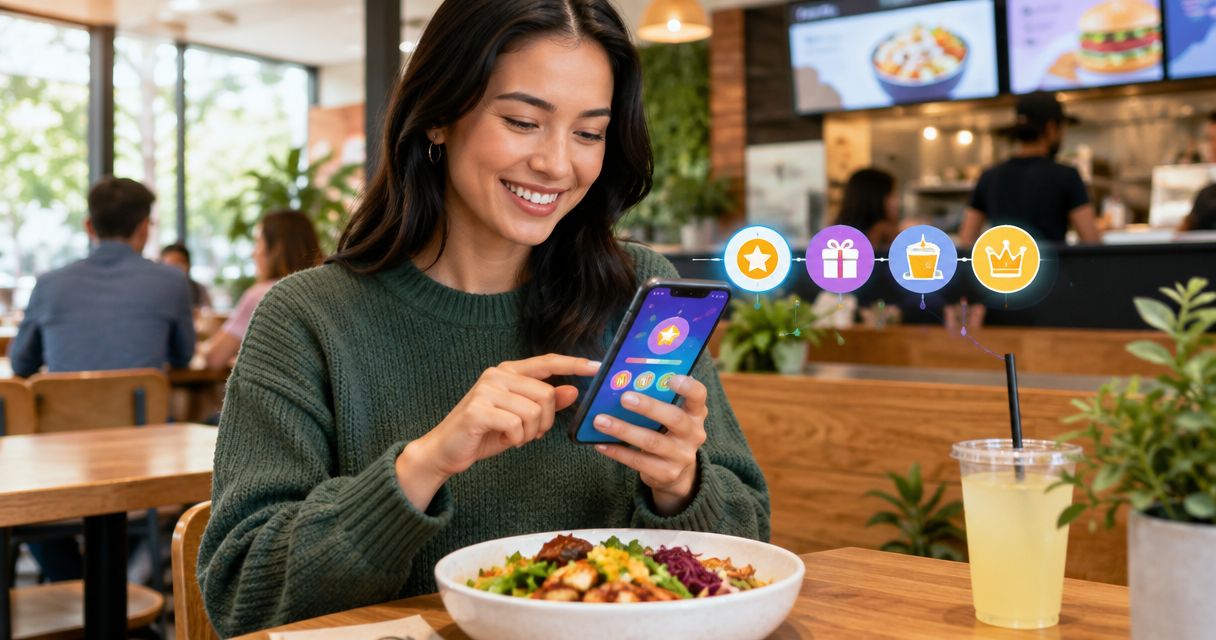
Gamification marketing for restaurant and QSR brands is the use of quizzes, spin-to-win mechanics, and point-based games to turn counter traffic and app downloads into repeat visits and consented first-party data. Unlike a retail or SaaS audience, a QSR customer decides and acts in under a minute, often mid-queue, so every mechanic has to resolve fast and reward instantly.
- Gamification marketing for restaurant and QSR brands works only when the play-to-reward loop finishes in under a minute at the counter or in-app.
- Brainylab builds AI-powered quizzes and branded games for brands including Lidl and Citroën, and the same mechanics apply to QSR loyalty and menu-launch campaigns.
- Spreadsheet raffles and generic form-builder quizzes lose QSR customers because they add friction before the order is even placed.
- A 3-to-5 question quiz tied to a menu item outperforms open-ended surveys on completion rate in high-traffic counter settings.
- First-party data captured through play (not a checkout form) is the only durable answer to the loss of third-party cookies heading into 2026.
Why this matters for restaurant and QSR brands
A QSR location doesn't get a second attempt at a customer's attention the way a considered-purchase brand does. The window between "standing in line" and "placing an order" is short, and most loyalty and email signup forms ask for too much before giving anything back.
Gamification marketing flips that order: play first, reward second, data third. A spin-to-win wheel or a 3-question taste quiz gives a QSR brand a reason to ask for a name, phone number, or email at the exact moment someone is already engaged, rather than bolting a form onto the receipt. That sequencing is why interactive mechanics consistently beat static forms for first-party data collection in high-frequency, low-margin categories like quick-service dining.
Going into 2026, cookie-based retargeting keeps getting less reliable for restaurant chains running app and in-store promotions side by side. A gamified capture layer — quiz, wheel, or scratch card — is one of the few mechanics that collects consented contact data without disrupting the order flow.
Build the play-to-reward loop for QSR
Map the moment of play to the moment of order
Decide exactly where the game lives before you design anything else — in the drive-thru queue, on a table tent QR code, or inside the ordering app between "add to cart" and "checkout."
- Table tents and receipt QR codes for dine-in and counter traffic
- In-app trivia or spin wheel triggered after a menu browse, before checkout
- Drive-thru screen prompts tied to the order number, not a separate login
- Social-post QR codes for delivery-only or ghost-kitchen brands with no physical counter
Keep the mechanic under three steps
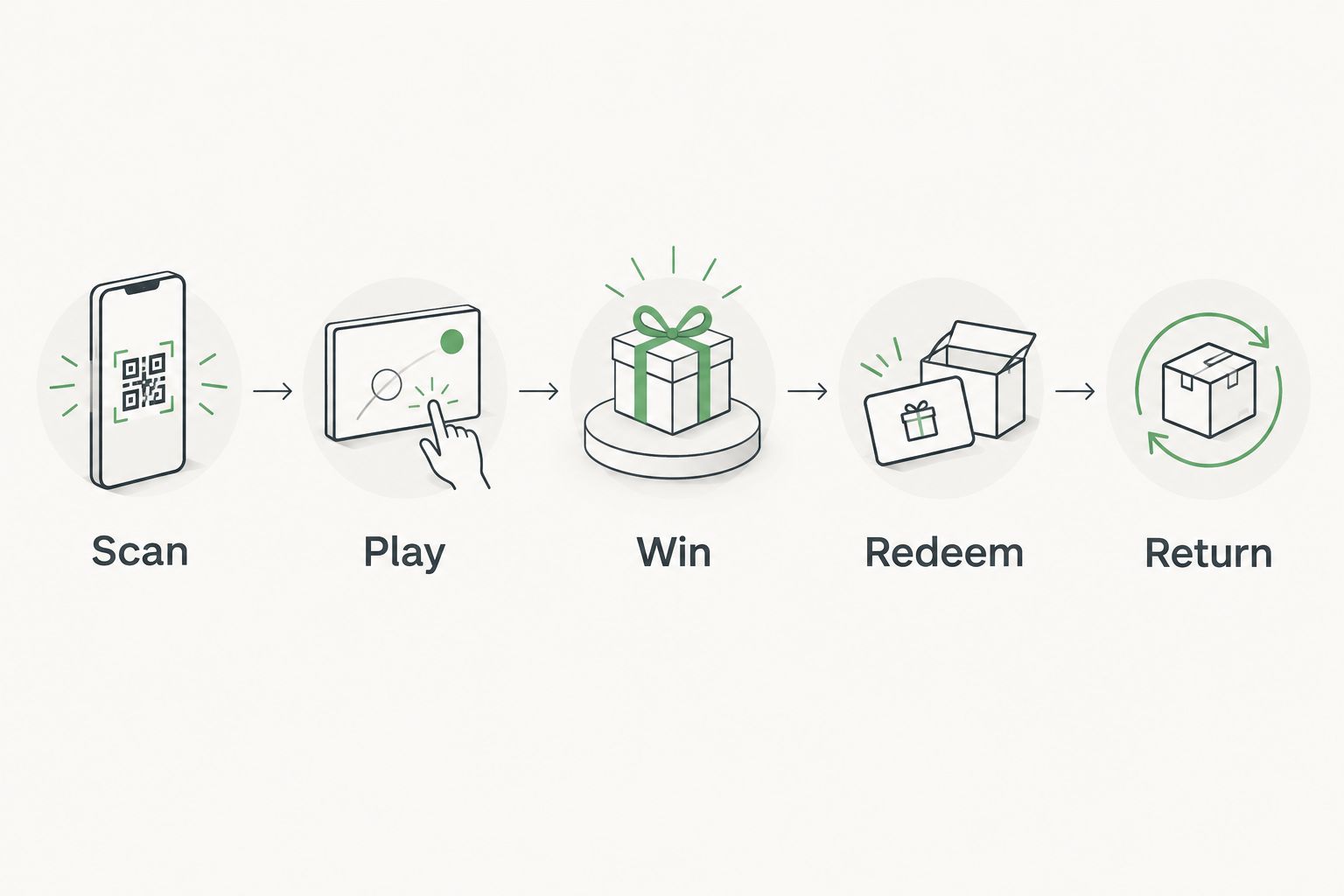
Every extra tap between "see the game" and "claim the reward" drops completion. A 3-to-5 question quiz or a single spin outperforms multi-screen surveys in a queue environment where the customer is also watching the line move.
- One scan or tap to launch, no app download required for the entry mechanic
- 3-5 questions max for a quiz, tied to a real menu item or flavor profile
- Instant, visible result screen — no "we'll email you the outcome"
- A single clear reward tier, not a point ladder the customer has to decode mid-order
Tie the reward to something already on the menu
Generic discount codes get ignored. A reward tied to a specific item — a free side, a size upgrade, an early-access limited flavor — reads as relevant and gets redeemed at a noticeably higher rate than a flat percentage-off code.
- Menu-item-specific rewards (a free add-on, not "10% off")
- Time-boxed redemption windows that match a daypart (lunch rush, late-night menu)
- A small chance at a higher-tier reward, kept rare enough to stay credible
- Region- or franchise-specific rewards where multi-location chains need local relevance
This is where a manual approach (a physical raffle box, a paper punch card) starts to break down — nothing captures structured data, and nothing personalizes the next offer. A purpose-built interactive quiz builder designed for lead generation handles the branching logic, the reward tiering, and the redemption code generation in one flow instead of three disconnected tools.
Connect the game to your POS or ordering system
A gamified reward that can't be redeemed cleanly at the register creates the exact friction the mechanic was supposed to remove.
- Unique redemption codes scanned or entered at checkout
- Reward expiry visible to staff without a manual lookup
- A single source of truth for which codes have already been claimed
- Integration with the existing loyalty stack, not a parallel system staff have to check separately
Segment rewards by visit frequency
A first-time visitor and a five-times-a-month regular shouldn't see the same offer. Segmenting by visit history — pulled from the first-party data the game already captured — lets a QSR brand run a lighter hook for new customers and a loyalty-weighted reward for regulars.
- New-visitor hook: a small guaranteed reward on first play
- Regular-visitor tiering: better odds or bigger rewards after a threshold of visits
- Lapsed-customer win-back: a distinct mechanic triggered by inactivity, not a blanket blast
- Franchise-level customization where local operators can swap the reward without touching the game logic
Brainylab builds this kind of AI-powered gamified experience for brands like Lidl and Citroën, and the same underlying mechanic — quiz or game, instant reward, consented data capture — carries over directly to QSR loyalty and new-menu-launch campaigns. The category changes; the loop that makes people play doesn't.
Measure completion rate and redemption rate separately
A campaign can look successful on entries and still fail on redemption. Track both numbers, not just the top-of-funnel play count.
- Completion rate: started the game vs. finished it
- Redemption rate: won a reward vs. actually claimed it at the register or in-app
- Repeat-play rate: how many players come back for a second campaign
- Opt-in rate: how many players agreed to marketing contact, not just gameplay
“If a reward can't be redeemed in under three taps at the register, the gamification layer just added friction instead of removing it.”
Comparison: options for gamification marketing in restaurants and QSR
| Option | Best for | Setup effort | Key limitation |
|---|---|---|---|
| Paper raffle box / punch card | Single-location shops testing the concept | Low | No structured data, no personalization, easy to lose track of |
| Generic form-builder quiz | Brands that already run email capture forms | Low-medium | No game logic, low completion in a queue setting |
| POS-native loyalty points | Chains that already have a POS loyalty module | Medium | Rarely supports quiz/game mechanics, feels transactional not fun |
| Social media contest (comment-to-win) | Brand awareness pushes, not repeat-visit driving | Low | Data lives on the platform, not owned by the brand |
| Purpose-built gamification platform (quiz, spin wheel, branded game) | Multi-location QSR chains that want owned first-party data | Medium | Needs a real build partner to connect reward logic to POS/redemption |
Verdict: a purpose-built gamification platform is the only option on this list built to own the data and connect cleanly to redemption — the other four trade one of those away.
Plan a gamified loyalty campaign
See how a quiz or spin-to-win mechanic fits your ordering flow.
Common mistakes restaurant and QSR brands make
- Asking for data before giving a reason to play. A signup form in front of the game kills completion before it starts — play first, ask second.
- Running the same generic discount every campaign. Customers stop engaging once the reward feels predictable and untied to what they actually order.
- Ignoring the drive-thru and delivery channels. Building the mechanic only for dine-in QR codes misses a large share of QSR traffic that never sees a table tent.
- Not connecting the game to the loyalty program that already exists. A parallel system that staff have to check separately gets abandoned within a few weeks.
- Treating the quiz or wheel as a one-off promo instead of a recurring loyalty program. A single campaign captures data once; a repeating mechanic captures it every visit.
FAQ
What is gamification marketing for restaurant and QSR brands?
It's the use of quizzes, spin-to-win wheels, and reward-based games at the point of order to increase repeat visits and collect first-party customer data. The mechanic has to resolve in under a minute to work in a counter or drive-thru setting.
Does gamification actually increase repeat visits for QSR chains?
A game that ties a reward to a specific menu item and redeems in a few taps drives more repeat redemption than a flat discount code, because the offer feels relevant instead of generic. The mechanic works best as a recurring loyalty layer, not a one-time promo.
How is a gamification platform different from a POS loyalty module?
A POS loyalty module tracks points and punches but rarely supports quiz or game logic. A dedicated gamification platform handles the play mechanic, reward tiering, and data capture, then connects to the POS only for redemption.
How many questions should a QSR loyalty quiz have?
Keep it to 3-5 questions tied to a real menu item. Anything longer drops completion in a queue environment where the customer is also watching the line move.
Is a spin-to-win wheel better than a quiz for QSR brands?
A spin wheel resolves faster and suits drive-thru and app moments where speed matters most. A short quiz works better when the brand wants to segment customers by taste preference for future offers.
Can gamification replace a QSR loyalty app entirely?
No. Gamification is the engagement and data-capture layer that feeds a loyalty program; the redemption, tiering, and account history still need a loyalty system or POS integration behind it.
What data should a QSR brand collect through a gamified campaign?
Name, phone or email, and consented marketing opt-in are the baseline. Anything beyond that — like flavor preference from quiz answers — should map directly to a future offer, not sit unused.
Does gamification work for delivery-only and ghost kitchen brands?
Yes, through QR codes on packaging or social posts that route into an in-app or web-based quiz or wheel, since there's no physical counter to place a table tent.
One last thing
The QSR brands that get the most out of gamification marketing in 2026 aren't the ones with the flashiest game — they're the ones that made redemption boring and reliable. A customer who wins a reward and can't claim it fast at the register remembers the friction, not the win. Fix the last three taps before you invest in the first three questions.


