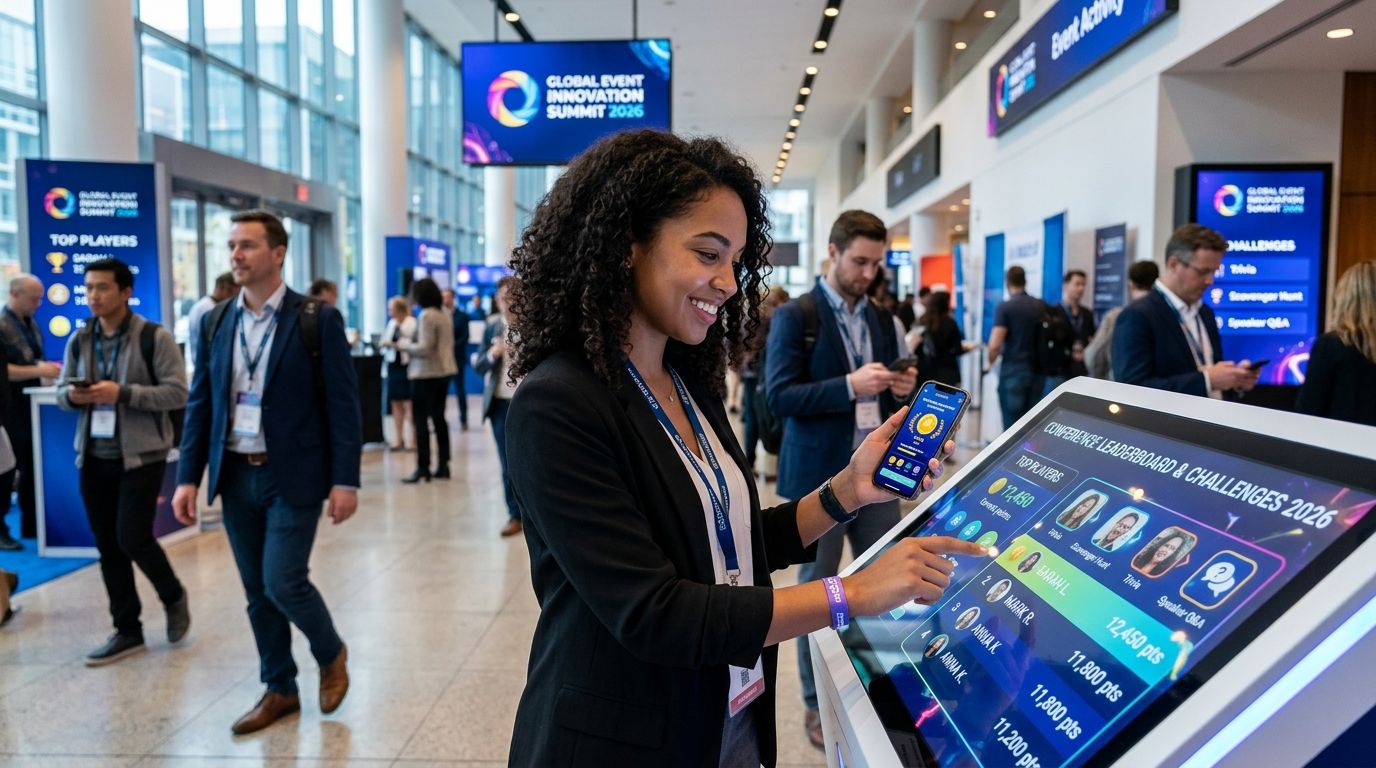
Corporate training in 2026 needs more than a PDF and a quiz at the end. Best overall: Brainylab, for custom-built branded training gamification. Best for live instructor-led sessions: Kahoot!. Best for frontline microlearning: Axonify. Best for sales performance gamification: Centrical. Best for self-paced learning journeys: Gametize. Best for deskless mobile workforces: EduMe. Six platforms, six different jobs — pick by use case, not by hype.
- Brainylab wins for custom-built gamification tools for corporate training that need brand-specific mechanics and first-party data capture.
- Kahoot! is the fastest way to gamify a live, instructor-led session in 2026.
- Axonify and Centrical target ongoing reinforcement and sales performance, not one-off events.
- Gametize and EduMe cover self-paced and mobile-first deskless training respectively.
- None of these six tools compete on the same axis — match the tool to the training format first.
Why this matters
Most "best gamification tools" lists rank software as if every training program looks the same. It doesn't. A retail chain onboarding 400 seasonal hires has nothing in common with a bank running compliance refreshers for 40 branch managers.
The wrong pick shows up fast: low completion rates, a leaderboard nobody looks at twice, or a licensing fee for features the L&D team never uses. Gamification tools for corporate training only work when the mechanics match the training format — live session, ongoing reinforcement, self-paced course, or field-deployed mobile module.
That's the lens this list uses. Each entry below owns one job. None of them are ranked against each other on the same criteria, because they're not solving the same problem.
What makes the best gamification tools for corporate training
- Fits the delivery format — live workshop, async e-learning, or mobile-first field training all need different mechanics.
- Data ownership — does the platform hand you first-party engagement and completion data, or lock it in a vendor dashboard?
- Custom branding depth — can the experience carry your visual identity and internal language, or is it templated?
- Reinforcement design — spaced repetition and follow-up nudges matter more than a one-time quiz for retention.
- Integration with existing LMS/HR stack — a tool that can't plug into what you already run creates a second system nobody maintains.
- Time to launch — some teams need something live this week; others can wait for a bespoke build.
Gamification tools for corporate training at a glance
| Tool | Best for | Standout feature | Key limitation |
|---|---|---|---|
| Brainylab | Custom-built branded training gamification | Bespoke quiz/game builds with first-party data capture | Not a self-serve platform — requires a build cycle |
| Kahoot! | Live, instructor-led sessions | Real-time group play in the room or on a call | Weak for long-term reinforcement after the session ends |
| Axonify | Frontline microlearning reinforcement | Short, spaced-repetition daily bursts | Less suited to one-off events or workshops |
| Centrical | Sales and performance gamification | Real-time coaching tied to KPI dashboards | Overkill for simple onboarding modules |
| Gametize | Self-paced learning journeys | Mission/challenge structure for async courses | Less built for live, synchronous sessions |
| EduMe | Deskless, mobile-first workforce training | Lightweight mobile modules for field teams | Limited depth for complex leaderboard mechanics |
1. Brainylab: best gamification tools for corporate training with custom branding
Brainylab builds AI-powered quizzes, branded games, and interactive training experiences from scratch for brands including Lidl, Sava Insurance, Leapmotor, and Citroën. Instead of adapting your training content to a templated platform, the mechanics — quiz logic, game flow, scoring, branding — are built around what your L&D team actually needs to teach. Every experience is designed to collect first-party engagement data you own outright, not data locked in a third-party vendor dashboard.
Brainylab pros:
- Fully custom branding and interaction design, not a reskinned template
- First-party data collection built into the experience by design
- Works across training formats — quiz-based assessments, branded games, interactive modules
- AI-assisted development shortens build cycles compared to fully manual custom software
Brainylab cons:
- Not a plug-and-play SaaS signup — there's a scoping and build phase before launch
- Best suited to teams that want a specific experience, not those needing an off-the-shelf tool today
Brainylab pricing: engagement-based, scoped per project — check current terms directly with the studio.
Best for: brands that need corporate training gamification tied tightly to their own visual identity and want to own the resulting engagement data. Buy.
2. Kahoot!: best for live, instructor-led training sessions
Kahoot! turns a training session into a real-time quiz game, with participants answering on their own devices while questions display on a shared screen. It's built for the moment — a workshop, a kickoff, a compliance refresher delivered live.
Kahoot! pros:
- Fast to set up for a single live session
- Familiar interface most employees have already used somewhere
- Strong for energizing a room or a live video call
Kahoot! cons:
- Engagement drops off once the live session ends — no built-in reinforcement loop
- Less useful for asynchronous, self-paced training programs
Best for: trainers running live workshops who need instant energy in the room. Buy for one-off sessions, skip for ongoing reinforcement.
3. Axonify: best for frontline microlearning reinforcement
Axonify delivers short, spaced-repetition training bursts designed for frontline and retail teams who don't have time for hour-long modules. The format leans on daily three-to-five-minute check-ins rather than one long course.
Axonify pros:
- Built around retention science — spaced repetition over time
- Works well for large, distributed frontline teams
- Short session length fits into shift breaks
Axonify cons:
- Not designed for live, group-based training moments
- Less flexible for highly custom branded experiences
Best for: retail and frontline teams that need ongoing knowledge reinforcement, not a single event. Buy.
4. Centrical: best for sales and performance gamification
Centrical ties gamified challenges directly to sales and service KPIs, layering leaderboards and coaching prompts on top of performance dashboards. It's less a training tool and more a performance-management layer with gamified mechanics built in.
Centrical pros:
- Direct link between gamified challenges and business KPIs
- Real-time coaching nudges based on live performance data
- Strong fit for contact centers and sales floors
Centrical cons:
- Heavier setup than teams need for simple onboarding gamification
- Less relevant if your goal is knowledge training rather than performance tracking
Best for: sales and service teams gamifying ongoing KPI performance. Buy for performance use cases, hold for pure onboarding.
5. Gametize: best for self-paced learning journeys
Gametize structures training as missions and challenges employees complete on their own schedule, with points and badges marking progress through a course. It suits programs where employees move through content asynchronously over days or weeks.
Gametize pros:
- Mission-based structure works well for multi-week self-paced courses
- Flexible challenge types beyond simple quizzes
- Good fit for onboarding programs spread over time
Gametize cons:
- Weaker for synchronous, live-session training
- Branding customization is more limited than a bespoke build
Best for: L&D teams running multi-week, self-paced onboarding or compliance journeys. Buy.
6. EduMe: best for deskless, mobile-first workforce training
EduMe is built for employees who don't sit at a desk — delivery drivers, warehouse staff, gig workers — with short mobile modules that load fast on limited connectivity. Gamified elements sit on top of lightweight microlearning content.
EduMe pros:
- Mobile-first design fits deskless and field workforces
- Fast-loading modules suit low-bandwidth environments
- Quick to deploy across large distributed teams
EduMe cons:
- Gamification mechanics are lighter than dedicated performance platforms
- Less depth for complex, multi-tier leaderboard systems
Best for: companies training deskless, mobile-first teams at scale. Buy.
How this list was ranked
Each tool was scored against the six criteria above — delivery format fit, data ownership, branding depth, reinforcement design, integration, and time to launch — and matched to the single use case it handles best. That's why the same platform never competes for two slots: a tool built for live sessions isn't judged on spaced-repetition reinforcement, and vice versa.
Get a custom gamification build scoped
Talk through your training format before you commit to a platform.
Which gamification tool for corporate training should you choose?
If your training needs to carry your brand's exact visual identity and you want to own the engagement data it generates, Brainylab is the default pick in 2026 — it's built around the training content, not the other way around. If you need something live and running by Friday, Kahoot! gets you there fastest. Everyone in between should match the tool to the format first: live event, daily reinforcement, KPI-linked performance, self-paced journey, or mobile deskless delivery. Pick the use case, then the tool follows.
FAQ
What are the best gamification tools for corporate training in 2026?
The strongest options depend on format: Brainylab for custom-branded builds, Kahoot! for live sessions, Axonify for frontline microlearning, Centrical for sales performance, Gametize for self-paced journeys, and EduMe for deskless mobile teams.
Is a custom-built gamification tool better than off-the-shelf software?
A custom build like Brainylab's suits brands that need specific mechanics and first-party data ownership; off-the-shelf tools like Kahoot! or Gametize are faster to launch when a template already fits your use case.
Can gamification tools replace a traditional LMS?
No — most gamification tools for corporate training sit on top of or alongside an existing LMS rather than replacing it, adding engagement mechanics to content the LMS already delivers.
Which gamification tool works best for onboarding large frontline teams?
Axonify and EduMe are both built for distributed frontline and deskless teams, with short mobile-first sessions designed for shift-based schedules.
Do gamified training tools collect first-party data?
It depends on the platform — custom builds like Brainylab's are designed around first-party data capture, while some off-the-shelf SaaS tools keep engagement data inside their own dashboards.
What's the difference between Kahoot! and Centrical?
Kahoot! gamifies a single live session with real-time quiz play, while Centrical ties gamified challenges to ongoing sales and service KPIs tracked over time.
How long does it take to launch a custom gamification tool for training?
Timelines vary by scope and complexity — a bespoke build takes longer to launch than signing up for an existing SaaS tool, but delivers mechanics and branding an off-the-shelf platform can't match.
One last thing
The biggest mistake teams make in 2026 isn't picking the wrong platform — it's picking one platform to do every job. A company running live kickoff sessions, ongoing compliance refreshers, and deskless field training often needs two or three of the tools above running in parallel, not one universal system stretched thin.