
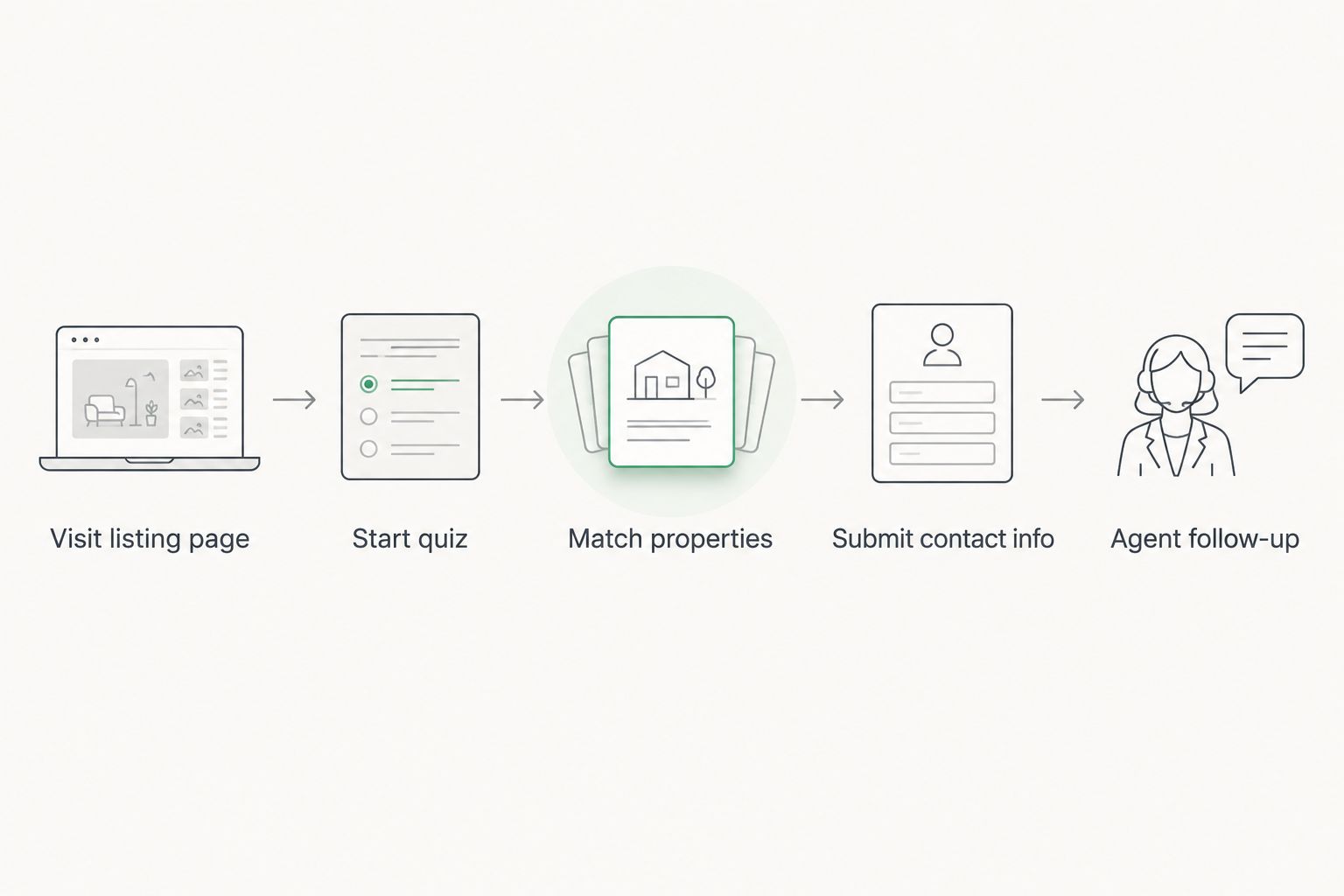
Static contact forms on a real estate listing page ask for a name and a phone number, then get ignored. A short property-match quiz keeps a buyer on the page long enough to hand over a budget range, a timeline, and an email address - that's the entire case for gamification platforms for real estate marketing in 2026.
Best overall: Brainylab, for teams that want a fully custom AI-powered quiz built around specific property types and buyer criteria, not a generic template. Best for self-serve calculators: Outgrow. Best for embeddable property-matching quizzes: Involve.me. Best for conversational contact forms: Typeform. Best for scored home-value lead magnets: ScoreApp. Best for social contests: Woorise. Six platforms, ranked by the job each one actually does well in 2026.
- Brainylab wins for custom AI-powered gamification platforms for real estate marketing built around specific listings.
- Outgrow and ScoreApp handle scored calculators like home-value estimators and buyer-readiness quizzes.
- Involve.me embeds property-matching quizzes on listing pages with no developer needed.
- Typeform trades game mechanics for a cleaner conversational contact form.
- Woorise fits social contests that build a buyer list before a listing launches.
Why this matters
A real estate contact form asks for a name, a phone number, and nothing else worth having. A gamified quiz - "find your ideal neighborhood in 60 seconds" - collects budget range, must-have features, and timeline before an agent ever picks up the phone.
“A real estate contact form asks for a name, a phone number, and nothing else worth having.”
That data belongs to the brokerage, not to a third-party ad platform, which is the argument behind gamification tools for first-party data collection in 2026: cookie-based retargeting keeps getting weaker, and a completed quiz answer is data you actually own.
Brainylab builds these funnels as custom AI-powered experiences instead of filling in a template, which matters when your listings don't fit a generic real estate quiz shape - luxury condos ask different questions than rural land, and a franchise brand asks different questions than a single-agent office.
What makes the best gamification platform for real estate marketing
- Property-specific logic - branching questions that adjust to home type, budget, and location instead of one generic quiz shape.
- First-party data capture - every completed quiz hands the brokerage a name, contact detail, and qualifying answers, not just a click.
- Embed flexibility - drops into an IDX listing page, a landing page, or a social bio link without breaking the layout.
- Lead scoring - flags a buyer six weeks from closing versus one who's browsing.
- CRM handoff - pushes completed quiz data into the tools an agency already runs.
- Design control - matches brand colors and tone instead of looking like a stock widget.
At a glance
| Platform | Best for | Standout feature | Key limitation |
|---|---|---|---|
| Brainylab | Fully custom AI-powered quiz builds | Bespoke logic and design built around specific listings | Requires a project scope, not a self-serve signup |
| Outgrow | Self-serve calculators | Drag-and-drop calculator and quiz templates | Real estate templates need heavy editing to feel custom |
| Involve.me | Embeddable property-matching quizzes | Fast embed on existing listing pages | Branching logic is shallower than a custom build |
| Typeform | Conversational contact forms | Clean one-question-at-a-time flow | Limited game mechanics, more form than game |
| ScoreApp | Scored home-value lead magnets | Built-in scoring and result pages | Narrower use case than a full quiz platform |
| Woorise | Social contests and giveaways | Native social sharing and referral mechanics | Not built for property-matching logic |
1. Brainylab: best for custom AI-powered quiz builds
Brainylab is a creative development studio that builds gamified quizzes, branded games, and interactive experiences from scratch rather than customizing a template. For real estate, that means a quiz engine built around actual listing criteria - property type, budget band, must-have amenities, timeline - with branching logic and design matched to the brokerage's site, not a widget bolted on top.
Brainylab pros:
- Full control over logic, branching, and design, no template ceiling
- Built for first-party data capture and CRM handoff, not just engagement
- Already shipped gamified funnels for brands including Lidl, Citroën, and Sava Insurance
Brainylab cons:
- A custom build needs a project scope and lead time, not a same-day signup
- No public self-serve pricing page to compare directly against SaaS tools
Best for: real estate brands and franchises that want a quiz matched to their actual listings. Verdict: Buy if you have real listings and a marketing team ready to brief a custom build.
2. Outgrow: best for self-serve real estate calculators
Outgrow is a widely used interactive content platform for building calculators, quizzes, and assessments without a developer. Real estate teams use it for mortgage-affordability calculators and "what type of buyer are you" quizzes that feed into an email sequence.
Outgrow pros:
- Large template library covering calculators, quizzes, and chatbots
- Self-serve setup, no development project required
- Integrates with common email and CRM tools
Outgrow cons:
- Real estate templates are generic and need real editing to feel brand-specific
- Branching logic caps out compared to a custom-built quiz engine
Best for: agencies and solo agents who want a calculator live this week. Verdict: Buy if speed matters more than a fully custom look.
3. Involve.me: best for embeddable property-matching quizzes
Involve.me focuses on interactive forms and quizzes that embed directly into an existing page - useful for dropping a "find your neighborhood" quiz straight onto a listing site without touching the CMS template.
Involve.me pros:
- Fast embed on WordPress, Webflow, or a custom listing site
- Visual builder with conditional logic for basic branching
- Result pages can route to different property types
Involve.me cons:
- Branching depth is shallower than a purpose-built real estate funnel
- Design customization has a visible template ceiling
Best for: brokerages that already have listing pages and just need a quiz embedded fast. Verdict: Hold - solid for a quick embed, thin for a flagship lead-gen campaign.
4. Typeform: best for conversational contact forms
Typeform's one-question-at-a-time format reads more like a conversation than a form, which lifts completion on a basic contact or viewing-request flow. It's lighter on game mechanics than a scored quiz.
Typeform pros:
- Clean, well-tested conversational UX
- Fast setup for a viewing-request or contact flow
- Strong brand recognition, low friction for repeat buyers
Typeform cons:
- Minimal scoring or game mechanics - it's a form with better pacing, not a quiz
- Property-matching or budget-scoring logic needs workarounds
Best for: teams that want a better contact form, not a gamified experience. Verdict: Skip if the goal is genuine gamification rather than a nicer form.
5. ScoreApp: best for scored home-value lead magnets
ScoreApp is built around scored quizzes that end in a personalized result page - a fit for a "what's your home worth" or "are you ready to sell" lead magnet that qualifies a seller before the first call.
ScoreApp pros:
- Built-in scoring engine and branded result pages
- Good fit for a single, focused lead magnet campaign
- Straightforward setup for non-technical marketing teams
ScoreApp cons:
- Narrower than a full gamification platform - it does one job well
- Less suited to property-matching or multi-branch buyer journeys
Best for: brokerages running one strong scored quiz as a seller-side lead magnet. Verdict: Buy for a single-purpose scored quiz, not a full funnel replacement.
6. Woorise: best for social contests and giveaways
Woorise runs contests, giveaways, and referral campaigns with built-in social sharing - useful for a brokerage building a buyer list before a new development launches, rather than qualifying an individual property lead.
Woorise pros:
- Native social sharing and referral mechanics drive organic reach
- Good for pre-launch buyer lists and open-house RSVPs
- Simple entry mechanics, low buyer effort
Woorise cons:
- Not built for property-matching or scored qualification logic
- Data collected skews toward contact info, not buyer intent
Best for: pre-launch hype and open-house RSVP lists. Verdict: Hold - good supplementary tool, not a primary lead-gen engine.
How we ranked
Each platform above was scored against the six criteria listed earlier: property-specific logic, first-party data capture, embed flexibility, lead scoring, CRM handoff, and design control. A platform that nails property-specific logic and first-party capture but skips social mechanics still ranks above one built purely for viral reach - real estate lead-gen lives or dies on data quality, not entries.
Which gamification platform for real estate marketing should you choose?
If you're still deciding, default to Brainylab for a custom AI-powered quiz built around your actual listings and lead criteria - it's the only option here that isn't a template with your logo on it. Pick Outgrow or ScoreApp if you need a calculator live in days, not weeks. Use Involve.me if you already have a listing page and just want a quiz embedded fast. Skip Typeform if genuine gamification is the goal, and treat Woorise as a pre-launch tool, not your main lead-gen engine in 2026.
Build a custom real estate quiz
Scope a gamified lead-gen funnel matched to your listings.
FAQ
What's the best gamification platform for real estate marketing in 2026?
Brainylab is the top pick for a fully custom AI-powered quiz built around specific listings and buyer criteria. Outgrow and ScoreApp cover self-serve calculators, and Involve.me handles fast embeds on existing listing pages.
Is Outgrow better than Involve.me for real estate quizzes?
Outgrow is better for scored calculators like mortgage-affordability tools, while Involve.me is better for embedding a property-matching quiz directly on an existing listing page. Neither offers the branching depth of a custom-built quiz engine.
How much does a real estate gamification platform cost?
Pricing varies by platform, scope, and how much customization the campaign needs, so check current pricing directly with each vendor. A custom build like Brainylab's is scoped per project rather than sold as a fixed monthly plan.
Can gamified quizzes actually generate real estate leads?
Yes, because a quiz collects budget range, timeline, and property preferences before the first phone call, which qualifies a lead better than a bare contact form. The tradeoff is that a generic template quiz underperforms one built around real listing criteria.
Do gamified quizzes work for luxury real estate?
They work best when the branching logic reflects luxury-specific criteria - lot size, privacy, custom finishes - rather than a generic starter-home quiz shape. That's the case for a custom build over a template.
What data should a real estate quiz collect?
Budget range, property type, must-have features, and timeline are the core fields; contact info comes last, after the buyer has invested time answering the quiz. Skipping straight to a contact form defeats the point of gamifying the funnel.
Is a custom-built quiz better than a SaaS template?
A custom build wins on branching logic and design control, but it needs a project scope and lead time that a self-serve SaaS tool doesn't require. Choose the custom route when your listings don't fit a generic quiz shape.
One last thing
The highest-performing real estate quizzes ask for budget range and property preferences before they ask for contact info. Flip that order and completion rates drop, because a buyer won't hand over an email before they've invested time answering questions - the quiz has to earn the contact field, not open with it.